Strong stances from faction leaders against the American-Saudi strikes on Iraq
Strong stances from faction leaders against the American-Saudi strikes on Iraq
2026-07-29
 Shafaq News – Baghdad
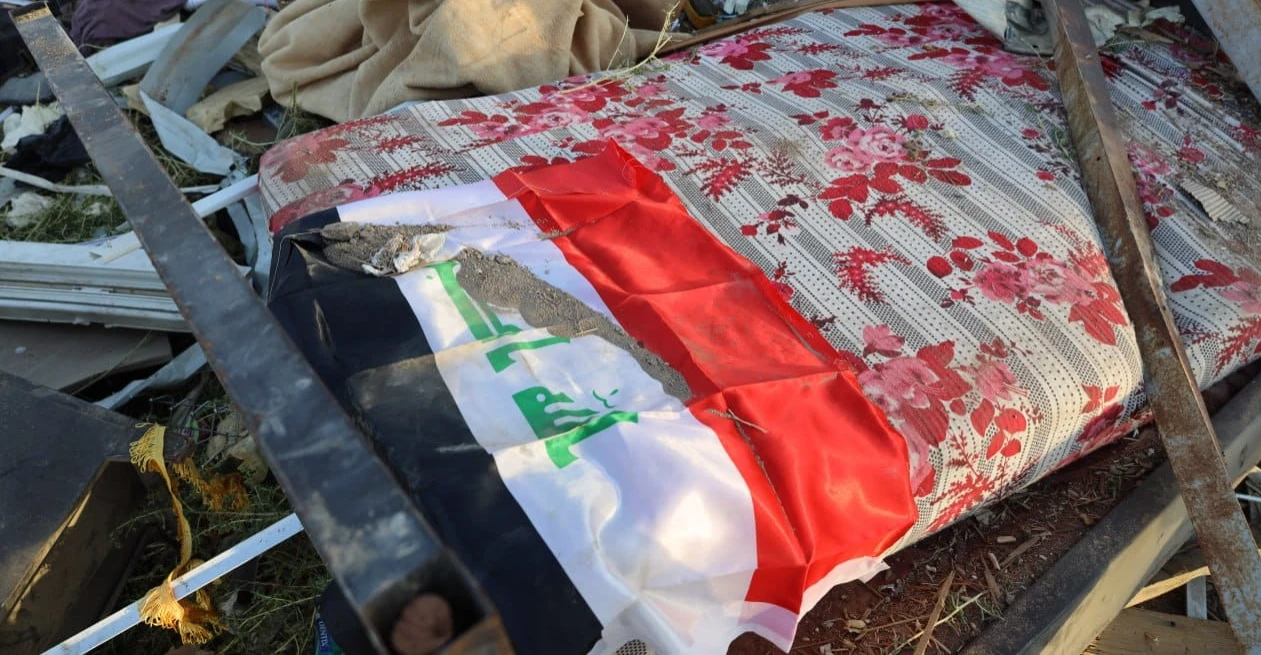
Reactions continued on Wednesday from political forces and armed factions in Iraq, condemning the joint bombing by Saudi and American forces that targeted headquarters belonging to the Popular Mobilization Forces, which resulted in dozens of casualties among its members, both dead and wounded.
For his part, the Secretary-General of the Badr Organization, Hadi al-Amiri, condemned the attack in an official statement, saying that it was “a sinful and unjustified attack that targeted the sovereignty of Iraq and its armed forces with the support of American aircraft,” urging the government to “take a firm and decisive stance towards this aggression.”
Al-Amiri added that “Iraqis were shocked by this blatant aggression from a neighboring country to which Iraq has always extended a hand of brotherhood and cooperation,” emphasizing that “Saudi Arabia is repeating this hostile approach today in an attempt to ignite a war that we have always been keen to extinguish.” He also stressed that the American role places Washington before its legal and moral responsibilities, calling for “a comprehensive reassessment of all relations and agreements concluded with the United States, foremost among them the security agreement,” describing the current stage as requiring “a unified national stance to defend sovereignty.”
In the same context, the Secretary-General of the Asa’ib Ahl al-Haq movement, Qais al-Khazali, commenting on the strikes, said that “targeting an Iraqi security force inside Iraqi territory represents a blatant violation of Iraq’s sovereignty and further complicates the security and political landscape,” expressing his astonishment that “foreign countries, some of which claim to be allies and others to be sister nations, are attacking our security forces.”
Al-Khazali added that this measure represents “disregard for Iraqi sovereignty and national dignity,” reiterating the demand for “the necessity of completing the withdrawal of foreign forces from Iraqi territory, and developing defense capabilities by purchasing air defense systems so that Iraq can defend its skies.”
Meanwhile, the al-Nujaba Movement condemned the joint bombing, threatening a military response to the attacks. In its statement, the movement asserted that “the continued presence of bases and headquarters belonging to the American occupation has become an imminent threat to the country’s security,” emphasizing the necessity of “severing all forms of cooperation with the Saudi regime.”
The Al-Nujaba Movement called on the Iraqi government to “immediately break its silence and not be satisfied with statements of condemnation and denunciation,” stressing the importance of “securing advanced air defense systems and protecting the country’s sovereignty and airspace immediately, and holding accountable all those who caused the country’s skies to be violated,” threatening Riyadh and Washington with “paying a heavy price in terms of their interests and security.”
In this context, the “Saraya Awliya al-Dam” called for the immediate “expulsion” of the Saudi ambassador from Iraq and the severing of diplomatic and economic relations with Saudi Arabia.
The spokesman for the Saraya, Abu Mahdi al-Jaafari, said in a statement: “We are still waiting for an official position from the Iraqi government that rises to the level of the event and expresses loyalty to the sacrifices of the martyrs,” indicating that “if the government fails to perform its duty, then the zealous Iraqi people must demand that the government’s weapons be restricted to the resistance.”
These positions come in conjunction with Saudi Arabia’s accusation that “Iraqi factions loyal to Iran” launched drones targeting energy facilities inside the Kingdom, while the US Central Command “CENTCOM” said that the Iranian Revolutionary Guard directed more than 30 air attacks within 72 hours against US forces and Saudi infrastructure.
Early Wednesday, CENTCOM announced that US and Saudi fighter jets had carried out precision strikes on weapons and logistics supply sites in several areas of eastern Iraq, which it said belonged to Iranian-backed factions responsible for those attacks.
In contrast, the Popular Mobilization Forces announced on Wednesday that at least 20 of its members were killed and 32 others were wounded, in what it described as a “non-final” toll from the joint US-Saudi strikes that targeted its official headquarters in a number of Iraqi provinces.
The escalation prompted Iraqi Prime Minister Ali Faleh al-Zaidi to cancel his planned visit to Saudi Arabia, according to a government source who spoke to Shafaq News Agency.
In a related development, Shiite nationalist leader Muqtada al-Sadr called on the Iranian Revolutionary Guard and “militias” not to involve Iraq in the regional conflict, demanding that the government impose state sovereignty and control security.
The strikes inside Iraq coincided with a new escalation between Iran and the United States, after Tehran launched ballistic missiles toward a base housing US forces in Jordan, while the US command announced that it had intercepted them and that no injuries or damage had been recorded.
shafaq.com
