Kurdish concerns and questions about who holds power in Iraq after the American withdrawal
Kurdish concerns and questions about who holds power in Iraq after the American withdrawal
2026-10-13
 Shafaq News – Special Translation
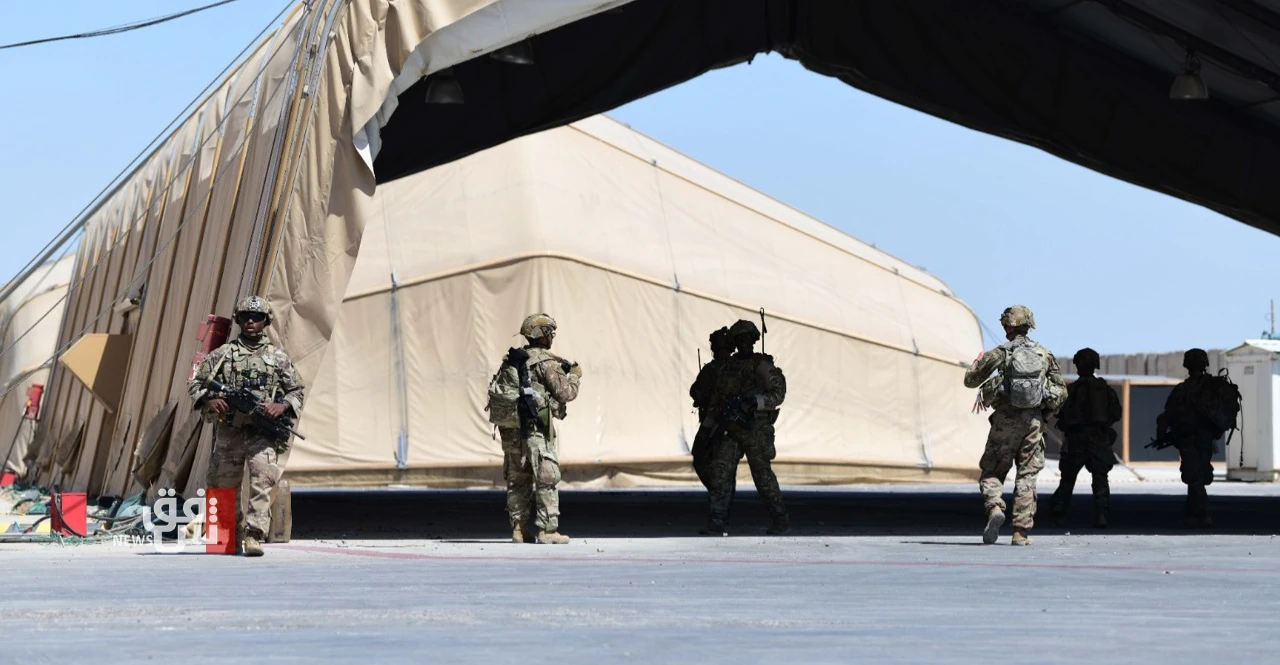
Baghdad celebrated, Washington declared victory, and Iranian-backed factions rejoiced, while anxiety prevailed in the Kurdistan Region. According to the Middle East Council on International Affairs , these stances reflect differing calculations regarding the future of Iraq in the absence of the United States and the withdrawal of its forces on September 30th. These forces had simultaneously acted as arbiters between the various factions, the target of attacks, and the guarantor of security. While the withdrawal puts an end to one of the chronic sources of conflict in Iraq, it also revealed a deeper struggle over who holds the authority to use force.
The Doha-based institute explained in a report translated by Shafaq News Agency that the American withdrawal settled a chronic dispute over Iraqi sovereignty, but it brought another dispute to the forefront, which is that the state officially monopolizes force, but its ability to actually monopolize it remains questionable, noting that this question is facing urgency after 8 months since the outbreak of the Israeli-American-Iranian war, which repeatedly dragged Iraq, especially the Kurdistan region, into the regional conflict.
The report noted that all of this comes as Prime Minister Ali al-Zaidi seeks to bring armed groups under state control by June 30, 2027, after postponing the date that was originally scheduled to coincide with the American withdrawal.
The report noted that Baghdad celebrated the withdrawal by declaring four days of national holiday under the name “Sovereignty Days,” to emphasize that the decision of war and peace belongs to the state, not to foreign armies or factions, while al-Zaidi pledged in New York that weapons would remain in the hands of constitutional institutions, and that Iraq’s relations with Western countries would shift from military cooperation to economic cooperation.
However, the report stated that the sovereignty discourse goes beyond symbolism, as it also constitutes a fundamental pillar in al-Zaydi’s strategy to confront the armed factions that have always justified their retention of their arsenals by the American presence, noting that, similar to what former US Ambassador Douglas Silliman said, the Prime Minister is building his argument on the fact that these groups no longer need their weapons.
After noting that some factions were willing to accept this logic, the report stated that others still rejected this approach. However, it argued that the American withdrawal weakens the factions’ main political argument without eliminating their military capabilities or their ability to use them.
The report continued that the United States and the Iranian-backed factions gave assurances to al-Zaydi that they would refrain from attacking each other for 90 days after the withdrawal, with the aim of preventing the situation from deteriorating in the near term, adding that this reality buys some time, but does not solve the problem.
The report argued that the Kurdistan Region is posing another test to Baghdad’s sovereignty, explaining that if the federal government insists that security and the use of force are the exclusive domain of the state, then it must also prove its ability to protect the territories and populations under its authority.
He pointed out that this is what the Kurds doubt, along with the Sunnis and other Shiite political parties not affiliated with Iran.
He continued, saying that the repercussions of the withdrawal of the coalition forces did not appear in any Iraqi region as quickly as they appeared in the Kurdistan Region, which, since late February, has been subjected to more than a thousand missile and drone attacks, and the American “Patriot” and “C-RAM” systems stationed in Erbil intercepted a large number of them, but these systems are no longer present now.
The report noted that, by virtue of the state structure, Erbil cannot manage its air defenses on its own, because Iraqi airspace is the jurisdiction of the federal government. It added that, at the same time, the partnership with the United States, which had long been a guarantee against Baghdad, disappeared, and the financial support that the coalition had been providing to the Peshmerga forces also ended.
The report argued that this puts Erbil in a difficult position, explaining that the American withdrawal may strengthen the authority of the central government, but at the same time it increases the regional government’s dependence on the Iraqi state for its security.
He noted that Erbil responded by completing the integration of the rival forces of the Kurdistan Democratic Party and the Patriotic Union of Kurdistan, and by pressuring Baghdad to address long-standing grievances, from Peshmerga salaries being less than half those of the Iraqi army, to delays in purchasing air defense systems.
According to the report, the region is now more vulnerable to risks than at any time since 2014, and more dependent on Baghdad than at any time since 2003.
He added that how Baghdad deals with this situation is extremely important, because the federal government now has greater influence over the region’s budgets, salaries, and air defense. If it uses this influence to deepen federal integration, it could strengthen the state’s claims to sovereignty. But if it uses it as a tool of coercion, it could revive the grievances that ended in 2017 in a confrontation over the region’s independence referendum.
According to the report, despite the withdrawal of US military forces, Washington’s influence has not dissipated because it still possesses significant leverage over Baghdad due to its control over oil revenues. It recalls that when Baghdad asked US forces to leave the country in 2020, reports indicated that Washington threatened to cut off Iraq’s access to these funds, so Baghdad backed down.
He explained that Washington halted dollar shipments to pressure Baghdad regarding Iranian-backed groups, including a shipment of approximately $500 million in banknotes that was on a plane and was blocked by the US Treasury Department. However, the shipments resumed last June, and Washington indicated that it was still able to impose sanctions because of the pro-Iranian factions.
The report continued that the withdrawal does not automatically mean the emergence of a vacuum to be filled by Iran, especially since Tehran itself is still under the pressure of war and sanctions, but it does remove one of the main constraints under which the Iraqi political balance was formed after 2003.
He added that Iraq remains highly vulnerable to external pressures stemming from the ongoing conflict outside its borders.
He explained that “this makes translating Baghdad’s claim of full sovereignty into actual control extremely difficult.”
He pointed out that the government’s options for coercion are limited in the face of the most powerful armed groups allied with Iran, adding that pushing al-Zaidi into a direct confrontation with these factions threatens to drag the government into a battle it is unlikely to win.
The report also noted Iraq’s lack of effective air defense capabilities, and that the government is still without a defense minister, while the financial crisis is also narrowing its room for maneuver, including the limited resources that would allow it to absorb fighters into the state payroll.
The report stated that “this explains the government’s preference for adopting a gradual political strategy consisting of postponing the disarmament deadline, securing a temporary truce, negotiating with factions willing to merge, and using withdrawal to weaken the legitimacy of groups that refuse to do so.”
He suggested that the government has no other practical option, but this path requires time, adding that every strike on Iraqi soil reinforces the same argument that Baghdad is trying to dismantle, which is that independent armed factions are still necessary because the state is unable to defend the country.
The report continued that the American withdrawal leaves an important question unresolved: who within Iraq has the authority to use force? While Baghdad says that this authority is the sole prerogative of the state, the factions that refuse to disarm seek to retain their share of it, while the Kurds want proof that federal sovereignty will protect them from any security threat that may come from Iran and its factions in Iraq after the American withdrawal.
In contrast, the report said that Iran and the United States expect each to have a role in shaping the outcome without incurring the cost of a permanent military presence.
The report concluded by saying that the “real test” is whether the state fails to bring weapons under its control by June 2027, in which case it will no longer be able to blame the foreign military occupation, while if it succeeds, Iraqis themselves will define, for the first time since 2003, the meaning of Iraqi sovereignty.
shafaq.com
