Government decisions regarding Kurdistan’s oil, the protection of the Tigris and Euphrates rivers, and the development of Iraqi Airways.
Government decisions regarding Kurdistan’s oil, the protection of the Tigris and Euphrates rivers, and the development of Iraqi Airways.
2026-11-04
 Shafaq News – Baghdad
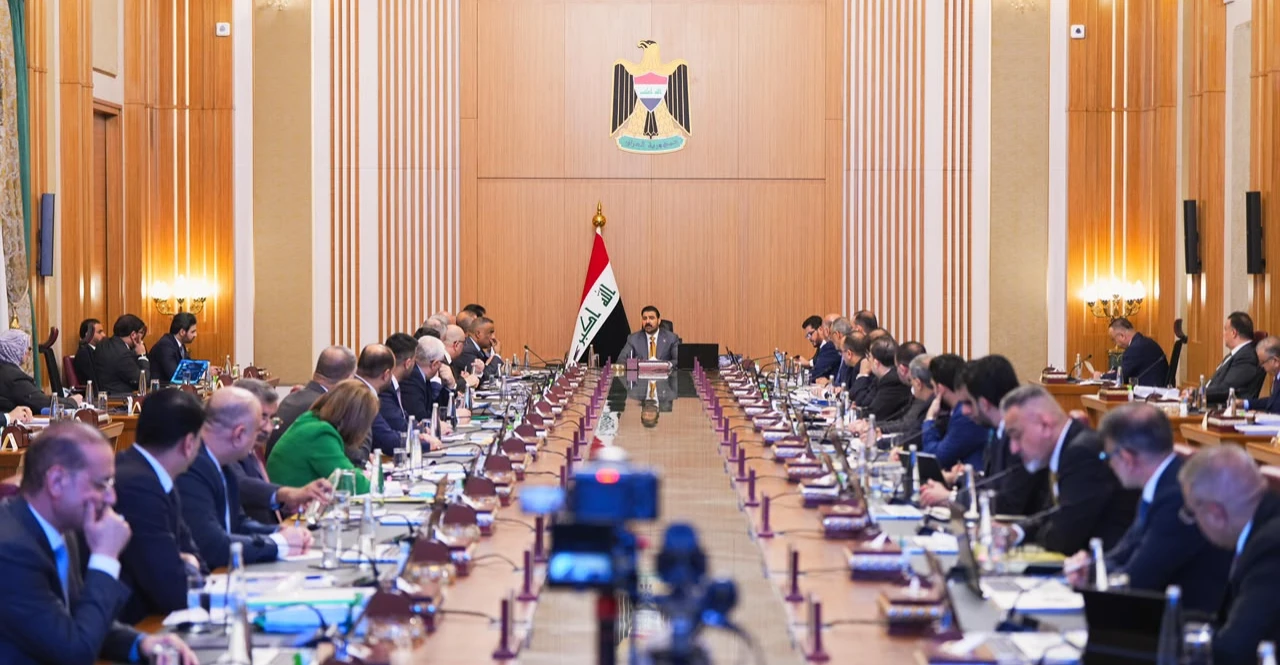
During its twenty-sixth regular session held on Tuesday evening, chaired by Ali al-Zidi, the Iraqi Council of Ministers approved a package of decisions that included supplying the Kurdistan Region with kerosene in preparation for winter, taking measures to reduce pollution in the Tigris and Euphrates rivers, increasing allocations for the purchase of Boeing aircraft, and assessing the state of Iraqi Airways.
The Prime Minister’s Media Office stated in a statement received by Shafaq News Agency that the Council approved supplying the Kurdistan Region with 50,000 cubic meters of white oil, as part of the government’s measures to secure the needs of citizens during the winter season.
In the environmental file, the Council approved the recommendation of the Supreme National Water Committee regarding the regional initiative to protect the Tigris and Euphrates rivers, which includes forming a committee of members of the national team to identify the projects of the highest priority and secure their financial allocations, in support of the first package of strategic projects for the initiative.
The decision obliges the ministries and entities responsible for polluting the two rivers to treat their waste in an environmental manner, and the governorates to operate sewage treatment plants before discharging it into the rivers, while the Ministry of Environment was tasked with monitoring the pumping stations during the summer season and monitoring violations in order to take the necessary legal measures.
It was also decided to include the protection of the Tigris and Euphrates rivers among the priorities of scientific research and sustainable development plans, to involve civil society organizations in efforts to combat pollution, as well as to expand the membership of the national team for the initiative to include representatives of federal ministries and bodies and others affiliated with the Kurdistan Region.
In a related context, the Cabinet approved a mechanism for implementing 101 afforestation projects, which will be announced by the beneficiary government agencies, and the extractive companies implementing them will be identified according to priority, with preference given to governorates affected by oil operations.
In the air transport sector, the council approved increasing the cost of the aircraft purchase project within its second phase, and paying the installment due for 2026 to Boeing, by increasing the current annual allocations to the Ministry of Transport.
He also decided to task the company “KBR” with studying the reality of Iraqi Airways and submitting proposals to improve its performance, in addition to forming a joint committee from the Ministries of Finance and Transport to evaluate the aircraft that are out of service and to explore the possibility of utilizing them, and to submit its recommendations to the Prime Minister within a specified period.
Regarding water issues, the council approved converting the workers employed on a fixed-term basis at the Mosul Dam to contracts within the allocations of the Ministry of Water Resources, as an exception to the instructions of the Ministry of Finance, while raising the risk allowances to 50%, given the nature of the work they carry out after the completion of the work of the Italian company “Trevi”.
In the health sector, the council voted to increase the total cost and financial reserve for the project to build a 100-bed hospital in the Bashiqa district of Nineveh Governorate, including the preparation of studies, designs and soil tests.
In the transport and communications sector, the Council authorized the Minister of Planning to negotiate and sign the draft financing agreement, “A safe future and safe movement for all.”
He also approved the House of Wisdom bill and referred it to the House of Representatives to complete the legislative procedures.
Al-Zaydi directed that special attention be given to the ancient city of Ur and that architectural designs be prepared that are appropriate to its historical character, stressing the cultural, touristic and economic importance of archaeological sites in the country.
shafaq.com
