Iraq outside Iran’s “cloak” and a new Arab integration… Washington strengthens al-Zaidi’s hand
Iraq outside Iran’s “cloak” and a new Arab integration… Washington strengthens al-Zaidi’s hand
2026-07-18
 Shafaq News – Special Translation
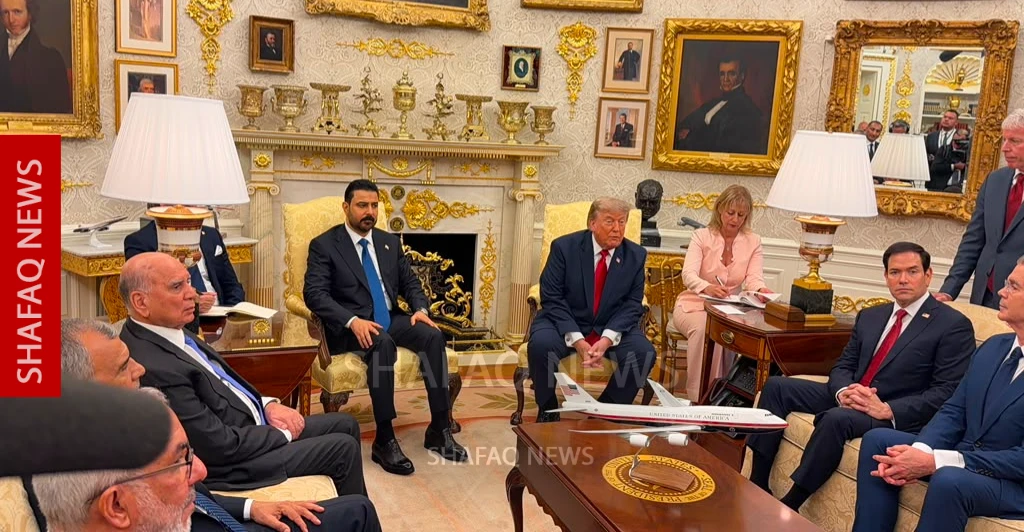
An American report considered that the visit of Iraqi Prime Minister Ali al-Zaidi to Washington reveals an American bet on integrating Iraq into a new regional Arab axis, based on economic partnership and political stability, far from Iran’s approach based on the “axis of resistance” and confrontation with the United States and Israel.
A report by the American ” Soufan Center ” Institute, translated by Shafaq News Agency, stated that Al-Zaidi’s meetings in Washington were not limited to economic and investment cooperation, but also carried clear political and security messages, represented by American pressure to implement Baghdad’s pledges to restrict weapons to the state and end the presence of armed factions with the end of the international coalition’s mission in Iraq on September 30.
The report added that the strong focus on the economy during the visit reflects a growing consensus between Baghdad and Washington on a vision for a Middle East based on economic integration and openness to the West, rather than engaging in the Iranian project based on hostility towards the United States and Israel.
A new Arab axis
According to the report, US President Donald Trump’s team used the visit to highlight the repercussions of Iran’s closure of the Strait of Hormuz, noting that this move has harmed even Tehran’s allies, most notably Iraq, whose oil revenues have declined by about 70% despite being described by Iran as an “allied country.”
The report suggested that Washington is betting on bringing Iraq into a broader regional alliance of Arab states that prioritize economic development and political stability, rather than adopting Iran’s strategy focused on conflict with the United States and Israel.
The report indicated that US policy towards Iraq has become similar to its approach in Syria after the fall of Bashar al-Assad’s regime, as well as its approach towards Lebanon under President Joseph Aoun, who is expected to visit Washington soon.
He explained that Damascus got rid of the Iranian-backed militias and Iranian advisors, while the Lebanese government is engaged in an American-sponsored dialogue with Israel to develop a roadmap for disarming Hezbollah and completing the Israeli withdrawal from southern Lebanon.
The report stated that the US administration views the formation of an axis of moderate Arab states as a means to contain Iranian influence and strengthen Washington’s position in any future settlement with Tehran.
Factional weapons
The report argued that removing Iraq from the sphere of Iranian influence requires the al-Zaidi government to fulfill its commitments regarding disarming the factions and curbing their influence, explaining that the American goal is not limited to reducing Iranian influence within Iraq, but extends to ending the role of Iraqi factions in the Iranian defense system.
However, the report conveyed the skepticism of experts regarding the possibility of achieving this, noting that the factions still possess significant military power and enjoy a social base within some Shiite circles that see them as a protective force, given the weak trust in official security institutions.
He added that the continued confrontation between the United States and Iran could lead to new attacks by those factions.
OPEC paper
The report explained that during his visit, Al-Zaidi focused on strengthening the economic partnership with the United States, amid expectations of concluding major agreements in the fields of energy, communications and infrastructure.
He noted that officials from both countries also discussed strategic projects aimed at reducing Iraq’s dependence on the Strait of Hormuz, thereby protecting its oil exports from any future closure, while simultaneously limiting Iranian strategic influence.
Among the projects proposed is the rehabilitation of the Kirkuk-Banias pipeline with the participation of American companies, including Chevron, a project that may take about three years to get back up and running, in addition to continuing discussions on the Basra-Aqaba pipeline via Jordan.
The report concluded by noting that among the issues raised was the possibility of Iraq leaving OPEC, as part of US President Donald Trump’s efforts to weaken the oil organization.
He added that Iraq’s withdrawal, if it happens, would represent a major blow to OPEC, after the UAE left months ago, and Qatar earlier to focus on gas exports. However, the report stressed that it is still unclear whether Baghdad is prepared to respond to this American proposal.
shafaq.com
