Exclusive: US warning: Factions’ refusal to surrender weapons could push Iraq into civil war
Exclusive: US warning: Factions’ refusal to surrender weapons could push Iraq into civil war
2026-08-10
 Shafaq News – Washington
Mustafa Hashim
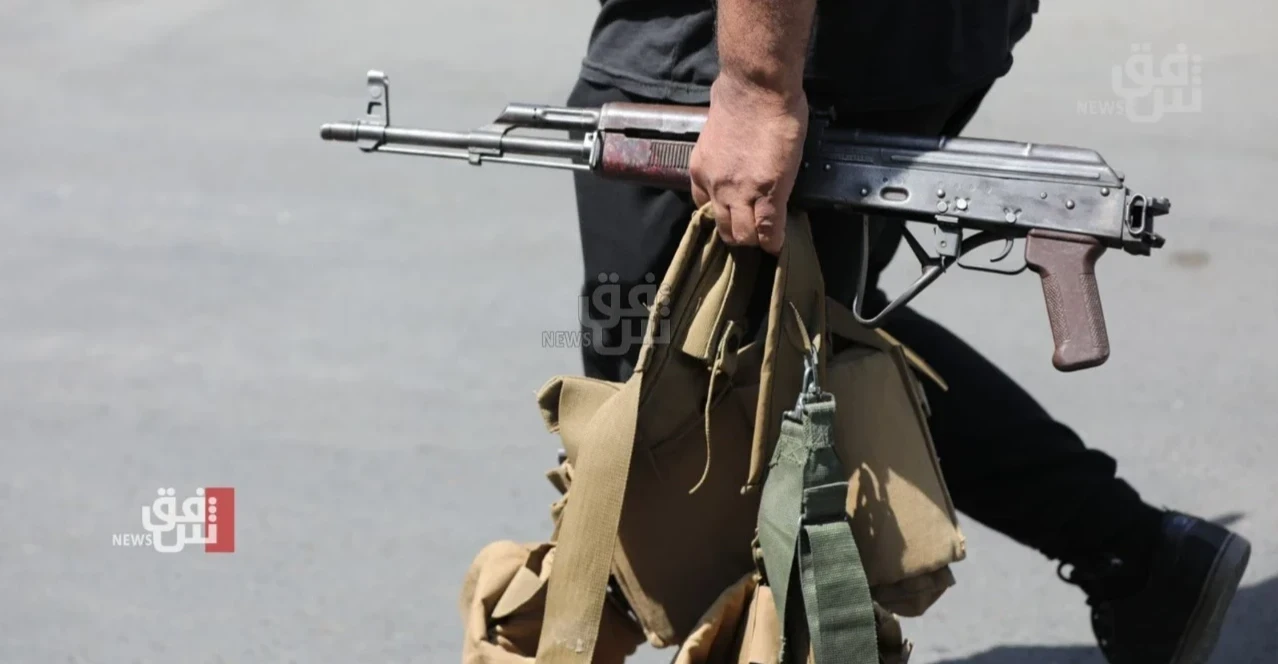
Former Pentagon official David Des Roches said on Monday that the Iraqi government’s setting a September deadline for the factions to hand over their weapons was a “positive step,” while noting that the factions’ refusal to hand over their weapons could push Iraq into a civil war.
Des Roches, who has held several positions, most notably Director of Operations for the North Atlantic Treaty Organization (NATO), told Shafaq News Agency, “Setting this deadline is a positive step, but as always, there will be resistance to the sovereignty of the Iraqi state from parties that take their orders from Iran and not from Iraq, and this resistance could be deadly.”
He added that “the pivotal question now is whether the Iraqi state is truly prepared to confront and fight the Iranian agents within its ranks, or whether the matter will end with a settlement and concessions that represent a new acknowledgment and legitimization of the unacceptable status quo.”
Des Roches noted that “the bottom line is that Iraq is not a fully sovereign state, and does not seem ready to confront its internal enemies to achieve that sovereignty, so it continues to flounder under an Iranian presence covered by a transparent veil.”
He also stressed that “although this situation may be politically acceptable in Baghdad, it will not be enough to lift international restrictions on bank transfers and other means of circumvention used by Tehran to evade US and international sanctions, especially as the Iranian economy continues to deteriorate.”
Regarding the expected scenarios in the event of a rebellion by the factions, Des Roches explained that “if the armed groups refuse to hand over their weapons, Iraq will either continue as a state with fragmented sovereignty, or it will face a phase of civil war against Iranian proxies, as there is really no third option.”
Regarding Erbil, Des Roches concluded his statement by noting that “the Kurdistan Region will continue to maintain its own dynamic, on a separate and independent path from the rest of Iraq.”
The issue of armed factions is one of the most sensitive issues facing the Iraqi government, with the approach of September 30, which the main political forces have set as the deadline for restricting weapons to official institutions.
The State Administration Coalition, which includes the most prominent Shiite, Sunni and Kurdish political forces, stressed during its meeting on August 5 the need to restrict weapons to the state, and considered the parties that carry out activities that threaten the security of the country outside the framework of official institutions as “outlaws and must be fought.”
The coalition warned that any armed activity outside the framework of the state after September 30 would be dealt with according to the anti-terrorism law.
Following this, Iraqi security and military forces raised their readiness level throughout the country, and the leave of a number of commanders and officers was cancelled, while security agencies began implementing field movements and exercises in anticipation of any emergency or friction that might develop into an armed confrontation.
Last week, Baghdad witnessed hours of security tension coinciding with threats by armed factions to retaliate against Saudi Arabia after strikes targeted Popular Mobilization Forces sites, before it ended with contacts and a dawn meeting between Prime Minister Ali Faleh al-Zubaidi and Badr Organization leader Hadi al-Amiri, which led to a mutual calming and opened the way for diplomatic action to address the crisis.
Al-Amiri later called on the “Islamic Resistance” factions to postpone any military response against Saudi Arabia and to prioritize “Iraq’s higher interest,” but he returned and stressed during a meeting with a number of Popular Mobilization Forces leaders the importance of maintaining a high level of readiness.
The plan to restrict weapons does not have a unified stance from the armed factions.
While some forces expressed a willingness to reorganize their military and security relationship with the state, other factions, including Kataib Hezbollah, Harakat al-Nujaba and Kataib Sayyid al-Shuhada, announced their refusal to relinquish their military capabilities, and linked any discussion about their weapons to the end of the presence of foreign forces and ensuring the protection of Iraq from external attacks.
The September 30th date also coincides with the deadlines related to ending the military presence of the international coalition in Iraq, which some factions use as a basis for linking the future of their weapons to the withdrawal of foreign forces.
shafaq.com
