Exclusive: Trump administration sends message to Baghdad regarding militia weapons following Qaani’s visit
Exclusive: Trump administration sends message to Baghdad regarding militia weapons following Qaani’s visit
2026-08-12
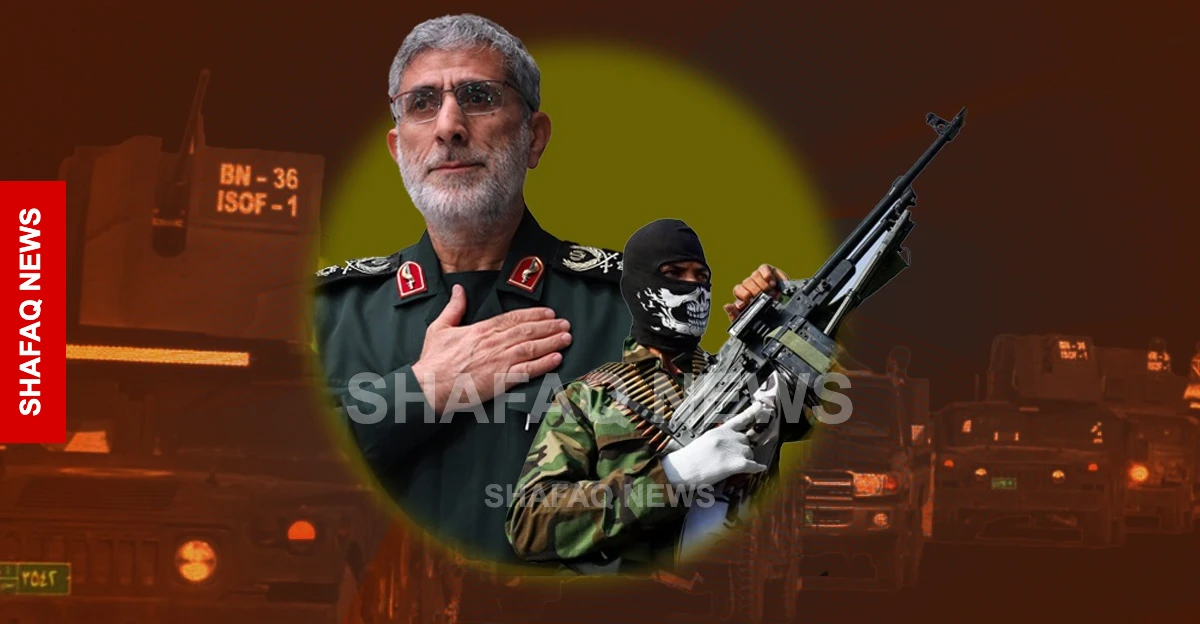 Shafaq News – Washington – Mustafa Hashim
A White House official confirmed on Tuesday that Washington supports the Iraqi government’s efforts to restrict weapons to the state, stressing the need to transfer the possession of weapons exclusively to the central government. This came hours after a visit by Iranian Quds Force commander Ismail Qaani to Baghdad, during which he called on armed factions not to hand over their weapons at the present stage.
The official told Shafaq News Agency in a special statement that the United States supports Iraqi efforts aimed at enabling Baghdad to achieve its full capabilities, making Iraq “a force for stability, prosperity and security in the Middle East.”
He added that “any government under Iranian control will not succeed in putting Iraq’s national interests first, keeping the country out of regional conflicts, or developing a mutually beneficial partnership between Washington and Baghdad.”
The official explained that the United States had clearly informed the Iraqi side of the need to preserve national sovereignty and prevent any attacks launched from Iraqi territory by armed groups supported by Iran.
He stressed that Washington fully supports the disarmament process and the transfer of weapons possession exclusively to the Iraqi government, considering that transparency with the United States and regional partners regarding how this process is managed is a key element for its success.
The American position comes hours after an informed source told Shafaq News that the commander of the Iranian Quds Force, Ismail Qaani, concluded an unannounced visit to Baghdad during which he held a series of meetings with leaders in the coordination framework and armed factions, before returning to Tehran.
According to the source, during their meetings with Qaani, leaders of the factions inquired about Tehran’s position on handing over weapons. However, the commander of the Quds Force rejected this option at the present stage, and at the same time urged avoiding any armed confrontation with the Iraqi government if it resorted to force to implement its plan. He also warned of repercussions that could go beyond the issue of weapons to a wider internal crisis.
According to the source, Qaani called for a political settlement between the factions and the government that would prevent the surrender of weapons at present and avoid clashes. He also demanded, during separate meetings with leaders in the coordination framework, that political pressure be exerted towards reaching this settlement.
These moves come as the September 30 deadline set by the State Administration Coalition for restricting weapons to official institutions approaches, after the coalition confirmed in its meeting on August 5 that entities that engage in activities that threaten the country’s security outside official institutions are “outlaws and must be fought,” warning against dealing with armed activity outside the framework of the state after the deadline expires, in accordance with the Counter-Terrorism Law.
A source within the coordination framework had revealed to Shafaq News, prior to Qaani’s visit, a political understanding stipulating that the factions’ weapons would be handed over to the Popular Mobilization Forces before the end of September, so that the Authority would officially supervise their inventory and document their storage locations, provided that the movement of weapons and personnel would be under the orders of the Commander-in-Chief of the Armed Forces exclusively.
But the plan does not have a unified stance from the factions, as Kataib Hezbollah, Harakat al-Nujaba and Kataib Sayyid al-Shuhada refuse to give up their military capabilities, and link any discussion about their weapons to the end of the presence of foreign forces and guarantees related to protecting Iraq from external attacks, while other groups have expressed a willingness to reorganize their military and security relationship with the state.
shafaq.com
