Counterfeit money threatens the pockets of Iraqis… and the Central Bank explains its procedures.
Counterfeit money threatens the pockets of Iraqis… and the Central Bank explains its procedures.
2026-10-15
 Shafaq News – Baghdad
News of counterfeit Iraqi banknotes being seized at border crossings, and warnings about the circulation of quantities of them in local markets, have raised concerns about citizens and traders being exposed to financial losses, amid economic warnings about the repercussions of the spread of counterfeit currency on the movement of commercial transactions and confidence in the currency in circulation.
One of the managers of private banks in Iraq told Shafaq News Agency that the information circulating about the presence of counterfeit currency in the markets is “correct,” noting that he does not have accurate data on the size of those currencies or the denominations of currency that have been counterfeited.
He added that border crossings seized, on Wednesday, a group of people who were trying to bring counterfeit banknotes into the country, without specifying the crossing where the seizure took place or the value of the seized amounts.
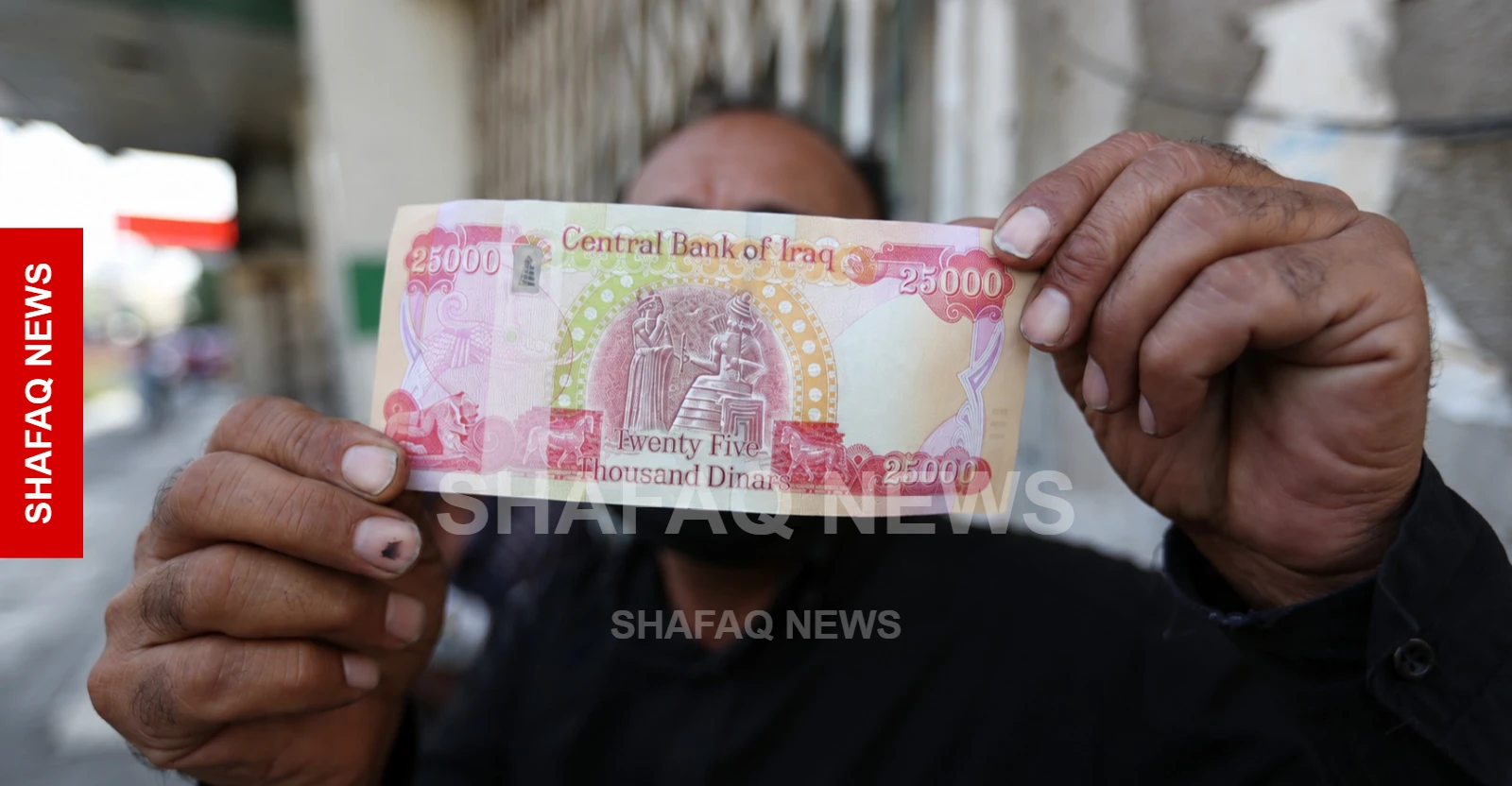
In one of the most prominent commercial centers in the capital, Baghdad, Abu Ahmed, a merchant who works in the Jameela Industrial Area, warned against the circulation of counterfeit banknotes of the 25,000 dinar denomination, confirming that large quantities of them entered the markets yesterday, Wednesday, according to the information that reached him.
Abu Ahmed explained to Shafaq News Agency that the forgery operations appear to be so sophisticated that they may be difficult for citizens to detect, especially during daily cash transactions that involve large sums of money.
Traders and citizens were urged to be cautious when receiving banknotes, and to check for security features that distinguish genuine currency from counterfeit, in order to avoid falling victim to fraud.
The Central Bank explains
In its first comment on the mechanisms for dealing with these cases, the Central Bank of Iraq explained on Thursday that counterfeit currency is discovered through official reports or during the examination, counting and sorting of money in banking institutions.
The Central Bank’s media director, Haider Ghazi, told Shafaq News Agency that suspected counterfeit banknotes are detected when official reports are received about them, or when they are discovered during money sterilization operations and examination of deposits received from banks and financial companies.
Ghazi added that the task of identifying the sources of counterfeit banknotes and the parties involved in producing or bringing them into the country falls within the jurisdiction of the security and investigative agencies.
The central bank did not provide figures on the size of the counterfeit currency discovered or its spread in the markets, and no independent official confirmation could be obtained regarding the quantities that traders reported entering the country in the past few hours.
For his part, economist Mohammed Al-Hassani warned that the circulation of counterfeit banknotes could cause direct losses for citizens and merchants, as well as disrupt buying and selling operations, especially in markets that rely heavily on direct cash transactions.
Al-Hassani told Shafaq News Agency that the danger of these currencies lies in the possibility of them being transferred between dealers without being detected, which makes the holder of the counterfeit paper vulnerable to losing its value when the counterfeiting is discovered.
He added that growing concerns may prompt some traders and shop owners to be stricter in accepting banknotes, or to subject them to additional examination before completing transactions, which may slow down trading and cause anxiety in the markets.
Al-Hassani stressed the need to distinguish between the direct impact of counterfeit currency on the integrity of cash transactions and the value of the Iraqi dinar, explaining that the presence of counterfeit banknotes does not necessarily mean a decline in the exchange rate of the national currency, but it may affect the confidence of those dealing with banknotes if the phenomenon expands.
He called for strengthening control and inspection procedures, prosecuting those involved in counterfeiting or smuggling currency, and intensifying awareness campaigns on ways to verify the integrity of banknotes.
Previous measures to combat forgery
These concerns come at a time when the Central Bank of Iraq has a system of regulations governing the handling of counterfeit banknotes, including procedures for detection, confiscation, documentation and reporting.
According to the Central Bank’s instructions regarding the handling, counting, and sorting of banknotes, banks are responsible for confiscating counterfeit banknotes discovered during deposit operations, providing the person in possession of them with an official receipt, and recording the details of the banknotes, their denominations, and the depositor’s information, before sending them to the Central Bank in accordance with the approved procedures.
The instructions also include imposing fines on banks when counterfeit papers are discovered within their deposits with the central bank, as part of measures aimed at enhancing the accuracy of inspection and sorting processes and reducing the leakage of counterfeit currency into the money supply.
The Central Bank had previously issued, on February 23, 2026, a warning about fraud and scams perpetrated using various banknotes, calling on citizens to be careful to avoid falling victim to these practices.
shafaq.com
