Christians in Iraq: Two thousand years of presence and an inherent right to participate in decision-making.
Christians in Iraq: Two thousand years of presence and an inherent right to participate in decision-making.
2026-08-15 05:04
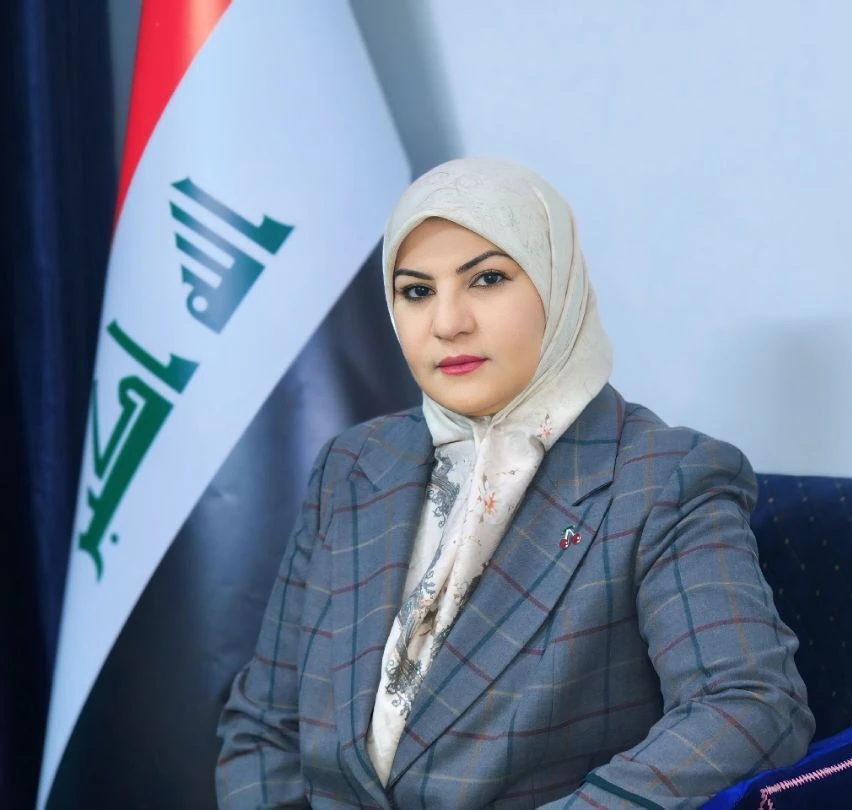 Dr. Duha Al-Sadkhan
The question is not: What should we give to Christians in Iraq?
But the question is: what remains of their historical right in a homeland of which they were and still are an integral part of its history and civilization?
When we speak of Iraqi Christians, we are not speaking of a group that migrated to Iraq in modern times, nor of a community that came from outside the region. We are speaking of a religious and cultural component that has been linked to Mesopotamia since the early centuries AD, and has become an integral part of Iraq’s social, cultural, religious, and political history for nearly two thousand years.
It is important to be precise here: the civilizations of Iraq predate Christianity by thousands of years, so it is incorrect to say that Christians were the “first inhabitants of Iraq.” However, it is historically accurate that Christianity reached Mesopotamia at a very early stage, and that Iraqi Christians represent one of the oldest continuous Christian communities in the world.
Christianity in Mesopotamia since the first century
Sources indicate that there were inhabitants from Mesopotamia in Jerusalem at the time of the spread of early Christianity. Christian tradition links the arrival of Christianity in Mesopotamia to the apostles and their disciples, and among the most prominent names associated with this tradition are Addai and Mari.
By the early centuries AD, Christianity had a presence in multiple regions of Mesopotamia, and then it began to grow noticeably, especially in northern and southern Iraq.
Academic studies indicate that Christianity has existed in Iraq since its earliest times, and that northern Mesopotamia witnessed early growth of Christianity around Erbil, while Christian churches flourished in southern Mesopotamia as far as Basra.
This means that the Christian presence was not confined to one city or one region, but extended over a wide area of historical Iraq.
From Seleucia-Ctesiphon to Baghdad
Iraq was not merely a region that embraced Christianity, but at various historical stages it became an important center for Eastern Christianity.
In Seleucia-Ctesiphon, near present-day Baghdad, the first known council of the Church of the East was held in 410 AD, by which time the Church had long been established in Iraq. The region then became an important ecclesiastical and intellectual center of Eastern Christianity.
During the fifth and eighth centuries AD, Seleucia-Ctesiphon was a major center of the Church of the East, then its center moved to Baghdad after the Abbasids made it the capital of the Caliphate around 762 AD.
From Iraq, Eastern Christianity spread in wide directions, and its influence reached far regions in Persia, Central Asia, India, and even China.
Here an important fact emerges:
Iraq was not just a homeland for Christians, but was one of the historical centers from which Christian knowledge and culture spread to large areas of Asia.
Al-Hira: Another chapter in the history of Iraqi Christianity
Another important stop was the city of Hira, which was located near present-day Kufa.
Al-Hirah was an important Arab center before Islam, and there were Christian communities, churches and monasteries there. Archaeological evidence indicates the existence of churches dating back to the sixth and seventh centuries AD.
This reveals that Christianity was also part of the social and cultural fabric of southern Iraq, and not just of its northern regions.
Syriac: The Language of Science and Culture
The history of Iraqi Christians is also linked to the Syriac language, one of the Aramaic languages that became an important religious, cultural and scientific language in Mesopotamia.
Christian scholars, translators, and physicians played important roles in transmitting medical, philosophical, and scientific knowledge, especially in Islamic times.
In the Abbasid era specifically, Christian scholars, physicians and translators emerged in Baghdad, and they contributed to the translation movement and the transfer of Greek and Syriac sciences into Arabic.
Thus, the Iraqi Christian was not merely an individual living in society, but was a participant in the production of Iraqi, Arab, and Islamic knowledge itself.
From building schools to building a modern state
In modern Iraq, Christians have had a significant presence in:
Education, medicine, pharmacy, engineering, journalism, literature, music, management, diplomacy, translation and culture.
Christian schools and educational institutions were part of the history of modern education in Iraq.
Therefore, talking about Christians is not just talking about churches; it is about a school, a doctor, an engineer, a journalist, an intellectual, an employee, a diplomat, an artist, and a university professor.
But what happened after 2003?
Here begins the most painful chapter.
Prior to 2003, estimates of the number of Christians in Iraq ranged roughly between 800,000 and 1.4 million, according to various international sources.
In subsequent years, their numbers declined sharply; a 2018 report by the United States Commission on International Religious Freedom quoted estimates that the number of Christians had fallen to less than 250,000, compared to a previous estimate of about 1.4 million.
The committee also estimated in its 2020 report the number of Christians in Iraq at about 200,000, compared to about 1.5 million before 2003.
That is, we are talking about a massive decline in less than two decades.
This decline was not the result of a single factor, but rather the result of an accumulation:
Wars.
Terrorism.
Sectarian violence.
Immigration.
The economic situation deteriorated.
Security is weak in some areas.
The occupation of large areas by ISIS in 2014.
Displacement from Mosul and the Nineveh Plain.
International bodies have documented ISIS crimes against Christians, in addition to its crimes against Yazidis and other Iraqi groups.
The problem is not just the number of Christians
Some might say: If the number of Christians has decreased, why are we raising the issue of their political representation?
The answer is simple:
Democracy is not just a numerical calculation.
True democracy means that the citizen, regardless of his religion, nationality or sect, feels that he is a partner in the state.
The Iraqi Constitution itself stipulates in Article 14 that all Iraqis are equal before the law without discrimination based on religion, sect, ethnicity, or origin, and Article 16 stipulates that equal opportunities are a guaranteed right for all Iraqis. The Constitution also guarantees freedom of belief and religious practice for Christians and others.
Therefore, the issue is not a favor from the majority, but a constitutional right to citizenship and participation.
Five seats… but is this genuine participation?
The Iraqi parliament consists of 329 seats. In the electoral system, 9 seats are allocated to minority groups, including 5 seats for Christians in Baghdad, Dohuk, Erbil, Kirkuk and Nineveh.
And here we must stop.
Five seats out of 329, which is equivalent to about 1.52% of the total seats in the House of Representatives.
But the issue is not just about the number of seats.
The most important question:
Can Christians freely choose their representatives? And can these representatives influence major state decisions?
If the quota seat becomes linked to a political force greater than the component itself, then the quota may turn from a means of ensuring representation into a means of reducing the independence of representation.
Therefore, what is needed is not just “Christian seats,” but genuine, independent, and effective political representation.
Where is the right of Christians to participate in political decision-making?
If Iraqi Christians are citizens with full rights, why don’t they have a greater presence in:
cabinet?
The highest state institutions?
The diplomatic corps?
Universities?
Cultural institutions?
Local administrations?
Public policymaking?
Which House of Representatives committees are influential?
Decisions regarding the regions that historically constitute its homeland?
Political participation does not mean that Christians have a “privilege,” but rather that they have equal opportunities to access public positions based on citizenship, competence, and merit.
Nineveh Plain: The Real Test
The Nineveh Plain issue is perhaps one of the issues that most tests the state’s seriousness in protecting Iraqi diversity.
There are towns and villages that have been associated with the Iraqi Christian presence for centuries.
When her family was forced to flee, the loss was not just the loss of a home.
It’s a loss:
Church, school, cemetery, family memory, language, heritage, and place identity.
Therefore, the return of Christians to their areas is not achieved simply by rebuilding houses.
But you need:
Security + Services + Jobs + Education + Property Protection + Stable Local Governance + Genuine Political Participation.
Do Christians want a privilege?
The discussion shouldn’t be like this.
Iraqi Christians do not need privileges.
He needs full citizenship.
We should not say:
“We will give the Christians five seats.”
Rather, we should say:
“We guarantee Iraqi Christians their right to access state institutions like any other Iraqi citizen.”
If he is a Christian and competent, he has the right to become a minister.
If he is competent, he has the right to be an ambassador.
If he is an academic, then he has the right to be a university president.
If he is qualified, he has the right to assume any position in the state.
The standard should be competence and citizenship, not religion.
Why should we protect them?
Because Iraq, which loses an essential component of its population, loses a part of its history.
When a community that has lived in Iraq for nearly two thousand years drops from estimates of 1.4–1.5 million before 2003 to estimates of around 200,000 in the following years, this is not a passing demographic issue.
It is a warning that Iraqi diversity itself is declining.
Diversity is not a weakness.
Diversity is a social, cultural, and political force, if it is managed on the basis of citizenship.
What do we want?
We need a new national vision that includes:
First: Developing the quota system in a way that ensures the independence of the will of the voters from the component, and prevents their seats from being turned into political tools in the hands of other forces.
Second: Ensuring the participation of Christians in the highest state institutions according to competence and merit.
Third: Developing a national program to return displaced Christians to their original areas.
Fourth: Protecting their property and preventing the seizure or encroachment upon their real estate.
Fifth: Supporting schools, universities and cultural institutions that preserve the Syriac, Chaldean, Assyrian and Iraqi Christian heritage.
Sixth: Protecting churches, monasteries and historical sites as part of the Iraqi national heritage.
Seventh: Ensuring the security of the Nineveh Plain and preventing it from becoming an arena of conflict between political and armed forces.
Eighth: Encouraging investment and creating job opportunities in Christian areas to reduce the motives for emigration.
Ninth: Involving representatives of the constituent groups in formulating decisions that affect their regions and their future.
Conclusion: Christians are not guests in Iraq.
Iraq is a country thousands of years old, and Christianity has been part of its history since the early centuries AD.
Hence, the real question is not:
What should we give to Christians?
but rather:
How do we preserve the right of a genuine Iraqi citizen to live safely in his homeland, to participate in the administration of his state, and to protect his land, heritage, and the future of his children?
The Iraqi Christian is not a guest so that we can grant him the right of residence.
He is no less Iraqi because he differs from us in religion.
Its presence is not linked to the number of quota seats.
He is Iraqi first, an Iraqi Christian second, and part of Iraq’s memory and civilization.
If Iraq taught the world the meaning of civilization, writing, and law, as the preamble to its constitution itself states, then the challenge facing the Iraqi state today is to prove that civilization is not just artifacts in museums, but also the state’s ability to protect humanity, diversity, and memory.
Iraq, by protecting its Christians, is not only protecting a sect; it is protecting a part of itself.
Iraq, by giving Christians their right to participate in political decision-making, is not doing them a favor, but rather restoring to them one of their rights of citizenship.
Those who have been partners in Iraq’s history for nearly two thousand years should not be absent from shaping its future.
shafaq.com
