An American perspective: Al-Zaidi faces two options: “Confront the factions or resign.”
An American perspective: Al-Zaidi faces two options: “Confront the factions or resign.”
2026-08-04
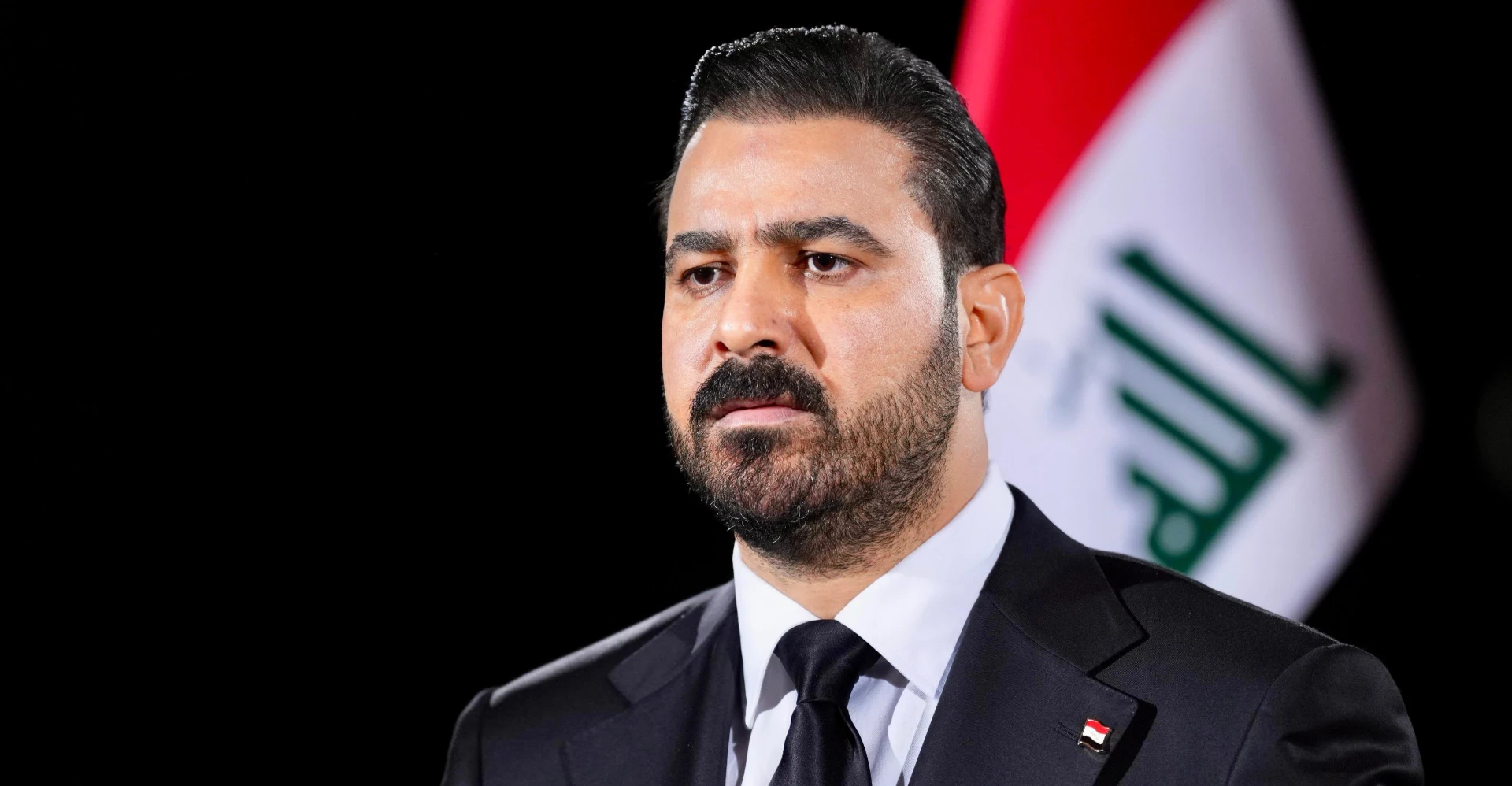 Shafaq News – Special Translation
According to a reading by the American ” Atlantic Council ” institute, the Shiites in Iraq are increasingly attached to the idea that the threat of an American war against Iran will pose a threat to their influence in the region, which is pushing the armed factions to be more stringent on the issue of handing over weapons before the dust of war settles.
This also shows that Iraq has not succeeded in building a democratic state of institutions, but rather a state of sects, and that Prime Minister Ali al-Zaidi’s battle is not about disarmament, but about restoring the state’s monopoly on its sovereignty.
The Atlantic Council stated in a report translated by Shafaq News Agency that it is no secret that the events taking place in the vicinity of Iraq have affected its politics, society and economy, adding that although the changes that the region witnessed after October 7, 2023 left their repercussions on Iraq, the greatest impact on Iraqi politics came from the repercussions of February 28, 2026, i.e. the start of the American war on Iran.
He argued that the assassination of Supreme Leader Ali Khamenei and the transfer of the position to Mojtaba Khamenei transformed Iran from a “theocratic state” dominated by the rule of the jurist into a “junta-cracy” system reflecting the control of the generals in the Supreme Council of the Revolutionary Guard. He explained that this structural transformation in the Iranian regime, and the existential threats it faced during the war, led to strengthening Iranian influence over the Shiite sects in Iraq and the region.
According to the report, the Revolutionary Guard still uses the power of religion and sect to influence its followers, but it has adopted a more urgent military discourse, telling Shiites throughout the region that the fall of Tehran means the fall of Shiite rule in the region as well. This reinforces Tehran’s narrative of “common destiny” and strengthens its dominance over factions in the region, including many Iraqis, even those who do not believe in the spiritual authority of the Guardianship of the Islamic Jurist or do not belong to armed factions, because the threats to Tehran are, according to this discourse, threats to all Shiites.
He added that this belief in a common threat explains the sharp increase in the number of Iraqi armed factions refusing to disarm, from five factions to ten, after the recent American escalation against Iran, and the revelation of discussions within the US National Security Council regarding plans for ground operations against Iran. He explained that this also explains the threat by members of the Al-Nujaba Movement to “arrest” soldiers from the Iraqi army and police forces when they recently tried to enter one of its headquarters in southern Baghdad.
According to the report, the importance of this ideological shift among the Shiites leads us to the institutional structure of governance in Iraq, which is a structure based on the sovereignty of the sect over the state, where state institutions have become owned by the sects instead of being owned by the state. He added that “Iraq has not become a state of individual rule nor a state of institutional rule, and it is neither a parliamentary nor a presidential system, but it is simply a case of sectarian rule, in which each sect has a political institution that represents it, and each sect has a position at the presidential level and in the ministries.”
He pointed out that, with the exception of the Kurds, the sects were merged into two political institutions, one Shiite and the other Sunni, stressing that the battle over the coordination framework with the Sadrist movement after the 2021 elections was a message, supported by Tehran through its armed factions, to anyone who tries to challenge the sectarian institutional structure.
The report continued, saying that the United States recently tried to break this sectarian structure by choosing a prime minister from outside the coordination framework, by threatening to cut off support to Baghdad if it chose a candidate allied with Tehran, and then celebrated the new prime minister, Ali al-Zaidi, during an official visit to the White House.
While the report noted that the US administration hopes that al-Zaidi will be able to completely disarm the factions before the withdrawal of US forces from Iraq by the end of September, it pointed out that senior members of the coordination framework believe that the fate of the weapons is linked to the results of the ongoing “US-Iranian” war.
He explained that “if the existence of the Iranian regime is in danger, or if Tehran does not give its approval regarding the disarmament of these factions, the influential forces within the coordination framework will not support al-Zaidi in fulfilling his pledge to US President Donald Trump to dissolve the factions before the end of this year.”
The report stated that although al-Zaidi mentioned in one of the framework meetings that he was prepared to risk an armed confrontation with the factions in order to disarm them, he realizes that the framework will not allow a Shiite-Shiite military confrontation, and therefore he will have no option but to resign, especially if the White House withdraws its support for him after his failure to carry out the mission for which he received support.
The American Institute concluded that the media attention surrounding al-Zaidi’s visit to Washington was insufficient, as experience with previous prime ministers shows that what matters most is not the decision itself, nor even external support, regardless of its source, but rather the existence of an agreed agenda among all parties on key issues, such as the disarmament of militias.
The report concluded by saying: “Unless al-Zaydi is able to curb the role of sectarian institutions in shaping state decisions and determining its fate and direction, he will be nothing more than another version of the former prime ministers who, within Iraq, were merely implementers of policies decided by sectarian councils,” indicating that “the battle before al-Zaydi, therefore, is not disarming the factions, but rather restoring the state’s monopoly on its sovereignty.”
shafaq.com
