“Stagnation and shops for rent”… Ramadi under the pressure of the dollar and traders’ losses reach 16%
“Stagnation and shops for rent”… Ramadi under the pressure of the dollar and traders’ losses reach 16%
2026-10-21
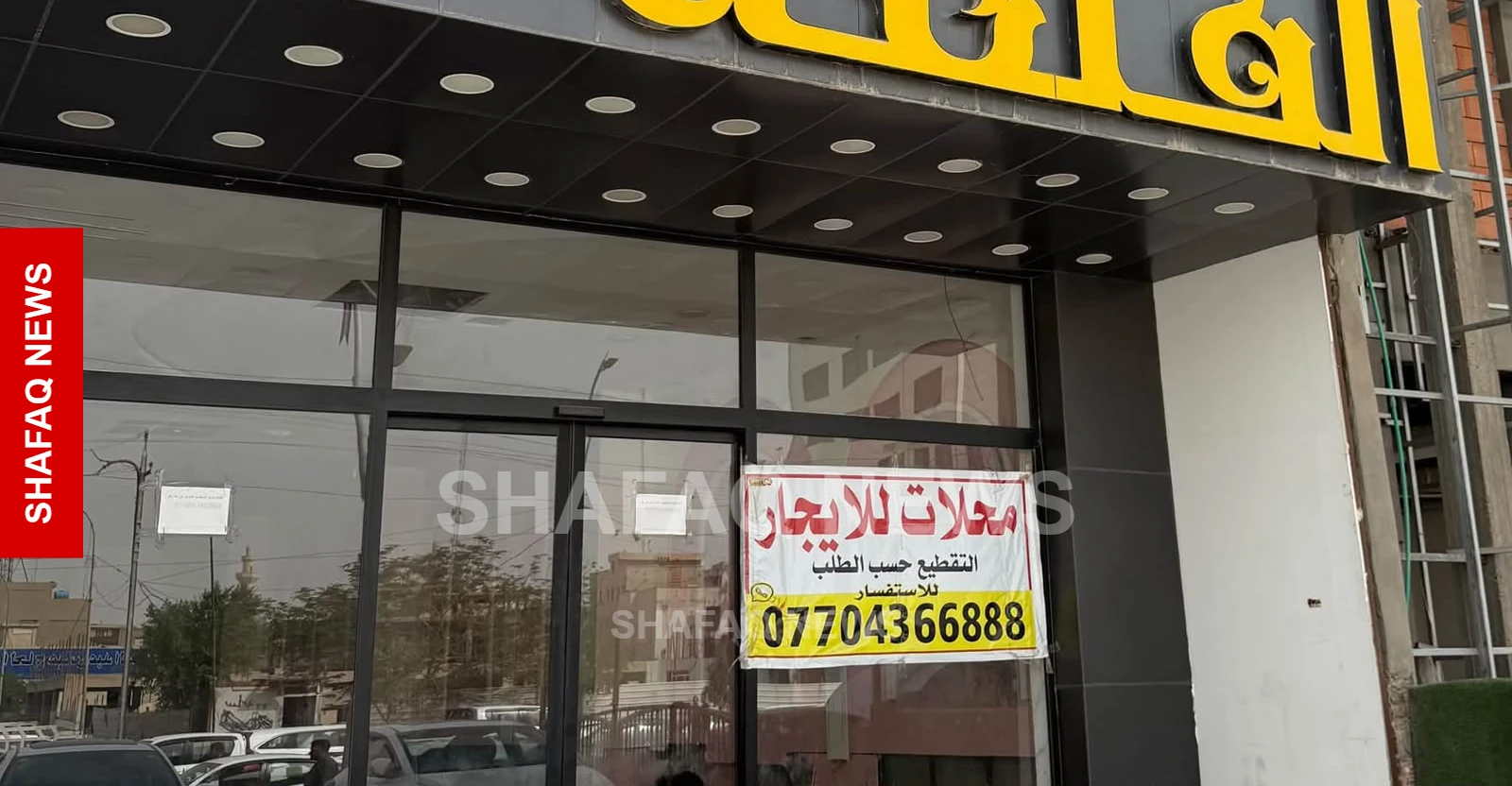 Shafaq News – Anbar
The markets of Ramadi, the capital of Anbar province, are facing increasing challenges with the rising exchange rate and the decline in citizens’ purchasing power, at a time when the burdens of rents, generator fees, workers’ salaries and government fees are accumulating on business owners, prompting some of them to close their shops or put them up for rent, amid fears of a widening recession and a decline in commercial activity.
Mohammed Al-Kubaisi, a business owner, told Shafaq News Agency that the impact of the exchange rate change begins with traders and agents who imported their goods from abroad in forward dollars, then sold them according to the previous exchange rate, before being surprised by the increased cost of paying the dues of foreign companies.
He added that these traders incurred losses of up to 16% of their money as a result of the change in the exchange rate, noting that the owners of retail stores in turn face difficulties in raising prices, because most of the goods have known prices in the market and cannot bear additional increases, which leads to a decline in their profit margins.
Al-Kubaisi continues, saying that these pressures have led some shop owners to lay off some of their employees, while others have been forced to close their businesses because they cannot cover operating costs, rents, and the fees for private generators.
He pointed out that the burdens are not limited to that, but also include taxes, electricity, water and municipal fees, health and professional license fees, civil defense fees, as well as amounts due for the retirement guarantee for workers, warning that the continuation of these costs may push more projects to close.
He explained that the decline in citizens’ purchasing power, as a result of the decrease in the real value of their salaries and incomes and the increase in the prices of some goods, will lead to a contraction in buying and selling activity, which will directly affect business owners.
Market stagnation
For his part, Hamza Ahmed, a shop owner, told Shafaq News Agency that reviving the markets and ending the economic recession requires addressing the burdens that weigh on both merchants and citizens.
According to Ahmed, shop owners are now finding it difficult to secure rents and generator fees, questioning the ability of small businesses to continue in light of these rising expenses and weak purchasing activity.
He pointed out that reducing rents to about 500,000 dinars per month, and reducing generator ampere fees to five thousand dinars, would alleviate some of the burdens on shop owners.
He added that the improvement in market activity is also linked to the employee’s ability to cover the expenses of electricity, generator and rent, if he lives in a rented house, in addition to university and school tuition fees and the costs of doctors and treatments, while leaving part of his salary to spend in the markets.
According to Ahmed, the regular disbursement of financial entitlements, including those of contractors, farmers, bonuses, promotions, and delegations, along with the approval of the budget and the absence of delays in disbursing entitlements, would support liquidity in the market and stimulate commercial activity.
The financial burdens borne by business owners reflect the extent of the pressures facing the markets of Ramadi. Ahmed pointed out that the rent for one of the shops is 700,000 dinars per month, while the cost of the generator reaches 150,000 dinars, and the wage of the worker reaches 500,000 dinars, at a time when sales have declined to levels that do not cover expenses, which prompts some shop owners to think about leaving.
economic pressures
For his part, economist Ahmed Al-Karbouli told Shafaq News Agency that the rise in the exchange rate exacerbates the pressures on traders and small business owners, by increasing the cost of imported goods and reducing the liquidity available to pay external obligations and replenish stock, especially for traders who sold their goods according to the previous exchange rate.
He explained that shop owners are finding it difficult to balance raising prices with retaining customers, at a time when the burdens of rent, workers’ wages, generators and government fees are increasing, which leads to a decline in profits and puts some businesses at risk of closure.
He explained that the decline in citizens’ purchasing power directly impacts buying and selling activity, leading to a slowdown in the circulation of money within the markets, which may prompt business owners to reduce their workforce or close their shops, with the widening economic and social repercussions of the recession.
Al-Karbouli stressed that revitalizing the markets requires easing the operational burdens on small businesses, reviewing fees and costs that can be reduced, and addressing the high rents and generator fees, in order to help shop owners continue working.
He stressed the importance of paying the dues of contractors, farmers and employees on time, as this plays a role in injecting liquidity into the market and stimulating demand for goods and services, as well as supporting job opportunities, improving the purchasing power of citizens and enhancing the stability of monetary and trade policies, which contributes to restoring confidence and revitalizing economic activity in Anbar Governorate.
shafaq.com
