Will Iran close the Strait of Hormuz after Khamenei’s threats?
Will Iran close the Strait of Hormuz after Khamenei’s threats?
6-18-2025
 Political rhetoric between the United States and Iran escalated following a meeting held by President Trump with members of the National Security Council, during which he requested that a letter be delivered to the Iranian leadership containing conditions for halting airstrikes against Israel, recognizing the commitment to refrain from the use of nuclear weapons, dismantling the nuclear program, and adopting new formulas for signing a permanent agreement during a meeting between Steve Witkoff, the US Special Envoy for the Middle East, and Iranian Foreign Minister Abbas Araghchi. Iran’s response came in a speech delivered by Supreme Leader Ali Khamenei on June 18, 2025, in which he expressed the political position against the United States and Israel, the continuation of air and missile strikes, and the adoption of intelligence-based approaches to confronting the challenges and current actions against Iran.
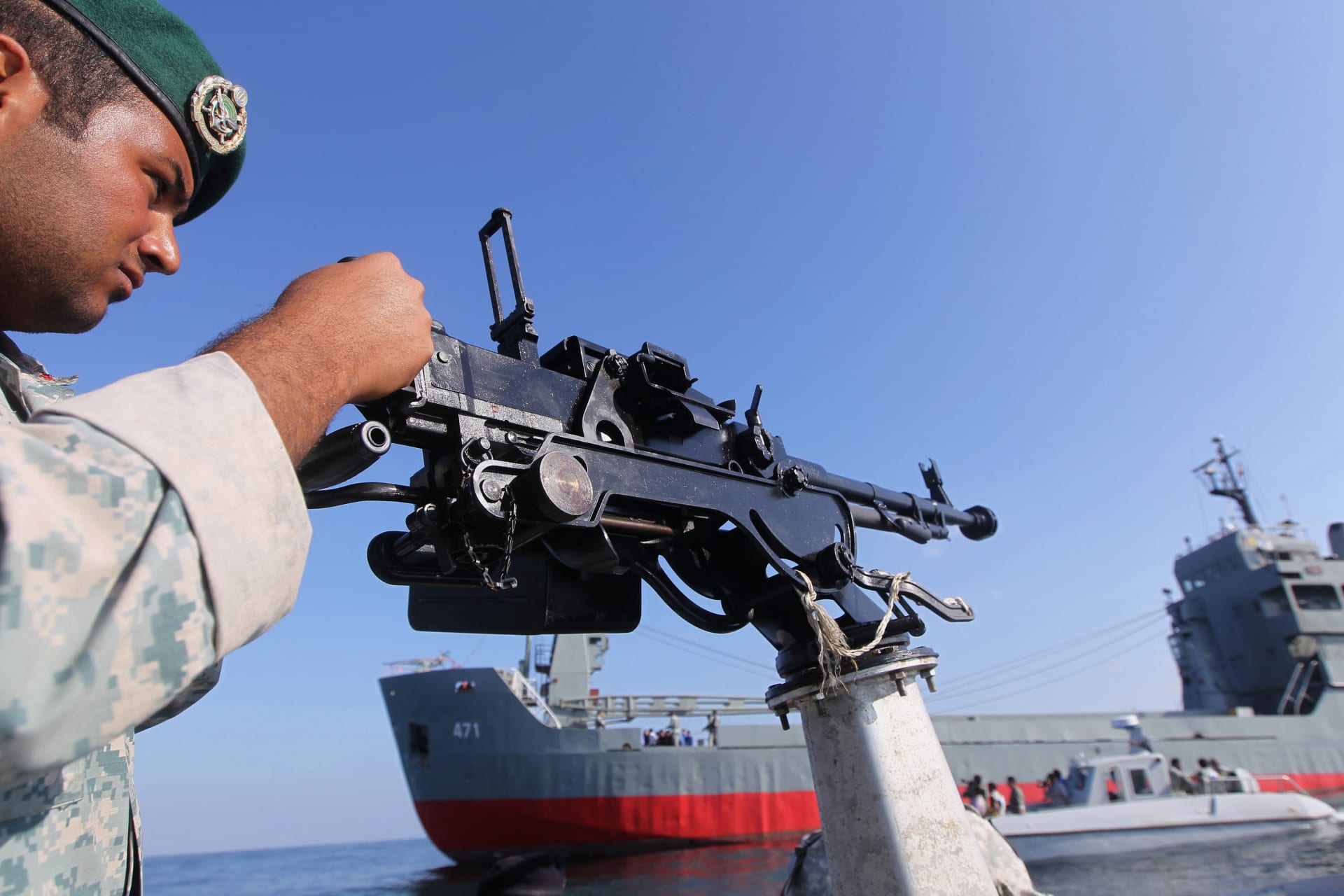
These political positions coincided with echoes indicating that Iran might, in the event of an intensified confrontation or any development on the military front, use an important card it has long used in every political crisis or potential war against it, and escalate the intensity of threats against it by closing the Strait of Hormuz to international navigation and global trade.
Once again, the economic and media importance of addressing the issue and the possibility of controlling the Strait of Hormuz and dealing with it in accordance with Iranian goals and objectives returns after the increase in geopolitical tensions in the Middle East region in light of the continued air and missile strikes between Israel and Iran, and due to the economic importance related to international trade and the need of countries around the world for the continued flow of energy to them, which is something that Iran is aware of, as it always looks at the field situation of the Strait in a way that is compatible with the process of creating a state of balance in the political and military pressures it is exposed to from any party, as is happening now in its relationship with the United States of America or its confrontation with Israel.
The geographical importance of the Strait of Hormuz can be understood from its strategic location at the eastern end of the Arabian Gulf and the northern end of the Gulf of Oman, forming two seaports connected to the Indian Ocean. It is bordered by Iran to the north and east, and to the south by the Sultanate of Oman, which oversees maritime traffic as it serves as a passage for ships entering its territorial waters. Its southeastern border extends from Ras Dibba on the coast of the United Arab Emirates to the Damajah area on the Iranian coast, the line separating the Strait of Hormuz from the Gulf of Oman.
The strait is a vital maritime passageway and one of the most important in the world, with approximately one-fifth of the world’s oil supply passing through it. It is a narrow shipping lane in the Arabian Gulf region and is known as the lifeline of the industrialized world. At 160 km in length, it connects oil-producing countries in the Middle East to global markets.
The maritime region linking the Arabian Gulf to the Gulf of Oman, where the Strait of Hormuz is located, has become of strategic importance following the discovery of oil in the Arabian Peninsula and Iran. It has become the main passageway for global oil and gas trade, the world’s main strait, and a chokepoint, ranking among the top eight most important points in the world and a major conduit for global oil supplies.
According to data from the US Energy Information Administration (EIA), approximately 21 million barrels of oil pass through the strait daily, representing about 20% of the world’s oil supply and about 30% of seaborne oil. Gulf countries, such as Saudi Arabia, the UAE, Kuwait, Iraq, and Iran, are among the most prominent countries that rely on the Strait to export their oil to global markets.
In addition to oil, a large portion of maritime trade in liquefied natural gas (LNG) passes through the Strait of Hormuz. LNG shipments transiting the Strait represent approximately 25%-30% of total global LNG shipments, which enhances its importance to the global economy and to countries that depend on imported gas. The Strait of Hormuz is of particular importance to Asian countries, as they are the most dependent on oil and gas that transits the Strait. China imports approximately 40% of its oil needs from the Gulf countries via the Strait of Hormuz. Japan also relies on the Strait to import approximately 80% of its oil. India also relies heavily on oil that transits the Strait to meet its energy needs.
Its commercial significance lies in the passage of 20-30 oil tankers daily, i.e., an average of one tanker every 6 minutes during peak hours. These tankers carry approximately 40% of the world’s seaborne oil
and 22% of the world’s basic commodities (grains, iron ore, and cement).
The Gulf states represent a significant proportion of global trade and the industrial boom in which energy supplies pass through the Strait of Hormuz. European oil demand accounts for 70% of the market’s demand, while US consumption accounts for 50%. Two-thirds of Saudi Arabia’s oil production passes through the strait.
The closure process that Iran might undertake would constitute an economic disaster for the world and a threat to global navigation and trade, and would harm international and regional economic interests, as it is the only sea passage between the Arabian Gulf and the world’s steamers, and one of (43) waterways used by global ships. The closure process could lead to an increase in oil prices by between $200-250 per barrel and increase the costs of international shipping of goods and basic needs that represent the continuity of life for the world.
Iran is the biggest loser from the closure of the Strait of Hormuz, as it depends on it to export crude oil to Asian countries, especially China, its largest importer. There are European countries (Italy, Spain, and Greece) that enjoy important trade agreements with the countries of the Arabian Gulf, and Iran will also be among the countries affected by the closure of the strait, as it imports Iranian oil on credit, after Russia stopped exporting it to it due to the freezing of a military cooperation agreement between the two countries (Greece and Russia). The total amount of Iranian oil imported by European countries is 450 thousand barrels of oil per day, or 18% of the total Iranian exports amounting to 2.7 million barrels of oil per day.
As for Iraq and the Gulf Cooperation Council (GCC) countries, oil exports will be affected by 98% in Iraq, 88% in Saudi Arabia, 99% in the UAE, 100% in Kuwait and Qatar, and 90% in Iran, with trade coming to a complete standstill and Gulf ports disrupted.
Iran’s constant political vision is that it always seeks to deal with its regional and international surroundings in a manner that serves its interests and gains. It is known that it awaits political and economic opportunities to implement its regional project. Therefore, it views the process of closing the Strait of Hormuz as an important card for it at the heart of the tensions and crises occurring in the game of political maneuvering for its interests and to balance the state of political and economic pressure it is receiving from the United States of America and the economic and social crises it is suffering and experiencing, the impact of which has increased in the ongoing confrontation with Israel and the continued air and missile strikes on its internal depth targeting nuclear, industrial and vital facilities, military and security command headquarters, the Revolutionary Guard, and important ministries and government institutions. Therefore, it may work on political maneuvering with military and economic threats in the direction of the process of closing the Strait of Hormuz, as it constitutes a strategic importance for all the requirements of the aspects of life and the economy for all countries of the world. The economic sanctions that constitute an influential aspect have increased the intensity of the field tensions that Iran suffers from, which makes the process of closure a situation it deems appropriate, as the region is of great sensitivity that can directly affect the security situation in the Arabian Gulf region and thus have repercussions. Economic stability of global markets and energy prices.
rawabetcenter.com
