Iraq after September 30th: From the handover of weapons to the engineering of the transition
Iraq after September 30th: From the handover of weapons to the engineering of the transition
8-24-2026
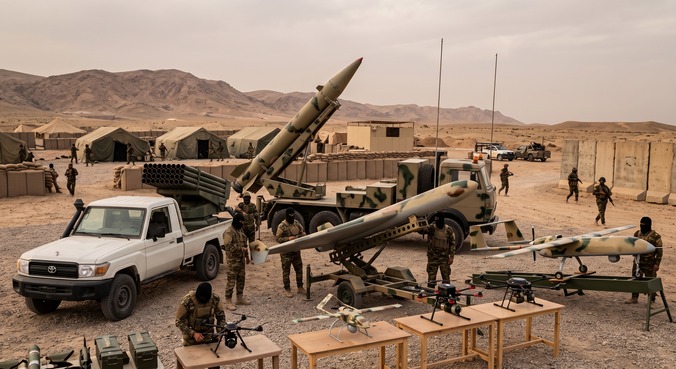 Haider al-Aboudi, the spokesperson for the Iraqi government, spoke about the event being followed by all internal and regional political circles regarding the American withdrawal and the handover of weapons by armed factions. He emphasized that September 30, 2026, represents the date for the completion of sovereignty and the withdrawal of the international coalition, and is not a final deadline for the factions to hand over their weapons. He stressed that the dialogue regarding restricting weapons to the state is progressing well in accordance with the constitution. It is clear that the government decision, which represented a turning point in setting September 30 as the date for considering any weapon outside the framework of government institutions as an uncontrolled weapon subject to legal procedures, has now shifted after al-Aboudi’s statement to talk about time flexibility and an implicit retreat. This indicates a clear transition from the principle of a “final date” to the logic of managing the transitional phase.
The extension process mentioned by the Iraqi government spokesperson falls within the fundamental points of defining the term “extension.” The executive branch views it not as a retreat from or postponement of the weapons control process, but rather as a controlled extension to prepare a practical mechanism for integrating armed factions into the Iraqi state’s security framework. However, the factions might perceive it as an open-ended political extension, interpreting it as a victory in defying the government’s will and turning September 30th into the beginning of new negotiations, not a final surrender.
If the extension is adopted, the best practical approach would be a gradual dismantling process, beginning with freezing the factions’ activities and the surrender of heavy weapons, followed by reorganizing the status of the fighters, and then establishing a precise mechanism to address the organizational and political structure of the factions’ internal framework.
The Iraqi state’s ability to manage the deadline set for the end of September, and its monopoly on force, will be tested to prevent a security vacuum and political divisions within party circles and political blocs.
The extension is seen as an attempt to avert internal conflict, given the refusal of some factions to heed the Iraqi government’s directives to surrender their weapons and heavy equipment. Efforts are underway to de-escalate tensions. All these efforts are not intended to abandon the government’s decision, but rather to protect internal security from any attempts at confrontation.
The bodies and committees established by the coordination framework aim to transform the weapons surrender deadline into a major settlement between the state and armed factions, considering it a practical turning point in restoring relations between all parties involved in implementing the decision.
Some factions view the extension as a political and security gain, not merely an additional grace period. They see it as a new space for negotiation, an opportunity to set conditions for implementation, and a chance to reorganize themselves and determine what weapons can be surrendered and what can be retained. The longer the extension, the more leverage the factions have to dictate terms for the surrender process. Conversely, keeping the extension within an agreed-upon timeframe allows the government to exert greater influence over the transition process it is managing. The
government’s executive branch is striving to contain and manage the factions, extending the political process to prevent a security breakdown. The aim is for the weapons handover to be gradual and agreed upon within the framework of the announced extension, rather than setting deadlines, thus preventing Iraq from becoming another arena for regional conflict.
Here, September 30, 2026, becomes not a date for any confrontation, but rather a date to begin a phase of negotiation and to adopt realistic foundations and principles in dealing honestly with the decision of the Iraqi government, organizing the process of handing over weapons, supporting the procedures from all political and partisan circles, and proving the state’s ability to manage the transition and build a clear legal and executive framework and a security alternative for the elements of the armed factions.
rawabetcenter.com
