From the controversy surrounding “Article 140” to the suspension of the demonstration… what is happening in Khanaqin?
From the controversy surrounding “Article 140” to the suspension of the demonstration… what is happening in Khanaqin?
2026-08-31
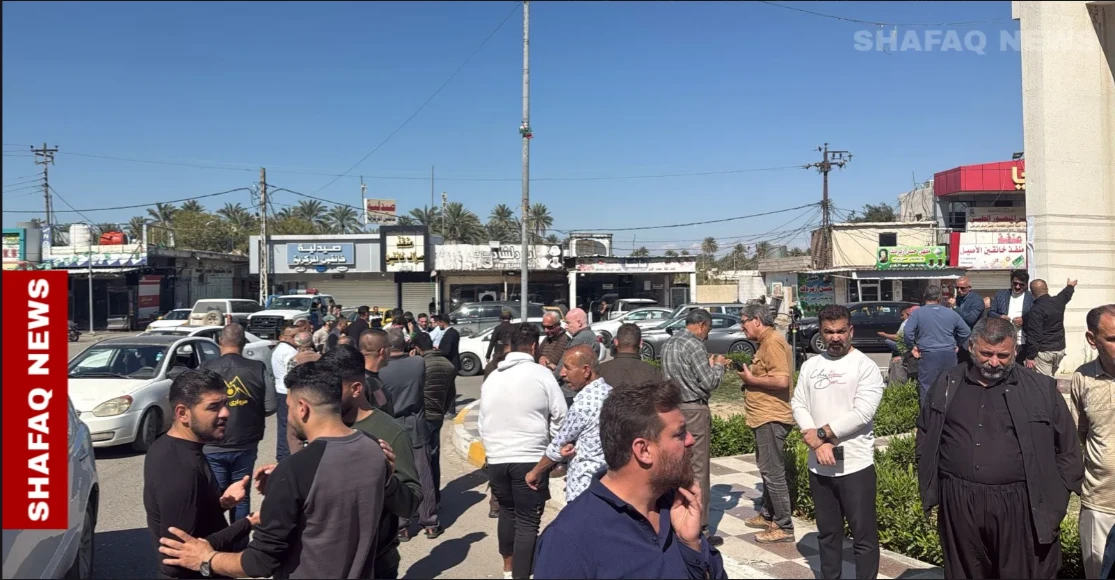 Shafaq News – Khanaqin
The story began with television statements, but it quickly went beyond the screen of one of the Kurdish channels to open one of the most sensitive files of Khanaqin. The talk by leaders of the Patriotic Union of Kurdistan and the Kurdistan Democratic Party about the demographic changes that the region witnessed after the events of October 16, 2017, and the call to implement Article 140 of the Iraqi Constitution, provoked mixed reactions, before the circle of controversy widened and turned into political and popular movements that ended with the call for a mass gathering in Khanaqin, then its suspension and taking the file to Baghdad.
Follow-ups conducted by Shafaq News Agency reveal that the past few days have witnessed a noticeable escalation in the discourse related to the identity of Khanaqin and the disputed areas, coinciding with reactions issued by figures and circles from areas adjacent to the district, some of whom objected to the Kurdish leaders’ talk about “Arabization” and Article 140, while some voices went so far as to question the origin of the constitutional article and call for legal measures to be taken against the parties that adopt this discourse.
Diyala Council hosts the mayor of Khanaqin
In a new development, the Presidency of the Diyala Provincial Council decided to host the mayor of Khanaqin district in an official “urgent” session scheduled to be held on Wednesday morning (September 2, 2026), to discuss the current situation and recent developments in the district.
According to an official document issued today, Monday (August 31, 2026), the decision to host was based on a memorandum submitted by the head of the Border Crossings, Development and Administrative Units Affairs Committee in the council, and supported by the signatures of 6 members of the provincial council.
From television to the street
According to information obtained by Shafaq News, the latest escalation began after a television interview with leaders of the Kurdistan Democratic Party and the Patriotic Union of Kurdistan, which addressed the situation in Khanaqin and the changes that the region witnessed after the events of October 16, 2017.
The statements focused on what Kurdish leaders described as “Arabization and demographic change” operations, along with stressing the need to implement Article 140 of the Iraqi Constitution to address the situation in the disputed areas.
But the proposal did not go without reactions, as social media and local circles in some areas neighboring Khanaqin witnessed a wave of objection to those statements, with some parties even demanding the prosecution of the figures who spoke about the issue, as well as rejecting calls to implement Article 140 and questioning the basis on which it is based. With the widening of the debate, the issue moved from statements and media responses to political and civil meetings inside Khanaqin.
The parties’ meeting… a demonstration with two flags and two slogans
On Sunday, the Kurdish political parties held a meeting at the cultural center in Khanaqin to discuss developments and how to deal with the reactions that followed the raising of the Article 140 issue.
A source who attended the meeting told Shafaq News Agency that the attendees agreed to organize a peaceful public demonstration in Khanaqin to demand the implementation of Article 140 and the rest of the relevant constitutional provisions, stressing that the movement does not target any of the city’s components.
According to the source, the understandings included that the flag of the Republic of Iraq would be raised during the demonstration alongside the flag of the Kurdistan Region, and that the slogans would be written in both Arabic and Kurdish, while opening the way for the participation of the various original components in Khanaqin.
The source says that the discussion within the meeting focused particularly on separating the objection to “organized demographic change” from the presence of Arab citizens in Khanaqin, as the attendees stressed that “Arabs are real partners in Khanaqin and the rest of the regions,” and that the objection is directed at any organized measures aimed at changing the demographic composition, and not at a specific component.
According to the same source, the participants also agreed to fully comply with security directives and instructions, and to refrain from any slogans or practices that could fuel national or sectarian tensions.
“Article 140 is not against a component”
The source reported that the meeting also discussed the nature of the discourse that should accompany the gathering, as it was emphasized that the demand to implement Article 140 should be presented as a demand to apply an article contained in the Iraqi constitution, and not as a tool to confront a social or national component.
According to the source, the participants pointed out that the scope of Article 140 is not limited to Khanaqin alone, and that addressing the demographic and administrative changes targeted by the constitutional text is also related to other areas in Iraq.
Therefore, it was agreed that the Arabic and Kurdish slogans should focus on coexistence, social peace, and the unity of the people of Khanaqin, and that the demands should be directed to the constitutional institutions of the state.
parallel civil movement
In the wake of the political meeting, civil activists held another meeting in the hall of the Martyr Salam Cultural Center in Khanaqin, to discuss preparations for the gathering and the mechanisms for organizing it.
According to an informed source who spoke to Shafaq News Agency, the civil meeting also stressed the peaceful nature of the movement and rejected any discourse that carries a national, sectarian or ethnic dimension, and stressed the need for demands to be limited to the application of the Iraqi constitution and addressing contentious issues through legal frameworks.
It was also proposed during the meeting that the public and civil society organizations should have a key role in leading the gathering, and that the event should not turn into a platform for partisan conflict or settling political scores.
Thus, preparations were underway for a demonstration that, according to its organizers, carried a message based on a precise equation: demanding Article 140 and rejecting demographic change on the one hand, and emphasizing the partnership between the Kurds, the Arabs, and the rest of the components of Khanaqin on the other hand.
“Al-Dalawi” enters the fray of the crisis
Simultaneously, former Popular Mobilization Forces leader Abu Muntadhar al-Dalawi entered the fray, days after announcing his joining one of the Kurdish parties in Khanaqin.
In a video posted on social media, Al-Dalawi called for dealing with Khanaqin as an “Iraqi Kurdish” city, away from sectarian and ethnic biases, demanding the implementation of Article 140 while guaranteeing the rights of all components and non-interference by parties in the affairs of other regions. This came in the context of his response to statements attributed to a leader in the Badr Organizations in the Jalawla district, who had criticized the Kurdish proposals related to Article 140, thus turning the debate from a discussion about a constitutional article into a broader confrontation in political and media discourse regarding the identity of the region and its future.
As the controversy intensified, according to a security source in Diyala, a security force arrested “ Al-Dalawi ” in Khanaqin district on charges of “inciting sectarian, racist and nationalist sentiments.”
In contrast, local officials within the Patriotic Union in the province told Shafaq News Agency that they were unaware of the arrest warrant.
The demonstration was halted before it began.
These developments have pushed the demonstration file to a new turning point; as the supervisory body of the mass gathering in Khanaqin decided to temporarily suspend the event, after preparations had been heading towards organizing it in the city center.
The decision came amid concerns among organizers about the security situation surrounding the event and the possibility of participants or organizers being exposed to risks. It was decided to send a delegation representing Khanaqin to Baghdad to present the region’s demands to the President of the Republic and relevant officials and higher authorities.
Following this, the Kurdish parties in Khanaqin announced their full support for suspending the gathering, and said in a joint statement seen by Shafaq News Agency that the decision was taken “exclusively out of concern for the security and safety of citizens and to protect their lives and property.”
She added that the security and protection measures allocated to the gathering, according to the information available to her, “were not up to the required standard and were not sufficient to ensure the safety of the participants.”
Kurdish parties demand the release of detainees and the cancellation of arrest warrants.
In an indication that the crisis has moved to another level, the Kurdish parties, in their statement, demanded “the immediate release of all detainees and the cancellation of arrest warrants issued against political figures, activists and youth,” considering that their participation came within the framework of “peaceful and civil expression of constitutional and legitimate demands.”
She also considered that the popular movement in Khanaqin, Jalawla, Saadiya, Mandali, Qara Tapa and Jabara conveyed a message regarding what she described as “the violation of Article 140 of the Constitution and the disregard for the constitutional rights of the people of these areas.”
The parties called on the “four presidencies in Iraq and the Kurdish representatives in Baghdad” to take action and respond to the demands of the people of the region and work to address them in accordance with constitutional and legal frameworks.
At the same time, the public called for a temporary suspension of events, in order to maintain security and stability, until the Khanaqin delegation completes its meetings and movements in the capital, Baghdad.
From the street to Baghdad
Thus, a case that began with statements on a television program turned within a few days into a political and social controversy, then into party and civil meetings and a call for a mass demonstration, before news of arrest warrants and security concerns came into play and pushed towards suspending the movement and transferring the file to Baghdad.
But the core of the crisis remains much older than recent developments; Article 140, which was approved by the Iraqi constitution to address the situation of the disputed areas, remains one of the most complex and sensitive issues in the relationship between Baghdad and Erbil and in a number of areas of Diyala Governorate.
In Khanaqin specifically, recent developments have brought back to the forefront questions of identity, demographic and administrative changes, the boundaries of the judiciary, and the rights of its constituent groups—issues that have been the subject of political and social dispute for years.
Between those who see Article 140 as a constitutional path to address the effects of previous policies and changes, and parties that object to the Kurdish proposal and the way the reality in the region is described, the local forces in Khanaqin are trying to keep the dispute within the peaceful and legal path.
As for the next test, it is no longer in the streets of Khanaqin after the suspension of the gathering, but has moved to Baghdad, where the city’s delegation is expected to carry its demands to the higher institutions, in an attempt to contain a crisis that has brought the issue of the disputed areas back to the forefront.
Article 140 stipulates the removal of demographic policies implemented by Saddam Hussein’s regime in the disputed areas in favor of the Arabs at the expense of the Kurds, and then a census of the population before the final step, which is to hold a referendum in which the population will determine whether they wish to join the Kurdistan Region or remain under the administration of Baghdad.
The implementation phases of the article were scheduled to be completed by the end of 2007, but security and political problems prevented this.
In 2019, the Supreme Federal Court ruled that Article (140) of the Constitution of the Republic of Iraq would remain in effect, and confirmed that this would continue until its requirements were implemented and the objective of its legislation was achieved.
shafaq.com
