Exclusive: Washington outlines its partnership with Baghdad: An Iraq free of terrorism and weapons in the hands of the state.
Exclusive: Washington outlines its partnership with Baghdad: An Iraq free of terrorism and weapons in the hands of the state.
2026-08-30
 Shafaq News – Washington
Mustafa Hashim
A spokesman for the US State Department confirmed on Sunday that Iraq has begun a new path under the leadership of Prime Minister Ali al-Zaidi, and in full partnership with the United States.
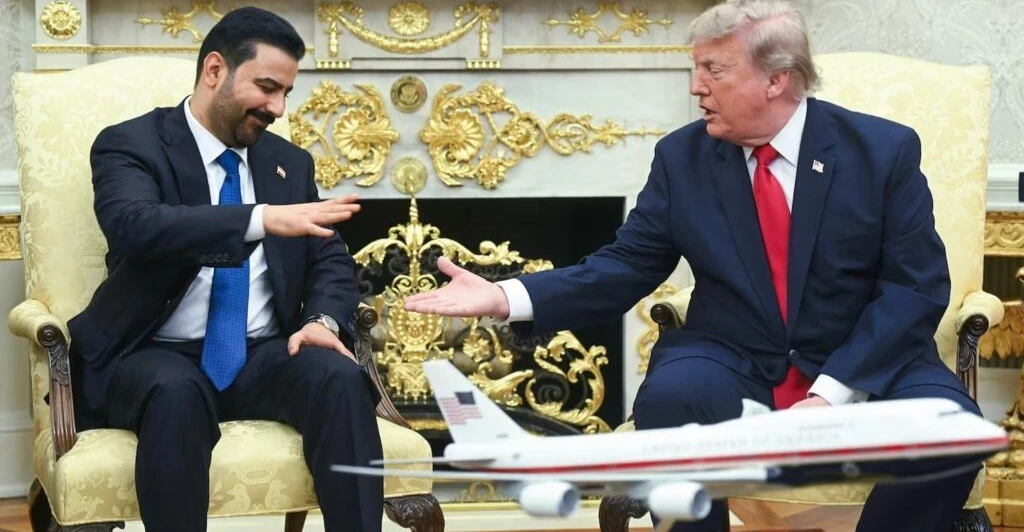
The ministry spokesman told Shafaq News Agency that “Washington, as emphasized by US President Donald Trump during his meeting with Prime Minister al-Zaidi on the historic visit on July 14, strongly supports the Iraqi government’s vision for a better and brighter future for all Iraqis, free from terrorism.”
He added that “the United States clearly supports efforts to prevent the execution or launching of any attacks from within or through Iraqi territory,” noting that “proceeding with the process of controlling and restricting weapons to the state is a fundamental pillar for enhancing security and stability in Iraq.”
The spokesman explained that “restricting weapons to the state would reduce the threats that armed factions and groups may pose, and create a stable security environment that would allow for building a strong and mutually beneficial partnership between Baghdad and Washington.”
The issue of armed factions is one of the most sensitive issues facing the Iraqi government, with the approach of September 30, which the main political forces have set as the deadline for restricting weapons to official institutions.
The State Administration Coalition, which includes the most prominent Shiite, Sunni and Kurdish political forces, stressed during its meeting on August 5 the need to restrict weapons to the state, and considered the parties that carry out activities that threaten the security of the country outside the framework of official institutions as “outlaws and must be fought.”
The coalition warned that any armed activity outside the framework of the state after September 30 would be dealt with according to the anti-terrorism law.
Following this, Iraqi security and military forces raised their readiness level throughout the country, and the leave of a number of commanders and officers was cancelled, while security agencies began implementing field movements and exercises in anticipation of any emergency or friction that might develop into an armed confrontation.
Last week, Baghdad witnessed hours of security tension coinciding with threats by armed factions to retaliate against Saudi Arabia after strikes targeted Popular Mobilization Forces sites, before it ended with contacts and a dawn meeting between Prime Minister Ali Faleh al-Zubaidi and Badr Organization leader Hadi al-Amiri, which led to a mutual calming and opened the way for diplomatic action to address the crisis.
Al-Amiri later called on the “Islamic Resistance” factions to postpone any military response against Saudi Arabia and to prioritize “Iraq’s higher interest,” but he returned and stressed during a meeting with a number of Popular Mobilization Forces leaders the importance of maintaining a high level of readiness.
The plan to restrict weapons does not have a unified stance from the armed factions.
While some forces expressed a willingness to reorganize their military and security relationship with the state, other factions, including Kataib Hezbollah, Harakat al-Nujaba and Kataib Sayyid al-Shuhada, announced their refusal to relinquish their military capabilities, and linked any discussion about their weapons to the end of the presence of foreign forces and ensuring the protection of Iraq from external attacks.
September 30th also coincides with the deadlines related to ending the international coalition’s military presence in Iraq, which some factions use as a basis for linking the future of their weapons to the withdrawal of foreign forces.
shafaq.com
