(Exclusive) The US State Department confirms its support for al-Zaidi’s efforts to extend sovereignty, control weapons, and prevent attacks.
(Exclusive) The US State Department confirms its support for al-Zaidi’s efforts to extend sovereignty, control weapons, and prevent attacks.
2026-09-16
 Shafaq News – Washington
Mustafa Hashim
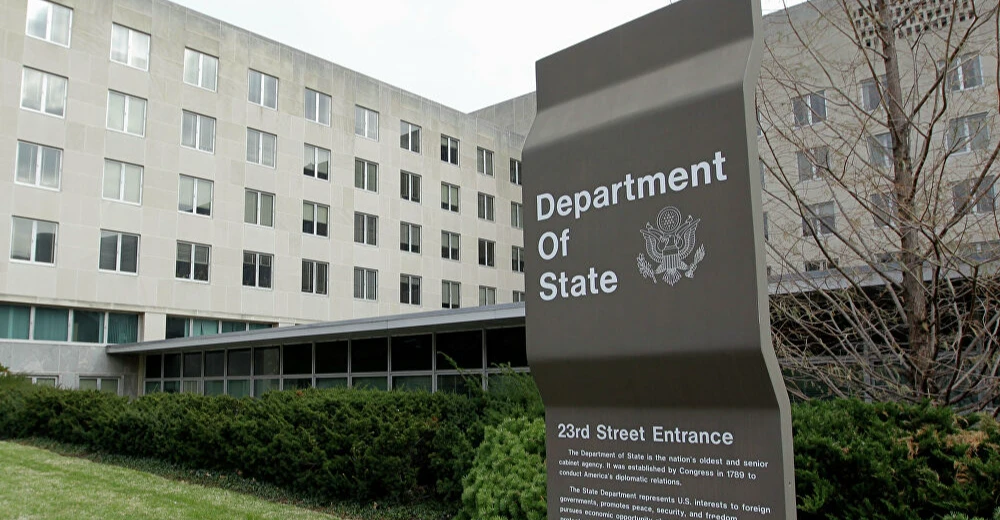
The US State Department affirmed on Wednesday that the United States supports Iraqi Prime Minister Ali al-Zaidi’s efforts to extend state sovereignty and prevent attacks from being carried out inside or launched from Iraq, stressing Washington’s commitment to building a strong and mutually beneficial partnership with Baghdad.
This came in response to a question from Shafaq News Agency from a spokesperson for the US State Department, regarding reports that Washington had warned Baghdad of possible measures if efforts to curb armed factions failed, and whether President Donald Trump’s administration was threatening financial and economic sanctions or restrictions on dollar transactions and transfers.
The spokesman said, “President Trump made it clear, when he hosted Prime Minister al-Zaidi for a historic visit on July 14, that the United States strongly supports his vision to ensure a brighter future for all Iraqis, free from terrorism.”
He added that this support includes “working to prevent any attacks from being launched from or within Iraqi territory, and building a strong and mutually beneficial US-Iraqi partnership.”
He continued: “We support Prime Minister al-Zaidi’s efforts to impose and exercise Iraqi sovereignty, at a time when Iraq is moving towards a new path under his leadership, and in full partnership with the United States.”
The spokesman did not address in his response the validity of reports concerning possible financial and economic sanctions or restrictions on dollar transactions, merely reiterating US support for measures to enforce sovereignty and prevent attacks.
The Foreign Ministry statement reinforces a position announced by a White House official to Shafaq News Agency, in which he affirmed the United States’ full support for disarming the factions and transferring their weapons to the federal government, stressing the importance of Baghdad’s transparency with Washington and regional partners regarding the mechanism for implementing the process.
Al-Zaydi also stressed that Iraq would not allow its territory to be turned into a base for launching threats against neighboring countries, and that placing weapons under state control does not represent a confrontation with any party, but rather a condition for building a unified state in which there are no multiple centers of power and decision-making.
The American position comes a day after MP Abu Turab al-Tamimi revealed to Shafaq News Agency al-Zaidi’s role in sparing Iraq from “almost certain” military strikes by Saudi Arabia and the United States that were scheduled for last Monday, attributing this to what he described as the “wisdom and policy” of the Commander-in-Chief of the Armed Forces, without revealing further details.
The escalation stems from the targeting of facilities belonging to the Saudi “East-West” oil pipeline by drones that Riyadh and the Iraqi government said were launched from Iraqi territory, causing injuries and material damage and leading to the temporary shutdown of the pipeline.
Saudi Arabia announced that it would refrain from responding at the present time in response to Al-Zaidi’s request, while reserving the right to take the necessary measures to protect its sovereignty, security and vital facilities.
Following the attack, Al-Zaydi relieved the operations and police commanders in Maysan of their posts, transferred the directors of the security services in the province to the command and referred them for investigation, in addition to forming an urgent investigative council and tightening inspection and control procedures at the border crossings.
The Iraqi government also agreed to conduct a joint investigation with Iran regarding drone launch platforms found near the border strip, while a leader in the State of Law coalition stated that Tehran had handed over radar recordings to Baghdad that could help determine the drones’ trajectory, pending the completion of the government investigation committee’s report.
The “Islamic Resistance in Iraq” denied responsibility for the attack, announcing its readiness to cooperate with the investigation.
The escalation brought the issue of restricting weapons to the state back to the forefront before September 30, coinciding with the end of the mission of the international coalition forces in Iraq.
After the date was initially presented as a deadline for handing over weapons outside official institutions, government officials later clarified that it relates to the end of the coalition’s mission and does not represent a date for the complete disarmament of factions.
In contrast, influential armed factions refuse to consider September 30 as a binding date for them, and link the discussion of the future of their weapons to the complete and permanent withdrawal of foreign forces, while the government affirms that the end of the coalition’s mission will remove the justifications for keeping weapons and accelerate their organization under the umbrella of the state.
shafaq.com
