Exclusive from Washington: Tehran is behind the rebellion of Iraqi factions, and Trump’s anger awaits the leaders.
Exclusive from Washington: Tehran is behind the rebellion of Iraqi factions, and Trump’s anger awaits the leaders.
2026-08-23
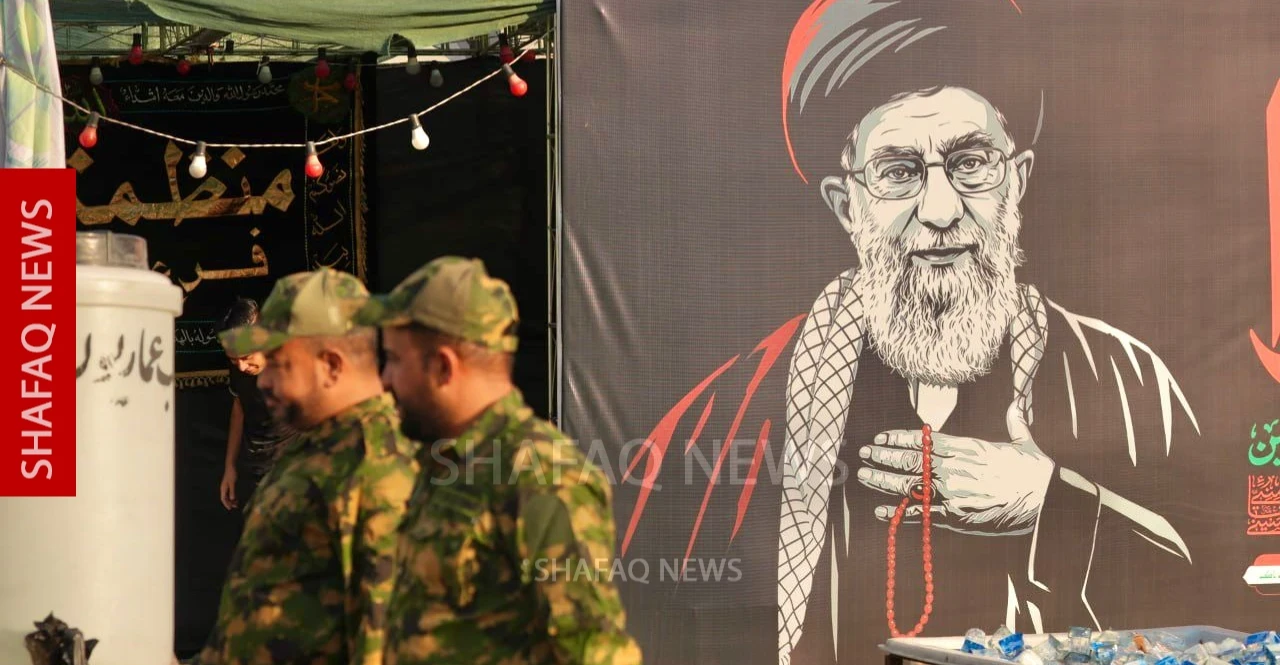 Shafaq News – Washington/ Mustafa Hashim
Paul Davis, an academic and researcher at the Institute for Global Policy in Washington, ruled out on Sunday the commitment of the armed factions under the umbrella of the Popular Mobilization Forces to end their weapons within the deadline set by Iraqi Prime Minister Ali al-Zubaidi, which ends at the end of next September .
Davis explained, in exclusive statements to Shafaq News Agency, that Baghdad is facing a complex situation in its attempt to balance moving forward with its national policies on the one hand, and confronting the opposition of its traditional ally Tehran on the other.
He pointed out that the use of armed factions represents the cornerstone of Iranian foreign policy based on exporting the revolution, and despite the significant decline in the capabilities of some of its allies such as Hamas, Tehran still maintains strong influence and control over the Popular Mobilization Forces and has directed that weapons not be surrendered .
According to the American expert, the United States will continue to pressure Iran to advance the disarmament process by escalating economic sanctions on the leaders of the factions.
In contrast, the factions are putting forward counter-demands that make the disarmament process extremely difficult, including the demand to include the Kurdish Peshmerga forces in the disarmament decisions, in addition to the current Iraqi army’s inability to enforce disarmament by force, according to Davis.
Davis concluded by noting that this crisis is a long-term issue and will not be resolved in the near future, pointing out that the only chance for the success of these efforts is linked to what the current conflict between Washington and Tehran might produce and its impact on the future of the Iranian regime .
The Iraqi government reiterated last Friday that the deadline for restricting weapons to the state is set for September 30, noting that the government had informed the armed factions of the date and the mechanisms for dealing with the issue.
The September 30th date also coincides with the deadlines related to ending the military presence of the international coalition in Iraq, which some factions use as a basis for linking the future of their weapons to the withdrawal of foreign forces.
The issue of armed factions is one of the most sensitive issues facing the Iraqi government, with the approach of September 30, which the main political forces have set as the deadline for restricting weapons to official institutions .
The plan to restrict weapons does not have a unified position among the armed factions. While some forces have expressed a willingness to reorganize their military and security relationship with the state, other factions, including Kataib Hezbollah, Harakat al-Nujaba and Kataib Sayyid al-Shuhada, have announced their refusal to give up their military capabilities, and have linked any discussion about their weapons to the end of the presence of foreign forces and ensuring the protection of Iraq from external attacks .
shafaq.com
