Exclusive: Al-Khazali discusses the prime ministership file with Tehran in an unannounced visit
Exclusive: Al-Khazali discusses the prime ministership file with Tehran in an unannounced visit
2026-02-10 03:14
 Shafaq News – Baghdad
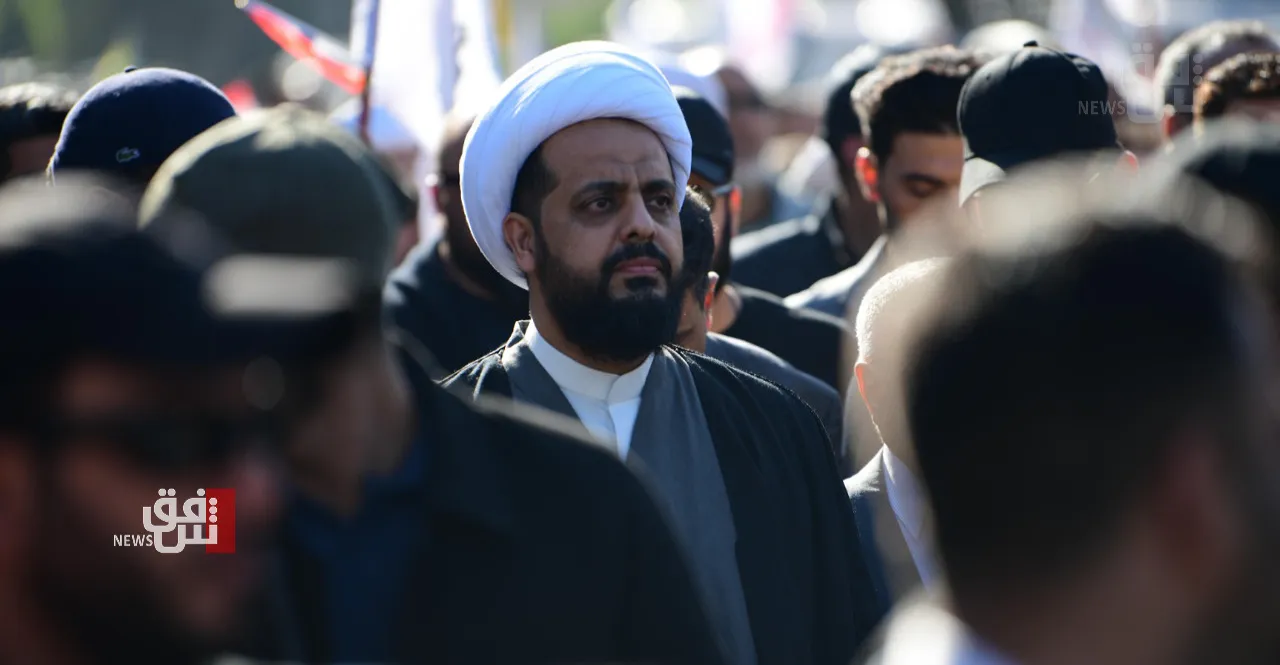
Two political sources revealed on Tuesday that Qais al-Khazali, the leader of Asaib Ahl al-Haq, made an unannounced visit to the Iranian capital, Tehran, during the past 24 hours, as part of moves related to the Iraqi prime ministership file.
The two sources told Shafaq News Agency that Khazali tried during the visit to meet with Iranian Supreme Leader Ali Khamenei, but was unsuccessful, while he met with a number of officials and those close to the Supreme Leader.
They added that al-Khazali raised during his meetings the need to maintain the cohesion of the coordination framework, and questioned the talk of an “Iranian blessing” for the nomination of Nouri al-Maliki for the next government, but the Iranian position remained supportive of his continued nomination despite the American objection, according to the two sources.
Hours after his return from Tehran, Khazali held a meeting this morning with the leader of the Wisdom Movement, Ammar al-Hakim, to discuss the results of his meetings there, at a time when Khazali and al-Hakim are considered among the most prominent voices within the Shiite bloc who are hesitant about Maliki’s return to the premiership so far, according to the two sources.
No immediate official comment was issued by the parties within the coordination framework regarding the details of this meeting.
Al-Khazali’s visit comes as the constitutional process for naming a new prime minister has stalled due to the delay in electing the president in parliament, as a result of a dispute between the two main Kurdish parties – the Democratic Party and the Patriotic Union – over a single candidate for the position, which effectively freezes the next step of assigning the candidate of the largest parliamentary bloc to form the government.
According to the constitution, after his election, the president of the republic shall task the candidate of the largest parliamentary bloc with forming the cabinet within a period not exceeding 15 days, while the tasked candidate shall be given 30 days to present his ministerial formation and program to the House of Representatives to gain confidence.
In parallel, American pressure on Iraqi forces supporting al-Maliki’s nomination has escalated in recent days, as US President Donald Trump warned on January 27, 2026, that the United States “will not help Iraq” if al-Maliki is chosen as prime minister, and considered that the country had previously slipped into “poverty and chaos” during his term.
The US State Department, in response to an inquiry from Shafaq News Agency on February 5, 2026, conveyed a strongly worded position, indicating Washington’s readiness to use “the full range of tools” to ensure the implementation of Trump’s policy, while hinting at halting US support if Maliki returns to the premiership.
Following that, Maliki said he would welcome any decision to withdraw his nomination if it was issued by a majority within the coordinating body that nominated him for the position.
Iran has been an influential player in the formation of Iraqi governments since 2003 through its close relations with Shiite forces, parties, and factions that today form the core of the “coordination framework.” Tehran often seeks to maintain the cohesion of this camp and favor options that ensure the survival of a friendly government in Baghdad, amidst an American-Iranian rivalry that is directly reflected in the names of prime ministerial candidates and alliances within parliament.
shafaq.com
