Confidential report: Iran has significantly increased uranium enrichment
Confidential report: Iran has significantly increased uranium enrichment
2025-05-31 06:51
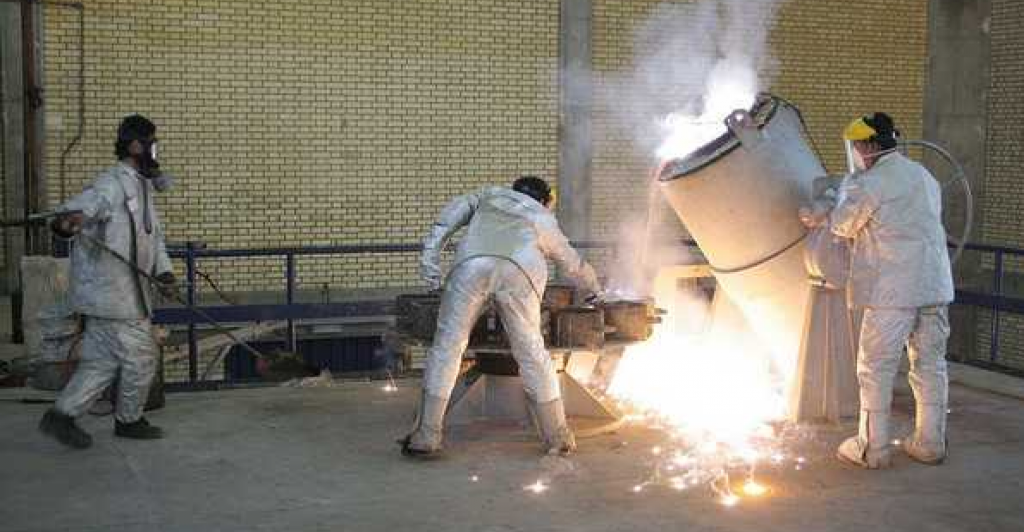 Shafaq News/ A confidential report by the International Atomic Energy Agency (IAEA) revealed on Saturday that Iran has significantly accelerated its production of enriched uranium, describing this increase as “a major concern.”
The agency reported that Iran has accelerated its production of 60 percent enriched uranium, close to the 90 percent level required for military use, in an unpublished report seen by Western news agencies.
The agency noted that the stockpile reached 408.6 kg on May 17, an increase of 133.8 kg over the past three months, compared to an increase of 92 kg over the previous period. It considered that “this significant increase in production by Iran, the only non-nuclear state producing such nuclear material, and its stockpiling of highly enriched uranium… raises major concerns.”
The agency also denounced Iran’s “less than satisfactory” cooperation on its nuclear program, in the unpublished report prepared by the UN body at the request of Western countries based on a resolution issued in November.
The report stated that “Iran, on several occasions, either failed to answer or failed to provide technically credible answers to the Agency’s questions and cleaned up” sites, which “hindered the Agency’s investigative activities” at three sites suspected of having hosted undeclared nuclear activity: Lavisan Shian, Varamin, and Turquzabad.
The agency also said, in the confidential report it sent to member states, that Iran had previously carried out secret nuclear activities with materials it had not declared to the UN agency at three sites that had long been under investigation.
The “comprehensive” report, requested by the IAEA Board of Governors in November, stated that “these three sites, and potentially other relevant sites, were part of an undeclared, systematic nuclear program carried out by Iran until the early 2000s, and that some of the activities used undeclared nuclear material.”
The agency has sent its quarterly reports on Iran to member states ahead of the next meeting of its Board of Governors, which begins on June 9.
This comes as diplomats say Western powers are preparing to pressure the International Atomic Energy Agency’s Board of Governors at its upcoming quarterly meeting to declare Iran non-compliant with its nuclear non-proliferation obligations for the first time in nearly 20 years, a move likely to anger Tehran.
This move is likely to complicate talks between the United States and Iran aimed at imposing new restrictions on Tehran’s rapidly developing nuclear program.
Washington and its European allies, Britain, France, and Germany, known as the “Euro-Troika,” have proposed previous resolutions adopted by the 35-nation International Atomic Energy Agency’s Board of Governors calling on Iran to take swift steps, such as providing an explanation for uranium traces found by the agency at undeclared sites.
The last time the Board of Governors took the step of formally declaring Iran in violation of its obligations under the Comprehensive Safeguards Agreement was in September 2005, amid a diplomatic standoff resulting from the discovery of secret nuclear activities in Iran.
The United States and the International Atomic Energy Agency currently believe that Iran had a secret, coordinated nuclear weapons program that it halted in 2003. Iran denies having any weapons program at all and asserts that it uses nuclear technology for peaceful purposes only.
A separate resolution issued by the IAEA Board of Governors in February 2006 referred the issue of Iran’s non-compliance to the UN Security Council, which subsequently imposed sanctions on Tehran.
Iran is upset by the decisions and other criticisms directed at it by the IAEA Board of Governors, which has prompted it to take steps such as accelerating and expanding its uranium enrichment program or barring senior IAEA inspectors from entering the country.
Iran already enriches uranium to a purity of 60 percent, and this percentage could easily be increased to nearly 90 percent, the level needed to make weapons.
The IAEA standard shows that Iran has enough material at this level to make six nuclear weapons if it continues to enrich.
shafaq.com
