Article 140 and the security file: 12 demands from the Khanaqin delegation to the President of the Republic (Exclusive)
Article 140 and the security file: 12 demands from the Khanaqin delegation to the President of the Republic (Exclusive)
2026-09-01
 Shafaq News – Baghdad
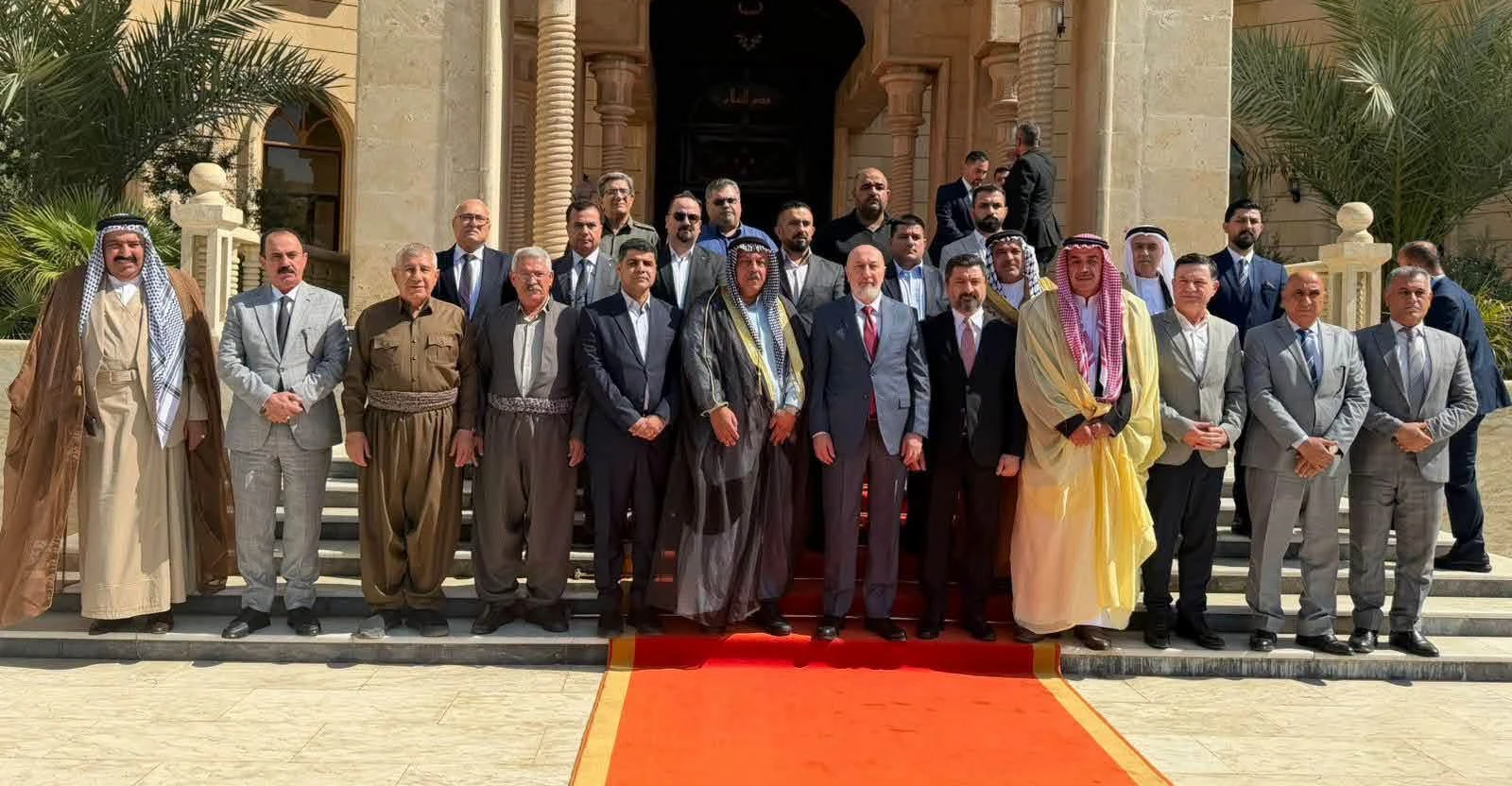
Informed sources reported on Tuesday that a delegation comprising political forces from Kurdish parties, political figures, and activists from Khanaqin presented a paper containing 12 demands regarding the security, administrative, and service conditions in Khanaqin and the areas covered by Article 140 of the Constitution during their meeting with the President of the Republic at the Peace Palace in Baghdad.
The sources told Shafaq News Agency that among the most prominent demands included in the document was limiting the security file to official agencies and preventing the interference of any other parties, as well as forming a joint civilian administration for the military file in Khanaqin and the areas covered by Article 140.
She added that the delegation also demanded the suspension of the decision to convert the districts of Qara Tapa and Jalawla into two districts, in addition to activating the Article 140 office and changing its director, stopping the transfer of the national card, the ration card and the residence card, and freezing the decisions to own agricultural lands.
According to the sources, the document included demands to achieve balance in the distribution of administrative positions in Diyala Governorate, to allocate an exceptional budget for the reconstruction of Khanaqin city, as well as to recognize the University of Kalar.
According to the same sources, the demands also included stopping the bulldozing of orchards and encroachment on state property, guaranteeing the freedom of political and organizational work for Kurdish parties, and reopening their headquarters in Jalawla, Saadiya and other areas.
The Presidency of the Diyala Provincial Council decided to host the mayor of Khanaqin district in an official “urgent” session scheduled to be held on Wednesday morning (September 2, 2026), to discuss the current situation and recent developments in the district.
According to an official document issued on Monday (August 31, 2026), the decision to host was based on a memorandum submitted by the head of the Border Crossings, Development and Administrative Units Affairs Committee in the council, and supported by the signatures of 6 members of the provincial council.
According to information obtained by Shafaq News, the latest escalation began after a television interview with leaders of the Kurdistan Democratic Party and the Patriotic Union of Kurdistan, which addressed the situation in Khanaqin and the changes that the region witnessed after the events of October 16, 2017.
Last Sunday, the Kurdish political parties held a meeting at the cultural center in Khanaqin to discuss developments and how to deal with the reactions that followed the raising of the Article 140 issue .
A source who attended the meeting told Shafaq News Agency that the attendees agreed to organize a peaceful public demonstration in Khanaqin to demand the implementation of Article 140 and the rest of the relevant constitutional provisions, stressing that the movement does not target any of the city’s components .
Article 140 stipulates the removal of demographic policies implemented by Saddam Hussein’s regime in the disputed areas in favor of the Arabs at the expense of the Kurds, and then a census of the population before the final step, which is to hold a referendum in which the population will determine whether they wish to join the Kurdistan Region or remain under the administration of Baghdad.
The implementation phases of the article were scheduled to be completed by the end of 2007, but security and political problems prevented this .
In 2019, the Supreme Federal Court ruled that Article (140) of the Constitution of the Republic of Iraq would remain in effect, and confirmed that this would continue until its requirements were implemented and the objective of its legislation was achieved.
shafaq.com
