American expert: Washington’s withdrawal from Iraq does not mean a decline in its influence in the region.
American expert: Washington’s withdrawal from Iraq does not mean a decline in its influence in the region.
2026-09-02
 Shafaq News – Washington/ Mustafa Hashim
Boston University political science assistant professor Marsin Alshamary confirmed on Wednesday that the United States is serious about ending its military mission in Iraq and moving towards a bilateral security partnership, noting at the same time that the withdrawal of troops does not represent a decline in the overall American military influence and presence in the Middle East.
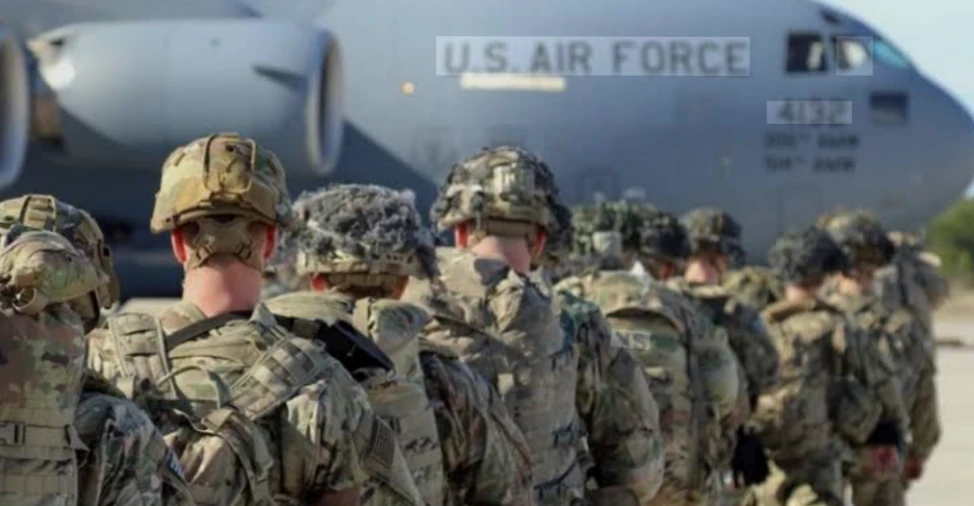
Al-Shammari told Shafaq News Agency that the timetable for ending the mission of the international coalition against ISIS was the result of previous agreements, noting that the commitment to these timetables reflects Washington’s seriousness in closing this file, driven by its confidence in its strength and regional reach, as the withdrawal of about 2,500 soldiers from Iraq will not end the US military presence in the region.
Regarding the rules of engagement and direct response within Iraqi territory against armed factions, Al-Shammari indicated that “American red lines have not changed,” noting that Washington has repeatedly demonstrated its readiness to launch direct military strikes inside Iraq whenever its forces or interests are targeted by those factions.
Regarding Washington’s handling of the influence of the factions and their integration into official institutions such as the Popular Mobilization Forces, Al-Shammari criticized the current American approach, considering that Washington is content with exerting pressure on the Iraqi government to dissolve or integrate these groups without addressing the roots and structural reasons for their emergence.
The professor of political science attributed the continued existence of unofficial armed formations to accumulated factors, foremost among them the weakness of the security establishment, repeated violations of sovereignty, and regional threats. These are the gaps that previously led to a large-scale security breach when ISIS emerged and armed forces arose as a reaction to that danger.
Al-Shammari explained that “since 2003, neither the United States nor its allies in the region have shown any real desire to build and establish strong Iraqi military forces, which will always keep the door open for the emergence and growth of unofficial armed forces.”
A spokesperson for the US State Department had previously confirmed to Shafaq News Agency that Iraq had begun a new path under the leadership of Prime Minister Ali al-Zaidi, in full cooperation with the United States.
In September 2024, Iraq and the United States agreed to end the military mission of the US-led international coalition against ISIS in Iraq, as part of a phased plan to move the security relationship between the two countries from the framework of the coalition to a bilateral partnership.
The first phase of the mission ended in September 2025, while forces remained in the Kurdistan Region to support operations against the organization in Syria, with the final phase to be completed by the end of September 2026.
The international coalition was formed in 2014 to assist Iraqi forces in confronting ISIS, which at the time controlled large areas of Iraq and Syria. The mission of the coalition forces later shifted primarily to training, advising, and intelligence support, while Baghdad asserts that its forces are now capable of assuming responsibility for security and pursuing the organization’s cells.
shafaq.com
