Al-Maliki is testing Al-Sadr by announcing his separation from the coordination framework in the local elections
Al-Maliki is testing Al-Sadr by announcing his separation from the coordination framework in the local elections
7-9-2023
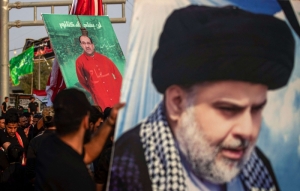 Baghdad – The ambiguity of the position of the leader of the Sadrist movement, Muqtada al-Sadr, regarding his participation in the Iraqi local elections raises the concerns of the forces of the coordination framework, led by the leader of the State of Law coalition, Nuri al-Maliki, who decided to run this contest with a single list away from political alliances, while the victory coalition led by Haider al-Abadi revealed the possibility of reviving His alliance with the Wisdom Movement led by Ammar al-Hakim.
Although this decision reflects the depth of the disagreement between the main forces in the Coordination Framework Coalition, which, although they share the same approach and project in support of Iran, their orientation towards the decision to secede remains temporary, pending the decision of the leader of the Sadrist movement, Muqtada al-Sadr, to push his movement to participate in the elections.
This alliance, in which the forces compete with each other to enhance their influence and impose themselves as the difficult figure in the existing equation in Iraq, was brought together by enmity towards al-Sadr and kept it united despite the existing rivalries between its parties.
Observers believe that al-Maliki’s decision may be a test for al-Sadr to know his position on the participation of his movement in the elections, especially after the exit of his supporters in demonstrations condemning the burning of the Qur’an in Sweden, which revealed to al-Sadr that his movement is still an important player.
Al-Sadr’s expected decision is of great importance to the forces of the coordination framework, which is not unlikely to overcome all their differences to block the way for his return to the political scene after they forced him to withdraw and withdraw into himself after his retirement from political work.
The High Elections Commission had opened the door for registration for alliances and political parties wishing to participate in the 2023 provincial elections, from the first of this July until the end of the same month.
Iraqi political forces ruled out, at an earlier time, the possibility that the Coordinating Framework Coalition, which is ruling in the country, would run in the local elections with one bloc, likely to be divided into three blocs (right, left, and moderation), despite the attempts made by leaders in the framework forces to reunite it, but it It did not produce results to bring the main forces closer together.
The Iraqi “Shafaq News” agency quoted Firas Al-Maslamawi, a deputy in the State of Law Coalition, as saying, “The coalition decided to enter and participate in the provincial elections with a single electoral list, separate from the political and electoral alliances and coalitions that take place before the start of the elections.”
He pointed out the possibility that “movement will take place after holding the provincial council elections, announcing the results, and finding out the number of seats obtained by the political blocs and parties, to conduct dialogues to form alliances to elect governors and form local governments.”
Local elections are held every ten years and include 15 provinces, with the exception of the autonomous Kurdistan region. The previous councils were dissolved in the fall of 2019 against the backdrop of unprecedented popular protests in the country, and one of the protesters’ demands was to dissolve these councils, which they accused of corruption.
Provincial councils play a major role in forming local governments, and they are responsible for selecting the governor and his deputies and preparing the governorate budget in light of the financial allocations allocated by the central government to them, and these councils have the right to dismiss governors and heads of departments, and these councils are chosen based on the size of the demographics of each governorate .
For his part, Aqil al-Rudaini, spokesman for the Victory Coalition, said in a press statement that “there is a political movement, and the map of alliances is not clear.”
Al-Rudaini added, “The Victory Coalition conducted a field survey of the coalition’s audience, and it was found that the masses are calling on the coalition to participate in the elections individually and with a list independent of the alliances, and that the issue is under study and has not yet been resolved.”
He pointed out that “the Victory Coalition had previously allied with the Wisdom Movement under the name of the Civil Forces Alliance.”
Al-Rudaini explained, “This alliance is still ongoing and has not ended yet, and there are attempts to restore this alliance and revive it to participate in the provincial elections.”
He explained, “The Victory Coalition is currently focusing on holding elections on the scheduled date of December 18, given that the meeting of the Board of Commissioners in the High Electoral Commission ends on January 7.”
Al-Rudaini indicated that “there is work currently underway with the political forces and the representative of the United Nations to go towards extending the members of the Council of Commissioners by voting on them in the House of Representatives or going to change them before the election date.”
The House of Representatives had voted earlier on amendments to the electoral law, and these amendments included a return to the (St. Lego) system and making the governorate one electoral district.
The coordination framework was formed after the legislative elections and included many Shiite forces and militias loyal to Iran. .
The Coordination Framework Coalition included the “State of Law” coalition led by Nuri al-Maliki, the “Fatah” coalition led by Hadi al-Amiri, the “State Forces” coalition led by Ammar al-Hakim, the “Ataa” blocs, the “Huquq” movement, the “Virtue Party” and others.
rawabetcenter.com
