Joint oil pipeline: Saudi Arabia agrees “in principle,” Iraq “pays”
Joint oil pipeline: Saudi Arabia agrees “in principle,” Iraq “pays”
2026-11-01
 Shafaq News – Baghdad
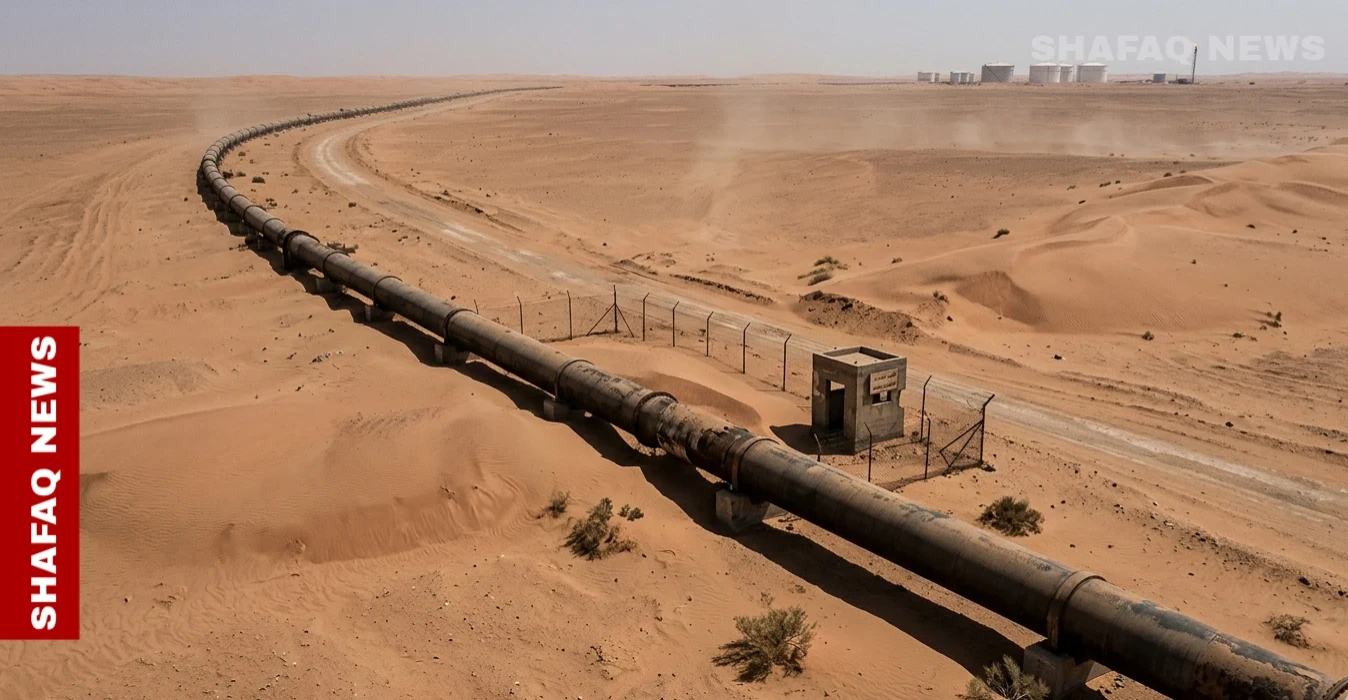
Informed sources revealed on Saturday that Saudi Arabia has given “initial approval” to restore the joint oil export pipeline with Iraq, but this requires the construction of a new pipeline and Iraq will bear part of the cost after the previous pipeline went out of service.
Sources told Shafaq News Agency that “Iraq has raised the issue of the joint oil pipeline with Saudi Arabia more than once, and that the latter has given initial approval to update the agreement concluded between the two countries after the formation of joint technical committees.”
She added that “the joint pipeline between Iraq and Saudi Arabia, which stopped working after the events of 1991, was brought up again by the Strait of Hormuz crisis. According to information, the Kingdom of Saudi Arabia demanded the establishment of a new pipeline, considering that the old one was out of service and its rehabilitation would be equivalent to the cost of establishing an alternative pipeline.”
He adds that “the trends, if Baghdad and Riyadh agree, stipulate the establishment of a new line, because Saudi Arabia has employed the pipeline (the part within its territory) to transport Saudi oil internally, i.e., from eastern Saudi Arabia to the Red Sea, and therefore it is looking for a political agreement with Iraq in exchange for reactivating the joint line on the condition that Iraq rebuilds the pipeline (the part within its borders).”
He explained that “Saudi Arabia is holding fast to its decision issued in 2001 to confiscate the Iraqi pipeline, and here the issues of ownership and legal rights of disposal of the pipeline must be settled after the Saudi confiscation decision, in addition to some other requirements related to the pipeline.”
The joint oil pipeline is one of the most prominent projects between Iraq and Saudi Arabia. It extends for about 1,568 kilometers, starting from the Zubair field in Basra and reaching Yanbu in Saudi Arabia .
Work on it began in the 1980s, but work stopped during the invasion of Kuwait by the former regime in Iraq. In 2001, Saudi Arabia used some parts of the pipeline on its territory to connect the “East-West” pipeline, which today is a strategic alternative to the Strait of Hormuz for oil transport.
At the end of last August, Iraqi Prime Minister Ali al-Zaidi confirmed that the crude oil export pipeline project is of great strategic importance to the country, as it provides diversification of export routes and enhances export capacity, stressing the need to expedite its implementation .
shafaq.com
