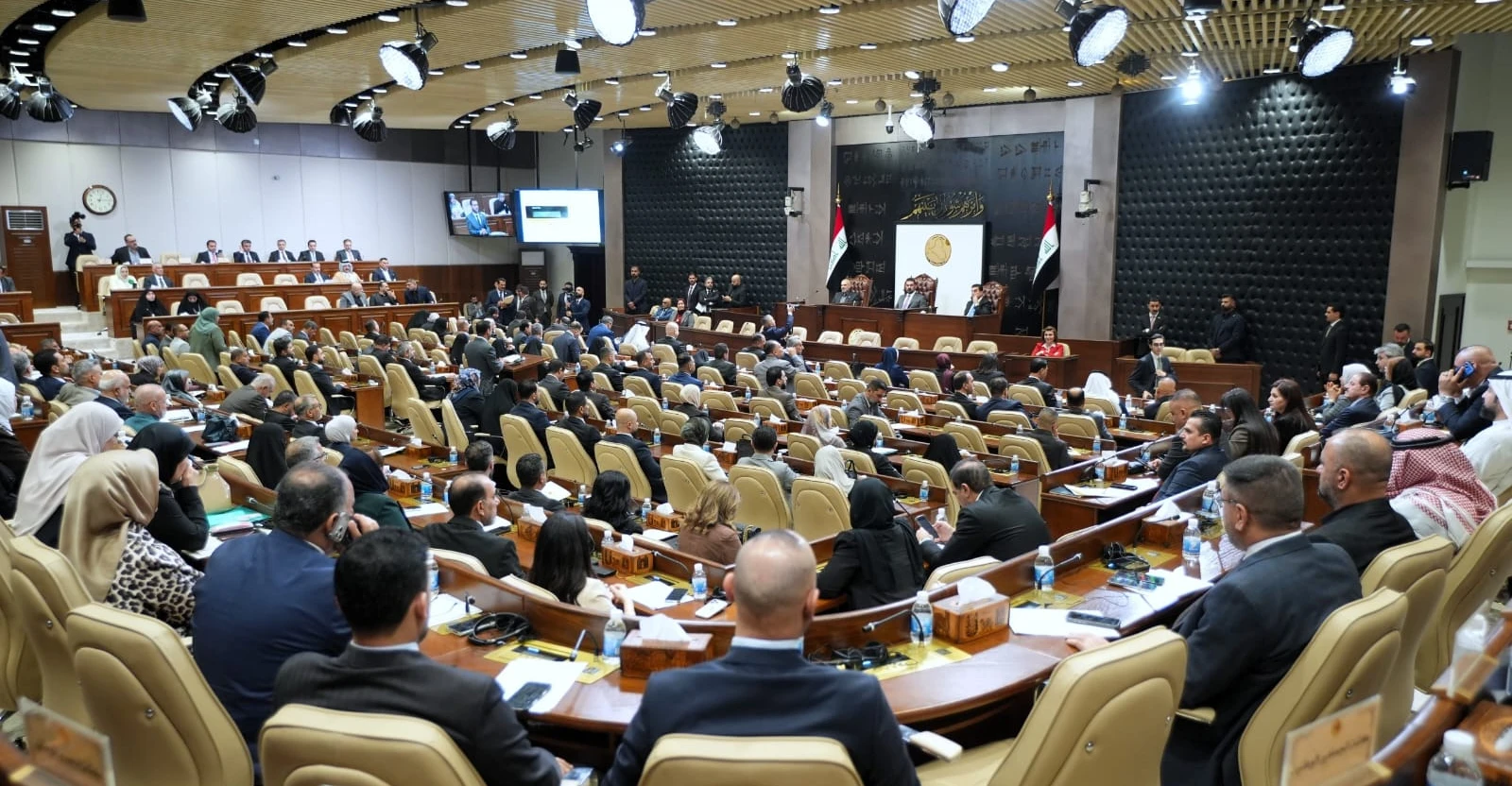
The “committee deadlock” is disrupting coordination framework meetings and delaying decisions in parliament.
The “committee deadlock” is disrupting coordination framework meetings and delaying decisions in parliament.
2026-10-28
 Shafaq News – Baghdad
A member of the State of Law parliamentary bloc revealed on Wednesday that political understandings are continuing regarding the distribution of parliamentary committees and the appointment of their heads, suggesting that the matter will be resolved in the coming days. Meanwhile, a source within the coordination framework reported the postponement of the periodic meeting of the framework’s leaders due to the failure to reach a final agreement regarding the leadership of some committees.
MP Arif Abdul Jalil Al-Hamami told Shafaq News Agency that “the issue of distributing parliamentary committees has not been resolved yet, as the formation of some committees has been completed, while the heads of other committees have not been named, in addition to committees whose formation has not yet been completed.”
He explained that “among the committees whose formations have not been finalized are the Culture, Tourism and Antiquities Committees, as these specializations were previously included within one parliamentary committee, but separating the Ministry of Culture from the Ministry of Tourism and Antiquities requires the formation of two separate committees,” noting that the appointment of their members has not yet been finalized.
He added that “the distribution of committees, especially the important ones, is subject to understandings between the political parties according to their parliamentary weight and influence,” expressing his belief that the coming days will witness the resolution of the distribution of committees and their presidencies.
Regarding the most prominent draft laws expected to be passed during the next stage, Al-Hamami indicated that there are no major draft laws currently being put forward for voting, such as the oil and gas law, explaining that “such legislations require prior understandings and agreements between the political blocs before proceeding with their approval.”
Regarding the Popular Mobilization Forces bill, Al-Hamami confirmed that “there is no official information yet about the bill reaching the House of Representatives,” suggesting that it will be passed if it arrives and is put to a vote, due to what he described as a “near agreement” among the political forces regarding it.
In the same context, a source in the coordination framework told Shafaq News Agency that the periodic meeting of the framework’s leaders, which was scheduled to be held on Monday, was postponed due to the failure to complete understandings regarding the appointment of the heads of some parliamentary committees.
He explained that “the committee tasked by the Coordination Framework with coordinating with the relevant authorities in the House of Representatives has not yet finalized the issue of appointing deputy heads of parliamentary committees,” indicating that the meeting was postponed to allow more time to reach a final agreement on the distribution of positions.
The Coordination Framework had decided, during its periodic meeting on October 19, to form a technical committee to study the mechanism for distributing parliamentary committees according to political entitlements and parliamentary representation, in preparation for submitting its results to the political forces and deciding on the committee presidencies.
The proposed understandings are based on classifying the committees into three categories according to their importance. The first includes sovereign and economic committees, foremost among them security, defense, finance, investment, energy and resources, while the other two categories include service and cultural committees and others.
On February 17, 2026, the House of Representatives voted to amend its internal regulations and establish 22 permanent parliamentary committees, including a unified committee for culture, media, tourism and antiquities, before voting on March 11 on the members of 11 committees. However, the completion of the distribution of leadership positions remained linked to understandings between the political blocs.
Regarding the Popular Mobilization Forces Law, the Cabinet voted on the draft law on September 29 and decided to refer it to Parliament. However, the “Sadiqun” parliamentary bloc demanded yesterday, Tuesday, that the Speaker of Parliament clarify the fate of the draft law and the reasons for not presenting it yet, and state whether it has officially reached the Council.
shafaq.com
