The factional crisis and the strikes on Iraq are overshadowing “Operation Dawn”.
The factional crisis and the strikes on Iraq are overshadowing “Operation Dawn”.
2026-08-02
 Shafaq News – Baghdad
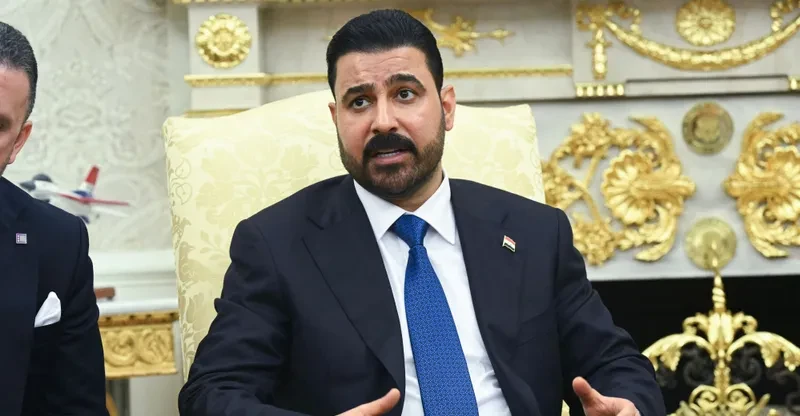
Iraqi Prime Minister Ali al-Zubaidi is facing one of the most complex phases, given the overlap of security and political issues, most notably the state’s monopoly on weapons and the fight against corruption, which are the two issues that the government has placed among the priorities of its program. Recent developments have cast a shadow on the “Dawn Campaign” to pursue those accused of corruption, amid an Iraqi movement to control the factions on one hand, and to confront the attacks on the country on the other.
Political analyst Iyad al-Fatlawi told Shafaq News Agency that the Prime Minister’s visit to Washington represented a remarkable political success, adding that al-Zaidi received a reception and support that no previous Iraqi Prime Minister had received.
He added that the government had been facing major challenges from the beginning, most notably the issue of weapons outside the framework of the state, noting that addressing this issue requires regional and international support, especially from the United States and Arab countries, in addition to strengthening border security and preventing any violations that affect Iraqi sovereignty.
Al-Fatlawi explained that the recent strikes targeting Popular Mobilization Forces headquarters by Saudi Arabia and America have complicated the situation and given some armed factions a justification to declare their adherence to their weapons, warning that continued escalation could negatively affect internal stability.
Saudi Arabia accused Iraqi factions loyal to Iran of being behind drone attacks targeting energy facilities inside the kingdom, before the United States and Saudi Arabia carried out airstrikes on Wednesday, July 29, 2026, targeting sites belonging to factions linked to Iran inside Iraq .
The US Central Command (CENTCOM) and the Saudi Ministry of Defense announced that the strikes targeted logistical sites and weapons depots belonging to groups they said were linked to the Iranian Revolutionary Guard, accusing those groups of carrying out attacks against US forces and Saudi energy infrastructure.
For his part, citizen Ali Hussein told Shafaq News Agency that the armed factions now have justifications for rejecting the project to restrict weapons to the state, after a number of them announced their adherence to their weapons, while other parties vowed to respond to the recent strikes, which has placed the government in front of additional challenges.
He added that Iraq needs to strengthen its diplomatic relations with neighboring countries and the world in a way that contributes to containing crises, calling for opening a new page in foreign relations and enacting legislation that limits hate speech towards countries that do not attack Iraq.
For his part, Iraqi affairs observer Ali Jassim told Shafaq News Agency that public and media attention in recent days has focused on the repercussions of the recent strikes, which, in his opinion, has been reflected in the attention given to anti-corruption files.
He added that some of those accused in corruption cases felt relieved as a result of the decline in interest in these files, calling on the Prime Minister to continue the anti-corruption campaigns and not back down from them, and to review all files related to public money from 2003 until today, stressing that the government needs to continue on this path.
In the same context, Sheikh Mohammed Al-Khafaji, a student at the religious seminary in Najaf, told Shafaq News Agency that the anti-corruption campaign must continue with all those accused being referred to the judiciary to receive their punishment according to the law, noting that previous government measures were encouraging.
He added that recent security developments have made the issue of restricting weapons more complicated, questioning the reasons for the failure of projects he described as important for Iraq in their final stages, and expressing his hope that the government would continue its anti-corruption campaign and not back down on this issue, given its importance in establishing the rule of law and enhancing citizens’ trust in the state.
On June 28, the Iraqi government launched an anti-corruption campaign, which it described as the “first phase” of recovering public funds, and which included the arrest of political officials, members of parliament, and businessmen as part of Operation Dawn Charge .
Government sources later revealed the completion of legal procedures for the second phase, which targets corruption cases in the Ministries of Health, Oil and Electricity, and includes tracking funds and properties inside and outside Iraq, and preparing new lists of names of accused persons, in conjunction with the continuation of investigations and taking strict measures to ensure their confidentiality .
The government also indicated that it is studying the “Where did you get this from?” bill, while the Integrity Commission confirmed that arrest warrants are being carried out under judicial supervision, as part of efforts to prosecute those involved and recover public funds.
shafaq.com
