Trump’s Call to End Quarterly Reports: Implications for the Global Economy
Trump’s Call to End Quarterly Reports: Implications for the Global Economy
9-21-2025
 Researcher Shaza Khalil*
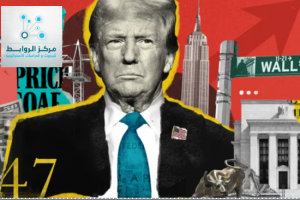
In a recent post on Truth Social, US President Donald Trump proposed ending the decades-old requirement for public companies in the United States to file their financial reports every three months. Instead, he called for semi-annual reporting, arguing that this step would save money and reduce “short-term thinking” among executives. Trump asserted that US companies are too focused on meeting immediate investor demands, while countries like China take a long-term approach to business.
Why does it matter in the United States?
Quarterly reporting has long been considered a cornerstone of American financial transparency, providing investors, policymakers, and the public with regular information about corporate performance. But critics of the system, including Warren Buffett and Jamie Dimon, argue that it pressures executives to chase short-term profits at the expense of innovation and future growth. Trump’s proposal reflects these concerns, suggesting that reducing the frequency of reporting could allow companies to focus on long-term strategies rather than pleasing the markets every quarter.
Potential global impact
If the United States moves toward semi-annual reporting, it would be in line with practices already in place in the European Union and the United Kingdom. This could set a precedent for other economies to follow, easing the reporting burden on companies globally. However, this change would also reduce the frequency of data available to markets. Investors, regulators, and policymakers rely on this quarterly data to track trends, from air travel demand to banking stability and technology innovation. Lack of updates could also increase market uncertainty, leading to greater volatility in global stock prices when late results are released.
Balancing flexibility and transparency
For global markets, the controversy highlights the delicate balance between reducing bureaucracy and achieving efficiency on the one hand, and ensuring transparency on the other. Emerging economies that rely on US financial indicators may face delays in obtaining important data, complicating trade and investment decisions. Furthermore, in rapidly changing industries such as artificial intelligence or energy, waiting six months for official updates may slow innovation and responsiveness to markets.
In conclusion
, Trump’s call to abolish quarterly reporting is not without foundation; it reflects a genuine concern about the culture of “quarterly capitalism.” But the broader implications suggest a trade-off between long-term corporate resilience and the transparency that underpins the stability of the global economy. If implemented, this policy could reshape corporate governance in the United States and impact financial reporting standards across the global economy.
rawabetcenter.com
