The Prime Minister’s advisor reveals the truth about the public debt situation and the plan to diversify revenues.
The Prime Minister’s advisor reveals the truth about the public debt situation and the plan to diversify revenues.
2026/07/03
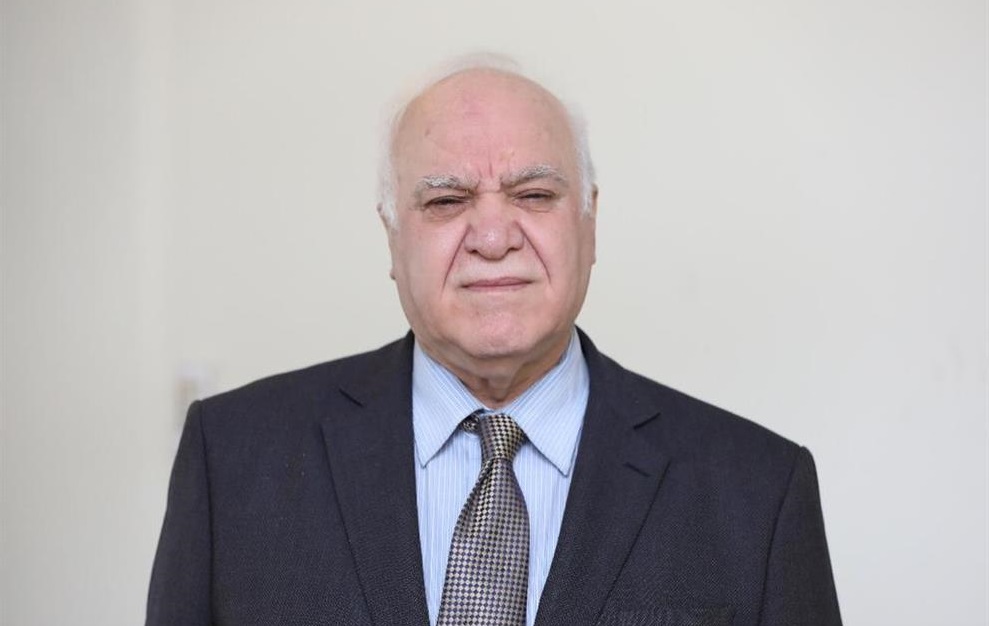 The Prime Minister’s financial advisor, Mazhar Muhammad Salih, confirmed on Friday that Iraq’s total public debt remains within manageable limits according to international standards, noting that government plans aim to raise non-oil revenues to 45% within ten years.
Saleh said in a press statement that “talking about the economy entering a danger zone when public debt exceeds 40% of public revenues should be read within a set of financial indicators, and not in isolation from them, because international institutions do not rely on this indicator alone, but also look at the ratio of debt to GDP, the cost of debt service, and the state’s ability to generate and sustain revenues.”
He added that “the largest part of Iraq’s debt is internal debt, while external debt has declined in recent years, which makes the real challenge related to the nature of public revenues, which depend heavily on oil, which makes public finances vulnerable to fluctuations in oil prices in global markets,” explaining that “any decrease in oil prices raises the debt-to-revenue ratio and increases pressure on the general budget, even if public debt does not witness a significant increase.”
He pointed out that “the external debt that must be paid until 2028 does not exceed about 9 billion dollars, and with the addition of the internal debt, the total debt represents about 36% of the gross domestic product, which is a percentage that is still within the limits that can be managed according to global standards that speak of a percentage that exceeds 60%.”
He added that “this percentage may decrease even further if the settlement of outstanding amounts under the 2004 Paris Club agreement, which has not yet been finalized, is completed. These obligations are owed to about eight countries, including Gulf countries, and it is expected that settling them will lead to the cancellation of at least 80% of those amounts, and perhaps more, according to the terms of the standard agreement.”
Saleh explained that “the internal debt has exceeded 100 trillion dinars, which is equivalent to about 80 billion dollars when calculated in foreign currency, and it represents the largest part of the total public debt,” noting that “the impact of the internal debt on Iraq’s financial independence remains limited as long as the external debt is within manageable levels, especially since the external obligations due until 2028 remain relatively limited.”
He stressed that “the continuation of the fiscal deficit and reliance on borrowing, especially in the event of a decline in oil prices, may reduce the flexibility of fiscal policy and increase the need for reform and financing measures,” noting that “the International Monetary Fund confirms that the main challenge facing Iraq is not the size of the debt, but rather containing the fiscal deficit and diversifying the sources of public revenues.”
He stated that “the current fiscal policy is working to gradually increase the contribution of non-oil revenues to reach about 45% of total public revenues during the next ten years, compared to the current situation in which non-oil revenues do not exceed 10% of total revenues.”
He explained that “this is achieved through improving tax and customs collection, automating financial systems, expanding the tax base, stimulating the private sector and investment, and reforming the banking sector,” indicating that “these measures need time to be fully reflected in the financial reality, but they represent the most sustainable path to address the liquidity problem, reduce dependence on oil, and enhance the ability of the Iraqi economy to face external shocks and achieve long-term financial stability.”
He noted that “there are arrears that represent entitlements to the private sector, including contractors, farmers, and others, that are equivalent to the internal debt, and they are called (arrears), and if it becomes impossible to pay them, they will enter the category of internal debts so that they can be settled properly.”
alforatnews.iq
