The Prime Minister’s advisor announces a ban on cash payments at government institutions starting next month.
The Prime Minister’s advisor announces a ban on cash payments at government institutions starting next month.
2025-06-09
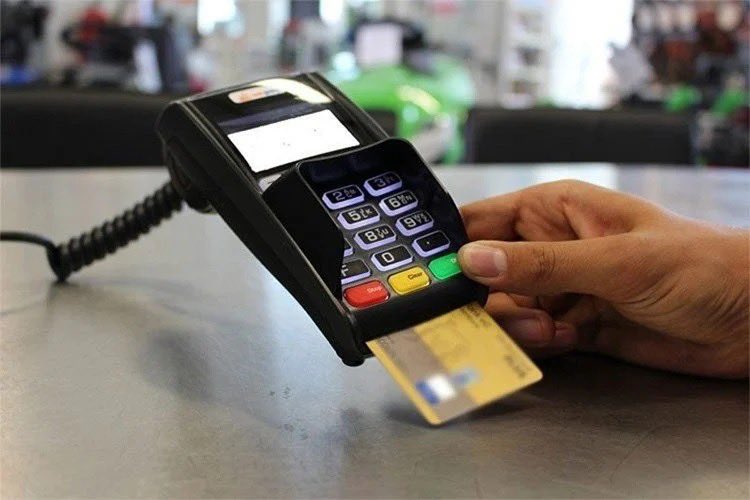 Prime Minister’s advisor, Saleh Salman, announced on Monday that cash payments will be banned in government institutions starting next month, while indicating that reforms will be implemented in the private banking sector. Salman told the official agency that “the Iraqi government has appointed Ernst & Young to restructure 6-7 state-owned banks in the country, including the Industrial Bank, the Real Estate Bank, Rafidain Bank, and Rashid Bank.” He indicated that “the Trade Bank of Iraq (TBI) has signed a separate contract with K2i and KPMG to help restructure its internal and external operations to meet international standards.”
He added that “Rafidain Bank, the largest government institution in Iraq, will be transformed into Rafidain First Bank, with the government’s stake reduced to less than 24 percent. The remaining shares will be offered to private banks and international investors.” He expected that “the restructuring plan will be completed and approved by the Iraqi government by the end of the year.”
He added that “the private banking sector will undergo reforms following the signing of a contract between the Central Bank of Iraq and Oliver Wyman.” He explained that “the results of this project, which will extend over two to three years, will yield recommendations for private banks to either exit the sector, comply with international standards, or merge with other institutions.”
Regarding electronic payments, Salman emphasized that “Iraq has made significant progress in adopting electronic payment systems, with financial inclusion rising from less than 10 percent in 2018-2019 to approximately 40 percent currently.” He noted that “the number of point-of-sale devices has reached 60,000-70,000, while the number of bank accounts has increased to 22-23 million.”
He explained that “starting in July 2025, all government payments will be made electronically, prohibiting cash payments through government institutions,” noting that “the government has launched awareness campaigns to encourage the public to adopt electronic payment systems and move away from the traditional cash-based culture.”
He stressed that “the government has launched the Riyada programme in partnership with the Central Bank to provide financing and training for small and medium-sized enterprises,” explaining that “this programme provides a registration platform through which participants can access training and potential financing opportunities.”
He also noted that “Iraq will remain open to foreign investment and international consulting services in all sectors, including legal, financial, accounting, auditing, and compliance services,” explaining that “government reforms aim to integrate Iraqi banks into the global financial system after decades of isolation due to sanctions and frozen assets.”
He continued, “Since November 2022, all bank transfers in Iraq have been processed through the Central Bank’s platform in cooperation with the US Federal Reserve, marking Iraq’s re-entry into the global financial system.” He noted that “the country now cooperates with approximately 30 foreign banks.”
He explained that “challenges still exist in opening international banking relations,” stressing that “comprehensive banking reforms represent a major shift toward international standards and increased private sector participation in the Iraqi financial sector.”
burathanews.com
