The “lost” budget: Iraqis’ livelihoods become a “political tool” in the election campaign auction.
The “lost” budget: Iraqis’ livelihoods become a “political tool” in the election campaign auction.
2025-06-10 03:27
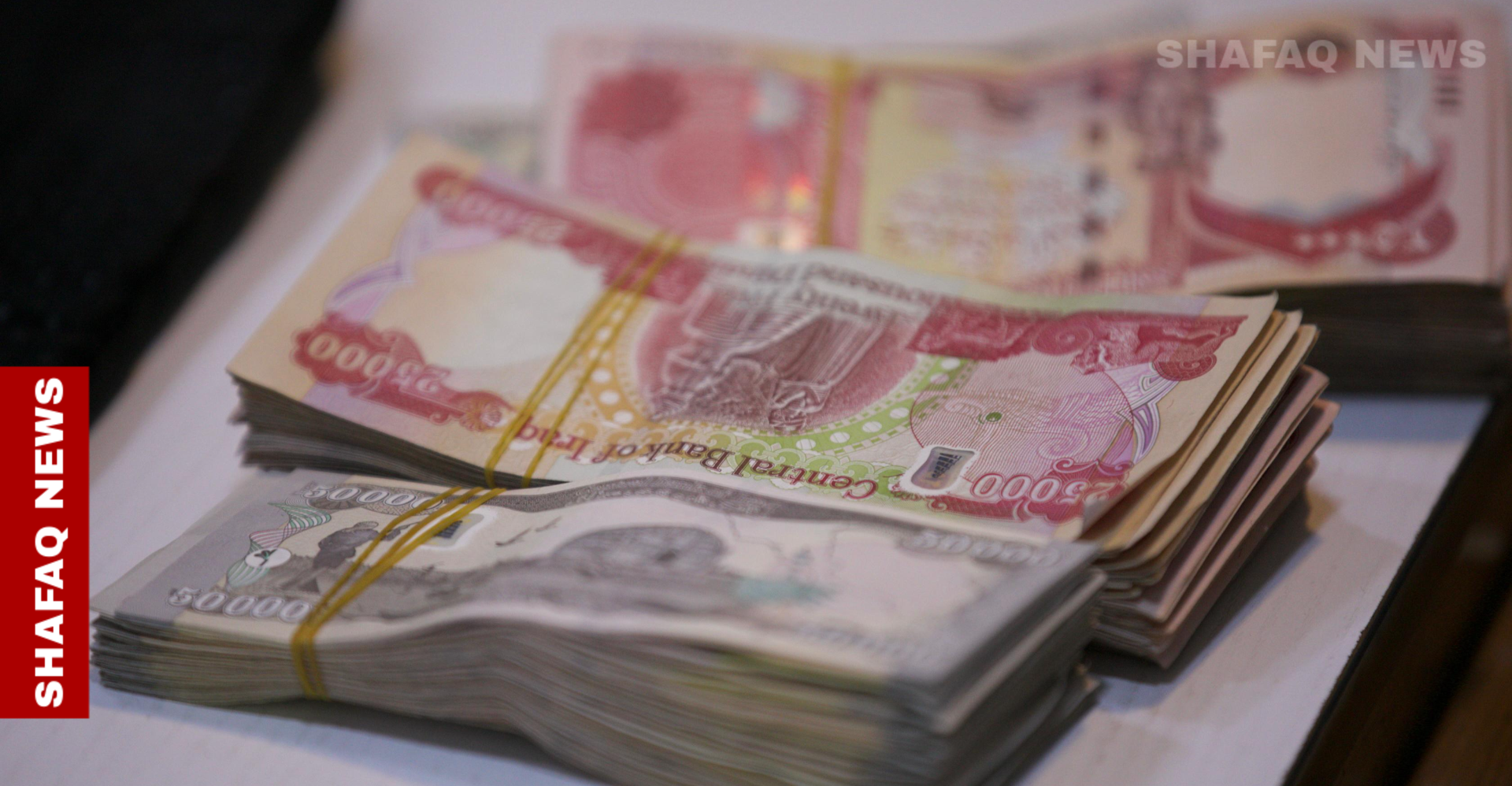 Shafaq News/ The delay in approving the 2025 federal budget in Iraq threatens financial stability, service and development projects, the disbursement of salaries and benefits, and other repercussions that directly impact the daily lives of Iraqi families, according to observers.
Observers believe the budget has become a “political tool” during election seasons, used as a means of pressure and bargaining between blocs, without taking into account the impact of these procrastinations, which have continued for more than half a year.
Despite more than six months having passed since the start of the fiscal year, the Iraqi government has yet to submit the 2025 budget schedules to the House of Representatives. There are expectations that it will not be submitted to parliament due to concerns that it could be exploited for electioneering.
financial and social crisis
Experts warn of the serious social repercussions resulting from Iraq’s deteriorating economic situation, particularly with regard to the annual delay in approving general budgets. They emphasize that this delay is not only a financial crisis, but also a social crisis that affects the structure and cohesion of society.
In this context, social researcher Ruqayya Salman says, “The turmoil in financial policies and the recurring scenario of budget delays lead to the disruption of service and development projects, the postponement of salaries and benefits, and the absence of job opportunities. All of this directly impacts the stability of Iraqi families, especially vulnerable groups and those dependent on social welfare or temporary contracts.”
Speaking to Shafaq News Agency, Salman pointed out that “the living conditions of most Iraqis are now subject to political fluctuations, as the budget is used as a tool for pressure and bargaining between blocs, without taking into account the impact these delays have on people’s daily lives, from late rent payments to the inability to meet basic needs such as food, education, and healthcare.”
She added, “Delays in budget-related projects, such as schools, health centers, and infrastructure, deepen the gap between citizens and the state and lead to feelings of frustration and despair, especially among young people awaiting job or training opportunities.” She emphasized that this situation “negatively impacts mental and social health and increases rates of migration, unemployment, and domestic violence.”
The social researcher continues, “The poor and the eroding middle class are the most affected, as rising prices resulting from delayed salary disbursements and increased unauthorized expenditures lead to a social imbalance, while a political class remains far removed from this suffering.”
She emphasized that “the economic aspect cannot be separated from the social reality, and any delay or confusion in its management has a direct impact on the lives and stability of individuals. It is essential that the budget be a tool for social justice and development, not a political card for settling partisan scores.”
political tool
For his part, political analyst Majash’a Al-Tamimi believes that “the delay in approving the 2025 budget schedules represents not only a technical flaw, but also once again demonstrates how the budget is becoming a political tool during election seasons, where the lack of legislative stability is exploited to expand spending without planning and obstruct essential financial entitlements, including bonuses, promotions, and the rights of governorates and implementing agencies.”
Speaking to Shafaq News Agency, Al-Tamimi warned that “this situation threatens financial stability, weakens the confidence of investors and donors, and burdens citizens and employees with the cost of political procrastination. This calls for protecting the financial track from conflict and prioritizing the public interest over narrow partisan interests.”
He expects that “what’s more dangerous is that next year may witness the complete absence of a federal budget, due to the possibility of a delay in government formation for several months after the elections. This means that 2026 will proceed according to the temporary spending rule stipulated in the Financial Management Law, which limits the state’s ability to implement new projects or address urgent crises.”
Delayed with lack of allocations
These warnings and their impact on the implementation of new projects in the provinces come at a time when the Deputy Speaker of the Iraqi Parliament for Regions and Provinces, Jawad Al-Yasari, believes that “Muthanna and Karbala provinces are the most affected by the lack of financial allocations in the budget.”
Al-Yasari explained to Shafaq News Agency, “The financial allocations for the two governorates were based on the old population numbers, without taking into account the current population increase and the results of the latest population census for each governorate.”
The MP calls for “increasing the funds allocated to governorates so that local governments can invest the funds in service projects.”
This is also emphasized by Mahdia Al-Lami, a member of the Parliamentary Services Committee, who said, “The level of services in the governorates does not match the budget allocations, especially in Diwaniyah, which is one of the governorates suffering from a service shortage, and therefore needs to increase its financial allocations.”
In addition to Diwaniyah, Al-Lami added to Shafaq News Agency, “Babil Governorate also suffers from deteriorating services. Only 6% of the infrastructure completed by 2023 has been completed, and there is a shortage of services in Anbar and Salah al-Din governorates, which have been affected by terrorism.”
In addition, she points out that “there are projects that have been dormant for many years, including the Najaf sewage project and the Mahmoudiya Grand Water Project. Part of the reason for their delays is the delay in disbursing budgets. This is evident, for example, in the Baghdad Municipality’s Projects Department, which witnesses daily protests by contractors and company owners demanding payment of their debts.”
Delayed disbursement… corruption
In this regard, legal expert Abbas Al-Aqabi believes that corruption in Iraq is not limited to the direct theft of funds, but rather encompasses several other legal forms that warrant accountability, including the disruption of projects and the delay in disbursing financial allocations.
Al-Aqabi explained to Shafaq News Agency, “Anyone who delays disbursing financial dues stipulated in the General Budget Law can be sued before the Federal Court, based on Article 93/Third of the Iraqi Constitution,” stressing that “these acts are no less serious than direct financial corruption.”
However, financial and economic expert Abdul Rahman Al-Shaikhli explains that “all projects were included in the three-year budget (2023, 2024, 2025) that was approved under Law No. 12 of 2023. However, due to the drop in oil prices from the estimated price of $70 per barrel in the three-year budget to $55 per barrel, there was a deficit in financing investment projects, which led to their suspension.”
Al-Shaikhli concluded his remarks to Shafaq News Agency by reassuring them that “the government has opted to implement the operating budget related to employee and retiree salaries, social welfare, and some other government obligations,” stressing that “salaries are fully secured for this year and next, even if the price of a barrel of oil drops to $40.”
shafaq.com
