The first to be affected: The rising dollar threatens the livelihoods of 4 million Iraqi workers.
The first to be affected: The rising dollar threatens the livelihoods of 4 million Iraqi workers.
2026-10-09
 Shafaq News – Baghdad
The rise in the dollar exchange rate against the Iraqi dinar is no longer limited to exchange screens, but has begun to affect market activity and citizens’ purchasing power, at a time when commercial and labor circles are talking about a clear decline in sales and demand, amid fears of a widening recession and the impact on job opportunities.
This comes after the dollar exchange rate rose to about 152,000 dinars per 100 dollars, which has led to an increase in the prices of a number of basic goods and materials, coinciding with a decline in the purchasing power of citizens, especially those with limited incomes and workers who depend on daily wages.
The most affected workers
In this context, Rahim Al-Ghanimi, head of the Iraqi Unemployed Union, says that Iraqi workers, especially self-employed individuals, are among the groups most affected by the high exchange rate, due to the stagnation of daily wages compared to the rising prices of basic materials and needs.
Al-Ghanimi adds to Shafaq News Agency that the rise in food prices has become evident in the markets, noting that the continuation of this situation may lead to a decline in commercial activity and a reduction in job opportunities, warning of the impact of this on a wide segment of workers.
He points out that about 4 million workers registered within the workers segment may be affected by the decline in economic activity, indicating that the shutdown of some factories and projects means, as a result, that workers will lose their sources of income.
He points out that the decline in local production compared to the increased reliance on imports may increase the pressures on Iraqi industry and local labor, calling for measures to balance fiscal policy and market activity and protect those with limited incomes.
Buying activity declined
For his part, Sarmad Al-Kawaz, a member of the Baghdad Chamber of Commerce, says that the rise in the exchange rate has affected various types of trade, indicating that the damage is not limited to traders, but extends to companies, their employees, and consumers.
Al-Kawaz explained to Shafaq News Agency that markets and shopping centers are witnessing a decline in purchasing activity, as a result of rising commodity prices and a decrease in citizens’ purchasing power, stressing that the increase in trade and production costs is ultimately reflected in product prices.
In the markets, the effects of the dollar’s rise are more evident through the decline in demand for some goods, as observed by Shafaq News Agency. A clothing store owner in Baghdad confirmed that purchasing activity has decreased compared to the previous period, while another store owner in Karbala indicated that the price increases have led many citizens to reduce their purchases and limit themselves to essential needs.
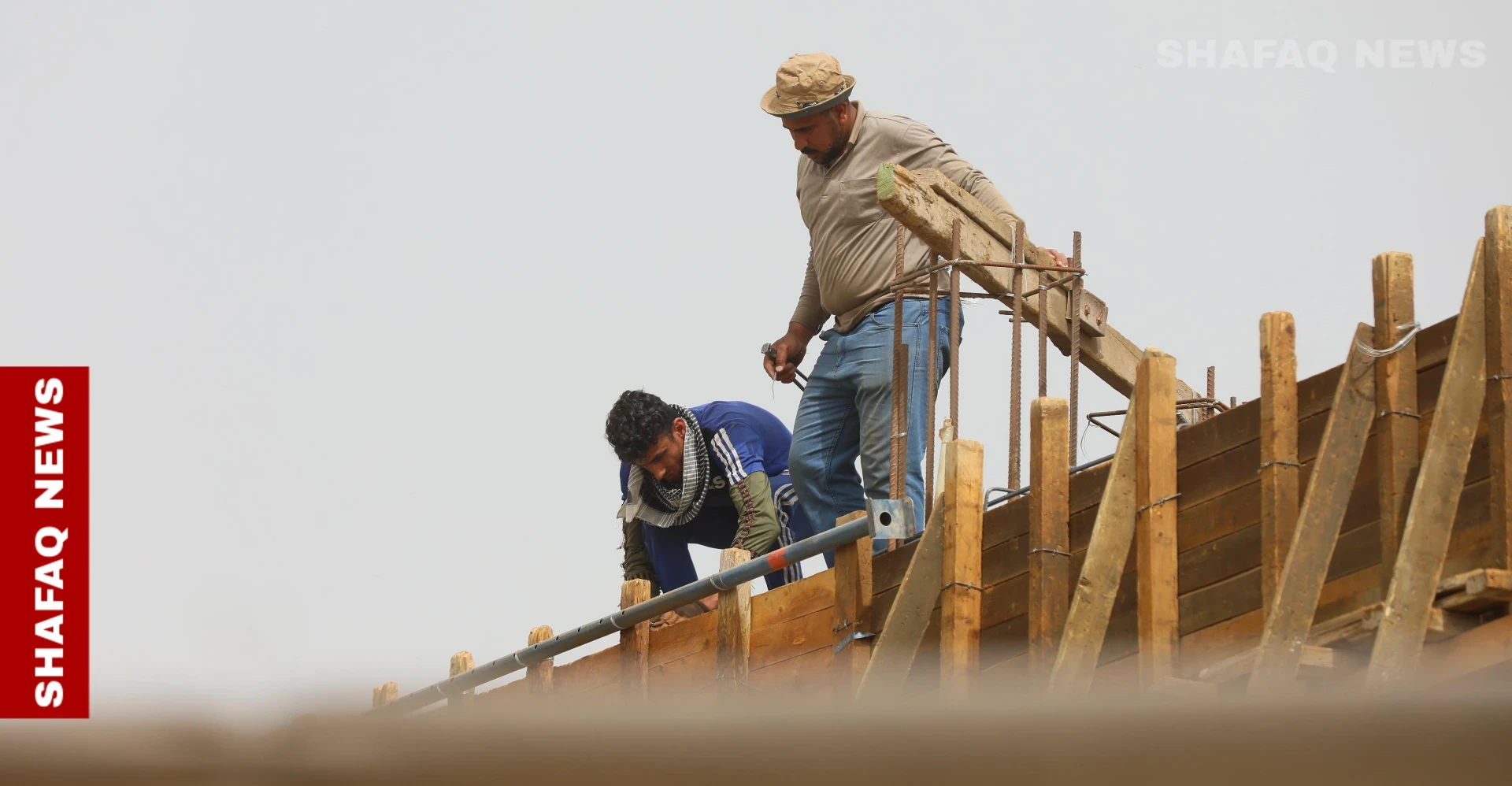
As for the workers, they face another aspect of the crisis. A construction worker from Karbala province said that the decline in work activity and the rise in prices of materials and daily needs make daily income less able to cover expenses, at a time when many workers depend on the availability of job opportunities on a daily basis.
“Irreversible”
Despite the economic repercussions of the decision, Iraqi Prime Minister Ali Faleh al-Zaidi explained to the House of Representatives on Thursday evening the necessities for changing the dollar exchange rate.
Al-Zaydi said before Parliament during his attendance at the meeting with the Presidency Board, “The government had three options: the first was to resort to mandatory savings and leave the employee to live on promises, the second was to distribute salaries every 45 days, and the third was to resort to borrowing and drown the country in debt, which it is already burdened with.”
For his part, Speaker of Parliament Hebat al-Halbousi affirmed that “the decision to change the exchange rate is irreversible, and the heads of the political blocs support the decision.”
The Cabinet had decided in its session last Tuesday, October 6, that the price of buying dollars from the Ministry of Finance would be 1,500 dinars, and selling them to banks at 1,510, and to the end beneficiary at 1,520 dinars, compared to 1,320 dinars previously, i.e. an increase of 20,000 dinars per 100 dollars.
The sudden rise in the exchange rate led to confusion in the markets, with difficulty in determining buying and selling prices and repricing goods.
shafaq.com
