The economy of private generators: an economic disaster and an environmental time bomb threatening Iraq
The economy of private generators: an economic disaster and an environmental time bomb threatening Iraq
5-25-2026
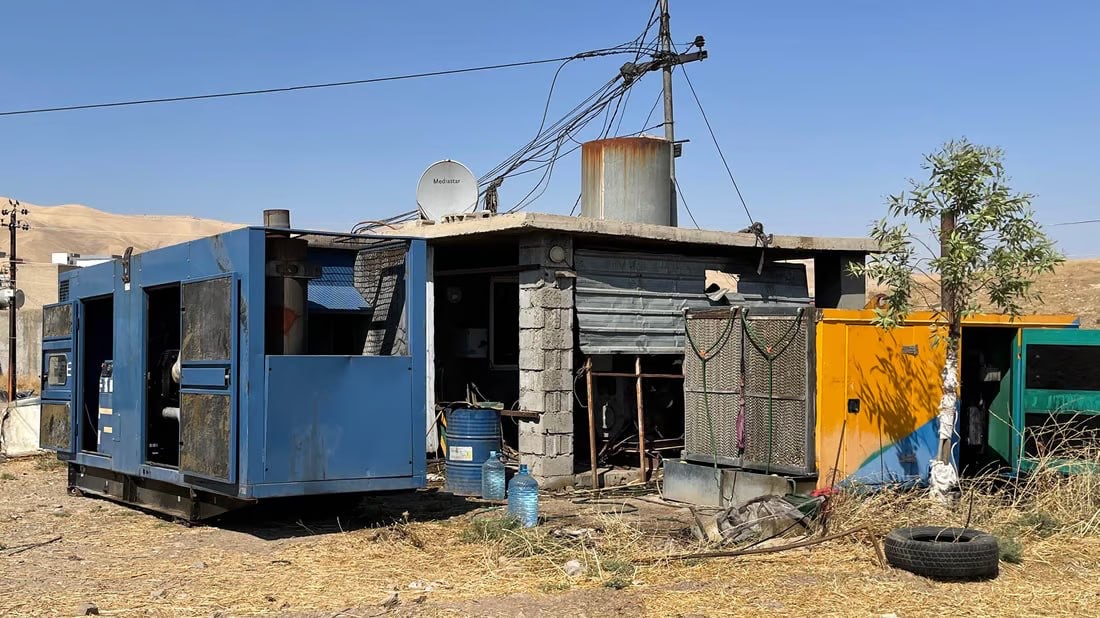 Since their emergence in the early 1990s, privately owned generators offered a temporary solution to Iraq’s electricity crisis. However, over the past two decades, they have transformed into a parallel economy generating billions of dinars annually, becoming one of the most influential informal sectors impacting the daily lives of Iraqi citizens. While successive governments have spent tens of billions of dollars on the electricity sector without achieving a lasting solution, the “generator empire” has expanded to become a permanent fixture of the economic, social, and even political landscape in some areas.
Thousands of generators to address the electricity shortage
Over the course of more than three decades, the number of private generators in Iraq has ballooned to more than 50,000 generators distributed among cities and residential neighborhoods, while more than 80% of the population depends on them during periods of power outages, especially in the summer, when temperatures rise to record levels exceeding 50 degrees Celsius in some southern governorates.
Billions spent, and the gap widens.
Although Iraq is the second largest oil producer in OPEC after Saudi Arabia, with production exceeding 4 million barrels per day at times, the electricity crisis remains one of the biggest economic and service failures since 2003. According to official estimates and oversight reports, Iraqi governments have spent more than $80 billion on the electricity sector over the past two decades. Meanwhile, the government’s financial advisor, Mazhar Muhammad Saleh, confirms that the electricity sector has drained more than $120 billion since 2003, but actual production is still less than the real demand, which exceeds 40,000 megawatts during peak summer times, while actual production ranges between only 24,000 and 27,000 megawatts, creating a huge electricity gap that forces citizens to rely on private generators.
” The economy of the ampere”: A market outside of regulation
This crisis has created a massive, largely unregulated market. In Baghdad alone, some large generator owners can earn between 10 and 20 million Iraqi dinars per month, depending on the number of subscribers, operating hours, and the price per ampere. The monthly subscription fee for a citizen ranges from 10,000 to 25,000 dinars per ampere, while the average family needs between 4 and 6 amperes to run essential appliances during the summer. This means some families spend more than 150,000 dinars per month on generator electricity alone, in addition to their government electricity bill.
The annual value of the privately owned generator market in Iraq is estimated at between $2 billion and $4 billion, according to economic and energy experts. This enormous figure reflects the significant amount of money circulating outside the formal economy and regulated taxation. This market also provides thousands of jobs, both directly through the operation and maintenance of generators, and indirectly through the trade of fuel, oil, wires, and spare parts.
Pollution and noise: The forgotten environmental cost
If we consider the other side of this economy, we find it carries significant social, environmental, and health costs. Generators rely primarily on diesel fuel, making them a major source of air pollution and noise within residential areas. Environmental studies conducted in Iraq agree that emissions from generators contribute to high pollution levels, respiratory illnesses, and a long list of health problems resulting from inhaling pollutants and gaseous emissions, especially among children and the elderly. Furthermore, their loud noise has become a daily part of Iraqi life, reflecting the depth of the structural crisis in the energy sector.
A network of interests is profiting from the crisis.
Even more dangerous is the fact that the generator economy has created a complex web of vested interests. Observers believe that the ongoing electricity crisis benefits those who profit financially from continued reliance on generators. Some generator owners wield social and economic influence within their neighborhoods, while fuel distribution and operation are sometimes linked to connections with local figures or influential individuals, making this sector far more complex than a simple service project.
Local governments find themselves facing a difficult dilemma: on the one hand, they try to regulate the price per ampere and set operating hours, while on the other hand, they realize that shutting down the generators could lead to widespread public anger due to the national grid’s inability to meet demand. For this reason, authorities often treat generators as a permanent emergency solution rather than a temporary measure.
Electrical interconnection: future prospects
In recent years, the Iraqi government has attempted to alleviate the crisis through electricity interconnection projects with Jordan and the Gulf states, as well as plans to utilize associated gas and reduce reliance on imported energy. Solar energy projects and improvements to transmission and distribution networks have also been launched, but the results remain limited compared to the growing demand and rapid population growth.
Economic drain threatens development
Experts warn that the continued reliance on private generators at this scale represents a long-term economic drain on both citizens and the state. The money spent monthly on generators could be channeled into productive investments or public services if the electricity crisis were resolved fundamentally. Furthermore, dependence on temporary solutions hinders the development of a genuine industrial sector, as a stable electricity supply is a prerequisite for any economic revival.
In conclusion
, today, private generators in Iraq have transcended their function as electricity-generating devices; they have become a testament to the failure of public service policies on the one hand, and the growth of a massive informal economy on the other. While governments continue to make promises to resolve the crisis, Iraqi citizens face the scorching summer season, caught between the official power outages and the exorbitant cost of the private alternative—an economic equation that burdens them daily and reveals the magnitude of the challenges facing one of the region’s richest oil-producing countries, yet one of the most energy-strapped.
rawabetcenter.com
