Shocking arrests and foreign pursuit: How does Baghdad plan to dismantle the corruption system?
Shocking arrests and foreign pursuit: How does Baghdad plan to dismantle the corruption system?
2026-06-28
 Shafaq News – Baghdad
In a rare political and security development, Baghdad has witnessed a wide-ranging arrest campaign since Sunday morning targeting political officials, members of parliament, and businessmen, in what authorities describe as one of the largest anti-corruption operations in years, targeting networks accused of wasting public money and smuggling billions of dollars, amid indications that the investigations may extend to include figures from the highest levels of the state.
These developments come at a time when the Iraqi government is placing the fight against corruption at the top of its priorities, while Iraq still occupies a low position in international transparency indicators, as it came in 136th place out of 182 countries in the Corruption Perceptions Index for 2025, reflecting the magnitude of the challenges facing reform efforts.
The Federal Integrity Commission announced on Sunday that it has begun taking decisive measures to implement the judicial arrest warrants issued against a number of those accused of misappropriating public funds. In a statement received by Shafaq News Agency, the Commission confirmed that this achievement was the result of the combined and integrated efforts of the three authorities – the judiciary, the executive, and the legislative – with the Commission’s efforts, which directly led to the implementation of those orders as a result of diligent and continuous follow-up, auditing, and monitoring operations by the aforementioned entities.
The list of detainees included the names of senior officials, namely: the head of the Azm Alliance and member of parliament, Muthanna al-Samarrai, member of parliament, Ziyad al-Janabi, member of parliament, Bahaa al-Nouri, member of parliament, Muhammad al-Karbouli, member of parliament, Alia Nassif, member of parliament, Muhammad Jamil al-Mayahi, member of parliament, Hassan al-Khafaji, and member of parliament, Abdul Rahman al-Luwaizi, according to the official government agency.
It also included: Member of Parliament Mudhar Al-Karawi, Member of Parliament Hind Al-Abbasi, Member of Parliament Muhammad Farman Al-Jubouri, Member of Parliament Bushra Al-Qaisi, former Member of Parliament Muhammad Al-Sayhoud, Undersecretary of the Ministry of Oil for Distribution Affairs Ali Ma’araj and Ibrahim Al-Sumaida’i.
Arrests and extensive investigations
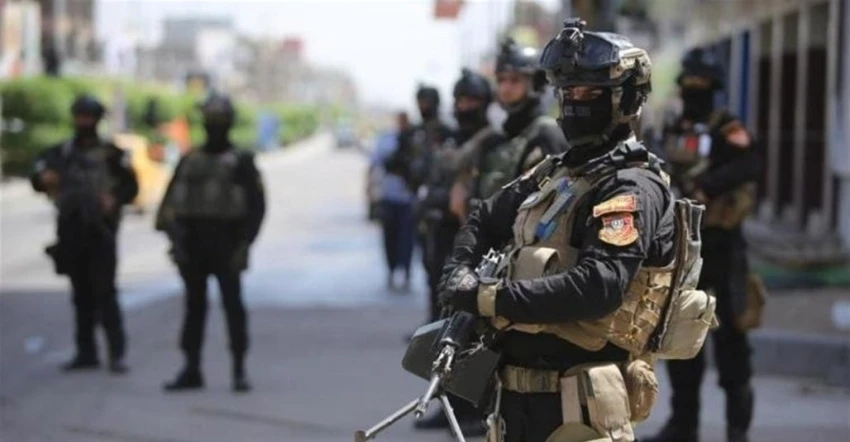
According to security and judicial sources who spoke to Shafaq News Agency, the campaign, which began at dawn on Sunday, included the execution of arrest warrants inside the Green Zone in Baghdad and other areas, in addition to a number of governorates, and resulted in the arrest of senior officials, employees and businessmen on charges related to financial and administrative corruption.
The sources explained that the investigations were based, in part, on the statements of detained officials, including the former Undersecretary of the Ministry of Oil for Refining Affairs, Adnan al-Jumaili, whose confessions are believed to have led to the opening of new files and the issuance of arrest warrants against other figures linked to government contracts and deals.
She added that some of the wanted men managed to leave their locations before the raids were carried out, which prompted the security forces to tighten procedures and close the entrances to the Green Zone, while investigations continue amid official secrecy regarding the final number of detainees and the nature of the files being investigated.
A step on a long road
Mohammed Al-Rubaie, head of the Al-Nahrain Foundation for Transparency and Integrity, believes that what is happening represents an “important start” in the fight against corruption.
Al-Rubaie told Shafaq News Agency that “the current government has begun holding accountable people suspected of being involved in wasting public funds, and this step may contribute to recovering large sums of money and easing the financial pressures facing the state.”
He added that the campaign “enhances public confidence in the possibility of moving forward with cases that have been frozen for years,” noting that Iraq has judicial cooperation agreements with a number of countries, which may open the door to pursuing wanted persons outside the country and recovering smuggled funds.
He pointed out that international cooperation could expand if the smuggled funds are proven to be linked to cross-border activities, thus allowing for the activation of international mechanisms to recover them.
“Snowball effect” is expanding
For his part, academic and political researcher Khaled Al-Ardawi described the campaign as a “long-awaited development,” considering that corruption has become one of the most prominent factors that have weakened state institutions since 2003.
Al-Ardawi told Shafaq News Agency, “The current investigations seem to be snowballing, as confessions are leading to new cases, which may rapidly expand the circle of accused individuals.”
He added that the success of this campaign “depends on the independence of the judiciary and the courage of law enforcement institutions to reach all those involved without exception,” expecting that the investigations will include current and former officials if legal evidence is available against them.
He pointed out that “corruption is no longer an individual phenomenon, but has turned into an intertwined network that extends across different institutions and sectors, which explains the magnitude of the challenges facing any reform campaign.”
A test of political will
Essam Al-Faily, a professor of political science at Al-Mustansiriya University, linked the current campaign to the level of support it enjoys from judicial and regulatory institutions.
Al-Faily told Shafaq News Agency that “opening files of this magnitude would not have been possible without a clear will on the part of the judiciary and the Integrity Commission,” explaining that corruption in Iraq “has permeated the structure of state institutions over the past years, and has often benefited from political and administrative umbrellas.”
He added that reviewing government contracts, especially those with large financial values, could lead to the uncovering of more complex cases, stressing that “building the state and restoring citizens’ trust requires dismantling corruption networks and recovering public funds.”
Al-Faily warned that “the continuation of corruption threatens the stability of the state, just as uncontrolled weapons pose a threat to security,” noting that some corruption networks “transcend political and sectarian affiliations and are based on shared financial interests.”
Ongoing challenge
This campaign comes at a time when various estimates and reports indicate that Iraq has lost hundreds of billions of dollars over the past two decades as a result of corruption and mismanagement, while some unofficial sources estimate the amount of wasted money at between 150 and 300 billion dollars.
While observers view the campaign as a true test of the state’s seriousness in fighting corruption, its success remains contingent on the ability of judicial and regulatory institutions to complete investigations, reach all those involved, and recover the looted funds, away from political pressures and selectivity in the application of the law.
shafaq.com
