Report recommends a “light, smart, and sustainable” US presence in Iraq to prevent chaos
Report recommends a “light, smart, and sustainable” US presence in Iraq to prevent chaos
2025-08-08 04:23
 Shafaq News – Special Translation
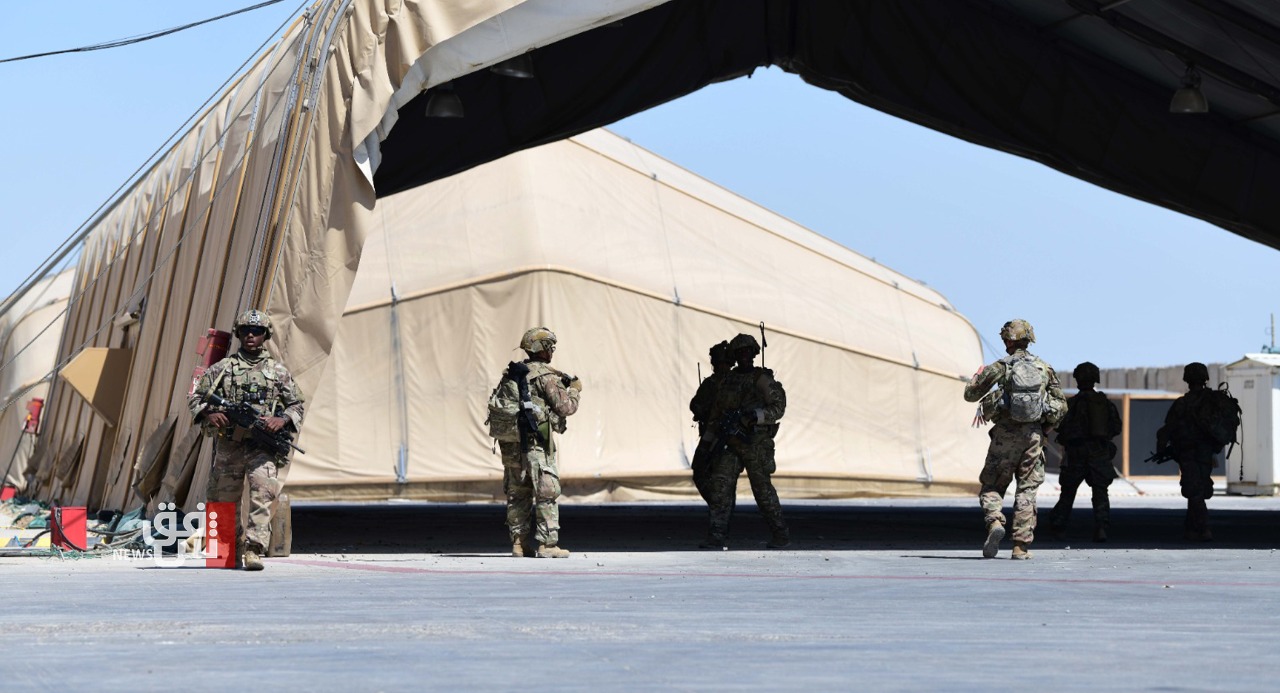
The US website Small Wars Journal reported that the United States is capable of engaging in Iraq with a “light, smart, and sustained presence,” even if its priorities focus on the Chinese and Indo-Pacific theaters.
According to the website’s conclusions in a report translated by Shafaq News Agency, maintaining a distance from Iraq is a strategic goal for confronting future instability, and the path forward is not about escalation, but rather about preventing chaos from returning to Iraq.
To begin with, the report by the American website specializing in military affairs stated that US forces in Iraq constantly ask themselves, “Why are we even here? Is it worth it?”
The report continued that, in light of the escalating tensions, the answers are more important than ever, adding that it is worth staying “if we are smart about how we stay, and can the United States and must maintain a moderate and sustainable presence in Iraq, including the 2,500 troops currently in the country?”
He considered doing so “necessary to protect regional stability, check hostile influence, and avoid the kind of costly intervention that history warns us against.”
The US report noted that the collapse of Saddam Hussein’s regime in 2003 following the US “shock and awe” invasion marked the beginning of one of the most ambitious and costly nation-building efforts in American history, and that despite the rapid fall of Saddam Hussein’s dictatorship, what followed was a “series of successive failures.”
After reviewing the decisions and signs of chaos that had spread in Iraq, the spread of terrorism, and Iranian influence, the report stated that when US forces withdrew in 2011, Iraqi politics remained “fragile,” and Iraqi forces, with the exception of special operations units, lacked a strong will to fight.
He added that by 2014, “Iraq was disintegrating,” particularly after ISIS invaded from the Syrian border and occupied large swaths of Iraq. This reasserted the United States’ role as an advisory force, counterterrorism force, and partner with Iraqi and Kurdish forces.
The report continued, “Iraq currently has a nominally elected government under the leadership of Prime Minister Mohammed Shia al-Sudani, but real power remains divided.” It noted that the Popular Mobilization Forces (PMF) operate semi-independently while the government attempts to integrate them under state control.
Although the report addressed “fundamental weaknesses” that go beyond security and politics, such as the budget’s 90% dependence on oil, corruption, youth unemployment, and the lack of basic services, it noted that more than half of Iraqis believe the country is heading in the right direction for the first time since 2004, indicating renewed optimism and progress.
The report stated that despite the United States’ attempts to shift its focus to the Indo-Pacific region and its strategic competition with China, the enduring appeal of the Middle East continues to shape the Department of Defense’s priorities and attract significant public interest, as demonstrated by the recent 12-day war with Iran.
Similarly, hostilities in Gaza and Lebanon, Houthi attacks on shipping, and the resurgence of the post-Assad Syrian state remain in the headlines. Yet, the report said, Iraq, once a focus of attention for post-September 11, 2001, US military interventions, where more than 4,500 US soldiers lost their lives, over $2 trillion was spent, and two decades of stabilization efforts were devoted, has all but disappeared from national debate.
However, the report emphasized that Iraq’s stability or lack thereof impacts every major regional issue of concern to the United States, explaining that an unstable Iraq without a US combat force would inevitably lead to the strengthening of Iranian influence and the revival of ISIS.
The report continued, saying that such a situation would pave the way for an expansion of the conflict between Turkey and the Kurds in northern Iraq and northeastern Syria, increase the flow of logistics from Iran to militias in Syria and Lebanon, posing a greater security threat to Israel, and exacerbate concerns among the Gulf Cooperation Council states regarding their own security.
The report explained that the permanent US presence is largely aimed at preventing such risks, as unrest in Iraq threatens not only Baghdad but could also spread to Syria, Turkey, Jordan, and the Gulf.
According to the report, cross-border armed activity between Iraq and Syria has allowed Iran to transfer weapons to its affiliated groups in Syria and Lebanon, demonstrating how crises in Iraq can undermine broader strategic priorities and regional stability. The report added that the rise of ISIS has forced the United States to re-engage, but on worse terms and at greater costs.
The report continued, “In light of the Chinese Communist Party’s ambitions to control Taiwan and its aspirations for global hegemony, and Russia’s ongoing war against Ukraine, the United States cannot afford a conflict in the Middle East that would divert a portion of its combat forces, which is precisely what could happen if Iraq becomes unstable.”
After highlighting the growing economic roles of China and Russia in Iraq, and Iran’s role in exploiting militias and political “proxies” to shape Iraq’s future, the report noted that Iraq remains one of the world’s largest oil exporters, even if the United States no longer relies on oil imports from the Middle East, as energy remains a vital commodity globally.
The report considered it important for the US military presence to help understand the country’s position, which continues to operate at a strategic crossroads. It added that even with 2,500 troops in fortified positions, the United States would be able to demonstrate that it possesses the “biggest stick,” and that as long as adversaries realize that Washington is prepared to use it, their willingness and ability to achieve their goals will remain limited.
According to the report, many Iraqis, particularly in the military, the Kurdish north, and civil society, see the importance of a limited American presence that supports, but does not dominate, their path to security, especially if it prevents the resurgence of ISIS and the strengthening of Iranian power.
The report considered that competition in Iraq does not require massive re-investment, explaining that it is possible to secure a moderate American presence focused on advising Iraqi forces, strengthening counterterrorism operations, and providing targeted economic and diplomatic engagement.
He added that this light-touch approach will not grab headlines or expand budgets, but it can preserve hard-won gains and prevent the kind of collapse that would require a much more costly re-intervention.
The report stated that historical experience shows that the cost of withdrawal is much higher than the cost of a smart stay, and that “strategic neglect” will not render Iraq irrelevant, but rather will make it unstable, and will provoke instability in one part of the world, leading to instability elsewhere.
The report concluded by stating that few doubt that the United States should prioritize larger theaters of operation, namely China and the Indo-Pacific region, but it added that “these priorities do not require a departure from Iraq, as a light, smart, and sustainable presence is a strategic means of countering future instability and limiting hostile influence.”
The US report concluded by saying, “The path forward is not about escalation. It is about a degree of disciplined engagement that prevents a return to chaos and gives Iraqis the tools to shape their own future.” It explained that, “If Iraq collapses again, the United States will not have the luxury of remaining disengaged, and if it is forced to return, it may be on someone else’s terms, and at a much higher cost.”
shafaq.com
