Popular unrest in central Iraq: Five provinces angry with Baghdad, threatening escalation
Popular unrest in central Iraq: Five provinces angry with Baghdad, threatening escalation
2025-05-31 05:56
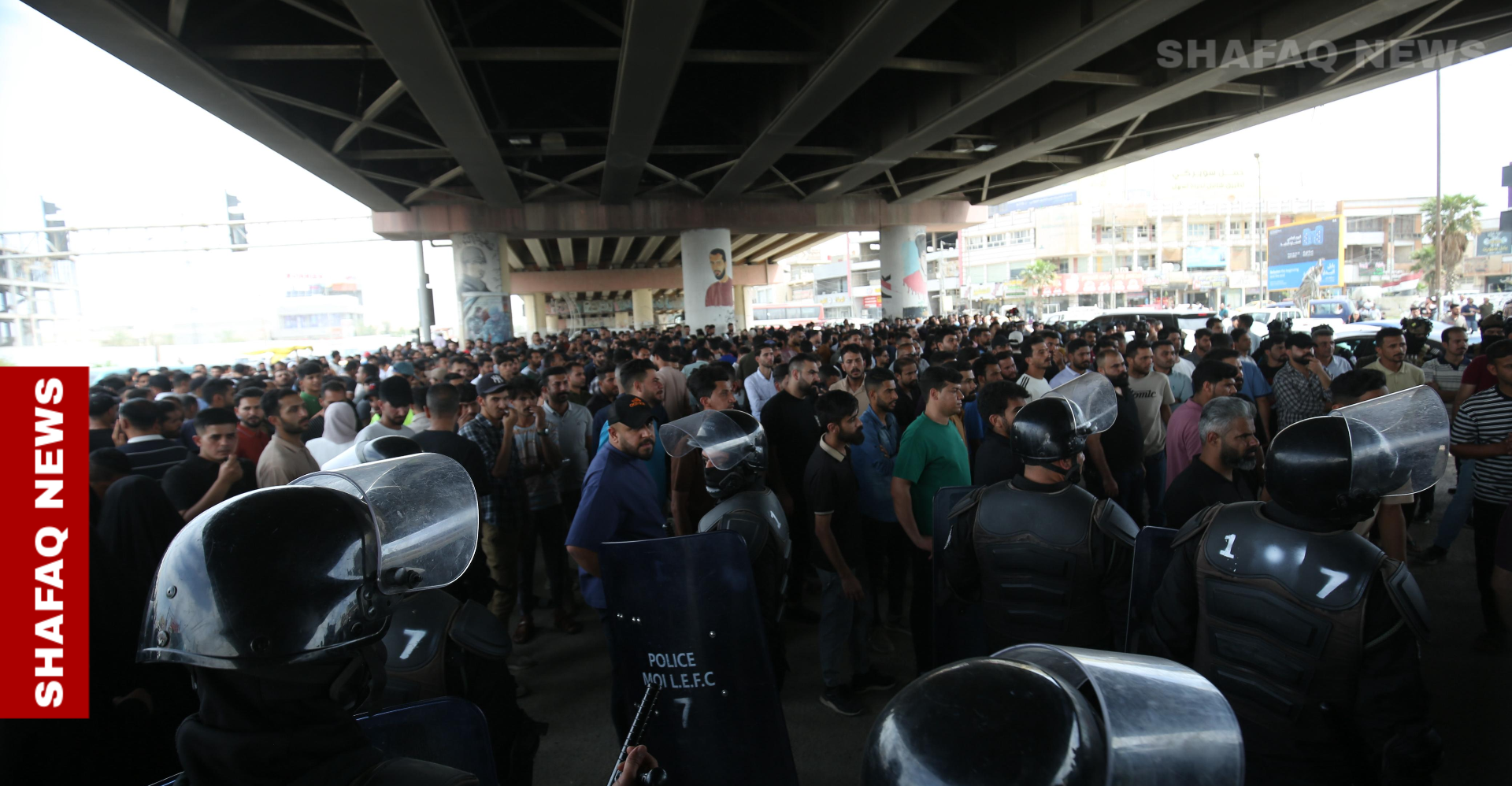 Shafaq News/ The Iraqi governorates, including the Middle Euphrates (Najaf, Karbala, Diwaniyah, Babil) and Muthanna, are suffering from a clear deterioration in the provision of services, most notably the provision of national electricity. Observers hold the local councils and governments, and even Baghdad, responsible for the aggravation of this recurring crisis with each summer season, without putting in place radical solutions to end it .
Citizens of the Middle Euphrates provinces have been complaining of a severe electricity crisis for more than a week. This crisis is due to soaring temperatures and increased energy demand, coupled with weak infrastructure and a lack of equitable distribution of energy among the provinces .
As a result, these governorates and various other parts of the country are witnessing protests that have included blocking major roads, burning tires, and limited clashes between protesters and security forces, as occurred in Najaf and Diwaniyah governorates last week .
Despite the government’s repeated promises to improve the electricity situation, citizens continue to rely on private generators, which constitute an increasing financial burden. Meanwhile, calls are being made to urgently reform the electricity system and increase governorate power allocations .
In this context, Jawad Al-Yasari, deputy chairman of the parliamentary committee for regions and provinces and representative of Karbala province, said, “All provinces, including Karbala, suffer from a shortage of national electricity supplies, despite the presence of the Khairat and Kamaliya power plants .”
Speaking to Shafaq News Agency, Al-Yasari pointed out that “these two stations are under the control of the Ministry of Electricity, and the local government has no authority over them,” calling on “the central government to expedite electricity reform and increase the governorates’ shares .”
Regarding the political impact and mismanagement of the crisis, he explained that “the governorates of Diwaniyah, Najaf, and Babil are suffering from poor services due to the conflict between blocs over the replacement of certain governors, the instability of local governments in these governorates, and the lack of financial allocations or their squandering on useless projects .”
The deterioration of services is not limited to certain governorates. Babil Provincial Council member Mohammed Al-Mansouri asserted that “the overall service situation in Iraq is poor and below expectations, including Babil Governorate, which has been suffering for more than 10 years and is demanding reform and the provision of services, but no one is listening, neither from the provincial council nor the local government .”
Speaking to the agency, Al-Mansouri explained that “Babil is one of the poorest governorates, and suffers from poor services and high unemployment, including 5,000 graduates looking for work. They have been demonstrating for nine months without solutions .”
He pointed out that “the Middle Euphrates governorates are among the most densely populated areas, yet it is noticeable that the central government has completely neglected them. In fact, the electricity they produce is being stolen and diverted to the rest of the governorates. Therefore, we support peaceful protests to pressure the central and local governments to resolve this crisis .”
A number of residents of the Middle Euphrates governorates, including Najaf, have been demonstrating for a week due to the scarcity of national electricity supplies, with blackouts lasting up to six hours a day in the governorate, according to Ali Tawij, an activist from Najaf .
Speaking to Shafaq News Agency, Tawij warned that “the reality of services in Najaf Governorate lacks the most basic requirements due to neglect and negligence in managing service affairs. This includes water, the accumulation of waste and debris near schools, residential buildings, and even near government departments and hospitals.”
shafaq.com
