Popular credit between bank deficits and the expansion of usurious loans
Popular credit between bank deficits and the expansion of usurious loans
2026-05-18
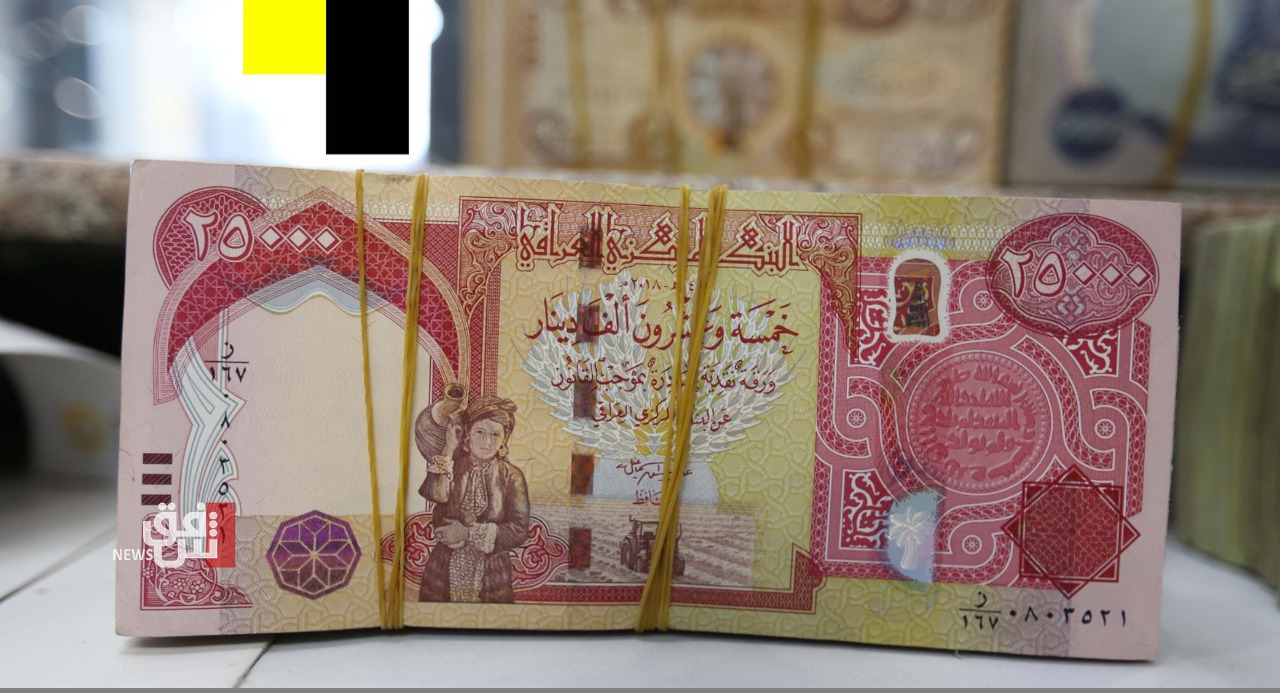 Shafaq News – Baghdad
In the crowded commercial alleys of Baghdad, specifically in the Al-Shourja and Jamila markets, a parallel financial market is growing daily, far from the eyes of official institutions.
There, the citizen does not need complicated banking transactions, a guarantor, or a long wait to get money. A phone call or a recommendation from a local intermediary is enough to get an immediate cash loan, in exchange for high interest rates and conditions that may later turn into a social and psychological nightmare.
This phenomenon, popularly known as usurious loans, is no longer isolated or limited cases, but has transformed into an informal credit system that manages a large portion of cash liquidity outside of state control.
While official banks are unable to accommodate the poor and those with limited income, popular lending networks are expanding to fill the void, taking advantage of unemployment, high living costs and declining purchasing power.
Experts believe that the expansion of this market reflects a deep structural imbalance in the Iraqi financial system, where thousands of citizens find themselves forced to resort to loan sharks to cover expenses for treatment, marriage, rent, or even daily needs.
parallel economy
In this context, economic researcher Ahmed Eid confirms that Iraq has witnessed in recent years a remarkable expansion in what can be called the popular credit market, which is an informal financial system that arose as a result of structural imbalances in the banking sector, weak financial inclusion, and high rates of unemployment and poverty.
Eid adds to Shafaq News Agency that this market relies on lending networks outside official oversight, providing quick loans to citizens in exchange for high interest rates and harsh conditions, especially in commercial and popular areas such as Al-Shourja and Jamila.
According to observers, the ease of access to these loans compared to traditional banking procedures has made them the fastest option for vulnerable groups, despite the high cost that the borrower pays later.
Monthly interest is often imposed, which leads to the principal of the debt doubling within short periods, putting borrowers in a spiral that is difficult to escape.
Eid warns that the danger of this phenomenon lies not only in the economic aspect, but also in its social repercussions, as debts have turned into a source of psychological stress, family disintegration, and legal and tribal problems in many cases, especially with the inability of some borrowers to repay as a result of declining incomes and the absence of legal protection.
He points out that the expansion of informal lending reflects a real gap between citizens and formal banking institutions, which are still unable to meet the needs of the poor and those with limited income.
He stresses that addressing this phenomenon requires genuine banking reform, expanding microfinance tools, promoting financial inclusion, and imposing legal oversight on informal lending networks that now manage a large portion of cash liquidity outside the state’s economic system.
financial exploitation
For her part, social researcher Ruqaya Salman warns of the worsening phenomenon of need and poverty among some families, and the accompanying dangerous recourse to usurious loans that drain family income and increase their social and psychological suffering.
Salman told Shafaq News Agency that the difficult economic conditions and high cost of living have driven many citizens to seek quick solutions, which has made some of them fall victim to usury and financial exploitation, stressing that this phenomenon has become a threat to the stability of families and their disintegration.
She believes that economic need has turned into an entry point for exploitation for many families, especially in light of the absence of effective social safety nets or microfinance programs capable of supporting vulnerable groups.
According to social activists, many borrowers start with a small loan to cover urgent needs, then find themselves forced to borrow again to pay off the accumulated interest.
Salman adds that need should not drive a person to doors that may further complicate their crisis, calling on the concerned authorities and civil society organizations to support needy families and provide job opportunities and real assistance that alleviates the severity of poverty and prevents the spread of usurious debts.
It was found that social solidarity and financial awareness represent the first line of defense to protect society from the effects of poverty and exploitation, pointing to the importance of spreading a culture of cooperation and small projects instead of relying on high-interest loans.
religious and moral dimension
For his part, cleric Sheikh Noor Al-Saadi believes that the issue of usury is one of the most serious and definitive prohibitions in Islamic law, noting that the narrations from the Ahl al-Bayt describe usury as “corrupting the economy and destroying social relations.”
Al-Saadi confirms to Shafaq News Agency that the prohibition of usury is fixed and absolute, but he differentiates between the borrower who is in dire need and the exploitative lender, explaining that the sin may be lifted from the borrower in cases of extreme necessity, while the responsibility of the lender remains because he exploited people’s need and poverty.
He emphasizes that usury is not an economic or legitimate solution to crises, calling for the activation of alternatives based on interest-free loans and social solidarity.
Regarding the responsibility for confronting this phenomenon, Al-Saadi assigns integrated roles to merchants, religious figures, and the state, starting with the establishment of interest-free lending funds, passing through raising awareness of the dangers of usury, and ending with enacting strict laws that criminalize illegal popular loans and protect poor groups from exploitation.
Why do formal banks fail?
Despite the Central Bank of Iraq announcing financing initiatives and soft loans over the past years, a large segment of citizens remains far from the formal banking system, due to administrative complexities, weak trust in banks, guarantee requirements, and lengthy bureaucracy.
Experts say that Iraqi banks have not yet succeeded in building a flexible financing system that responds to the needs of low-income earners and those working in the informal sector, which has created a void that has been quickly filled by informal lending networks.
The widespread reliance on the cash economy in Iraq and the weakness of the banking culture have contributed to consolidating this pattern of transactions, turning popular markets into undeclared financing centers that manage a huge financial movement without tax or legal oversight.
Moreover, the effects of this phenomenon are not limited to financial losses, but extend to the social structure itself. According to observers, the accumulated debts have caused an escalation of family disputes and cases of family disintegration, as well as some creditors resorting to illegal methods of pressure and threats to collect money.
In some areas, debts have turned into tribal issues that may develop into complex disputes, especially with the absence of clear legal contracts or judicial protection for borrowers.
Economists also warn that the expansion of the parallel economy weakens the state’s ability to control the flow of liquidity and monitor financial activity, creating a fertile environment for money laundering and tax evasion and deepening the crisis of confidence between citizens and official institutions.
shafaq.com
