ISIS exploits the chaos in Syria, and Baghdad urges the Americans to delay their withdrawal from Iraq.
ISIS exploits the chaos in Syria, and Baghdad urges the Americans to delay their withdrawal from Iraq.
2025-06-12 02:41
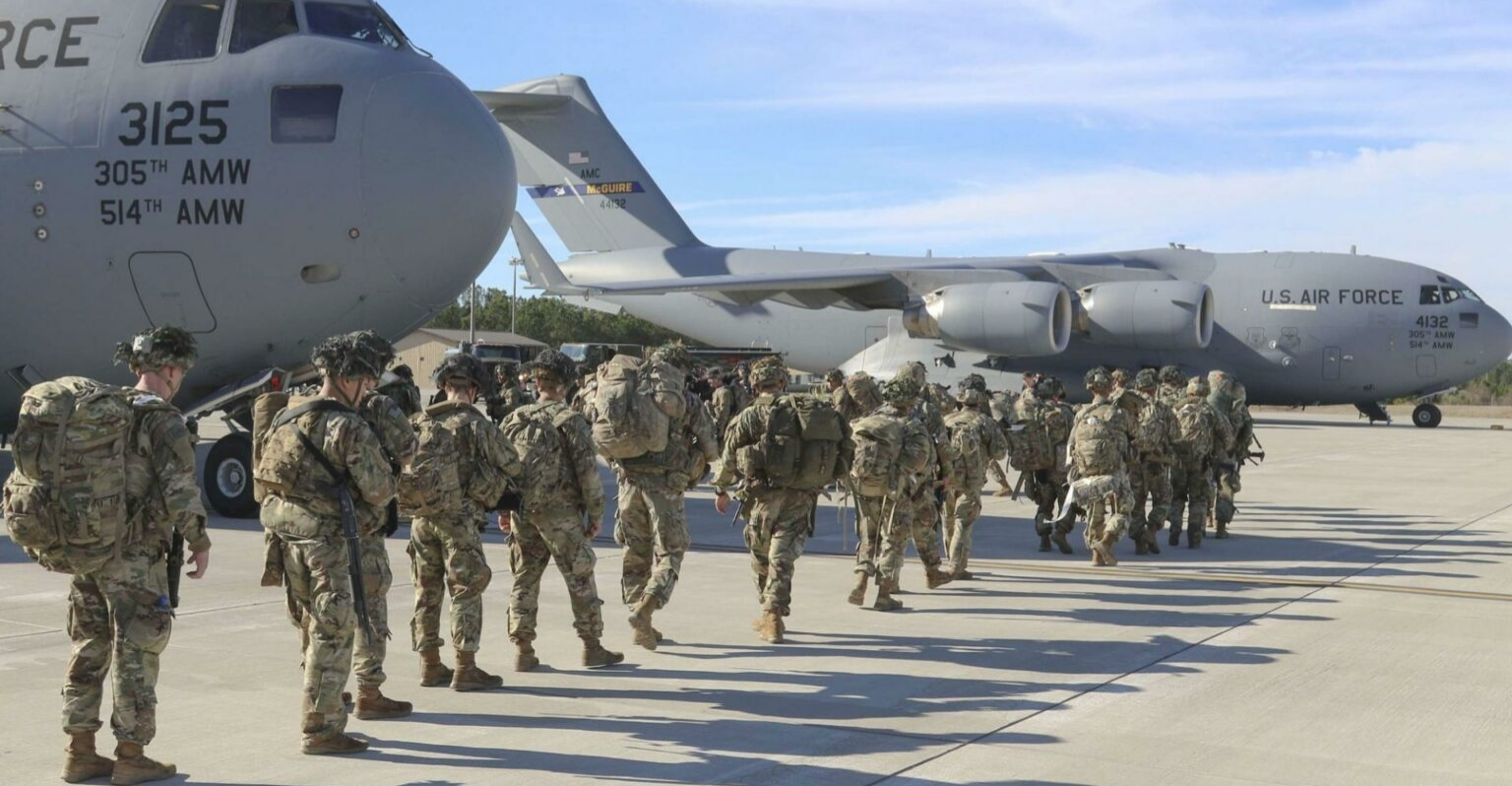 Shafaq News/ Reuters reported that ISIS is exploiting the Syrian chaos and has begun reactivating its fighters in Iraq and Syria, identifying targets, attempting to launch major attacks, distributing weapons, and intensifying recruitment and propaganda campaigns. Meanwhile, a US official confirmed that Baghdad has informally requested a slower withdrawal of approximately 2,500 US troops from Iraq, since it became clear that Bashar al-Assad’s regime was on the verge of collapse.
The report, translated by Shafaq News Agency, explained that leaders from the Middle East and Western allies warn that ISIS could exploit the fall of the Assad regime to return to the scene in Syria and Iraq, where it previously imposed a reign of terror on millions of people.
The Reuters report relied on more than 20 sources, including security and political officials from Syria, Iraq, the United States, and Europe, as well as diplomats in the region. They concluded that ISIS has begun reactivating its fighters in both countries, identifying targets, distributing weapons, and intensifying recruitment and propaganda campaigns.
The report continued, however, that these moves appear to have had limited impact so far, as security officials in Iraq and Syria, who have been monitoring ISIS for years, confirmed that at least 12 major plots have been thwarted this year.
The report addressed one such incident, which occurred last December. As opposition forces advanced toward Damascus, ISIS leaders near Raqqa sent two emissaries to Iraq, carrying verbal instructions for the group’s followers to launch attacks. Iraqi security forces arrested the two emissaries at a checkpoint in northern Iraq on December 2.
According to information obtained from the two detainees, the report said, 11 days later, Iraqi security forces pursued one of the suicide bombers to a crowded restaurant in the northern town of Daquq, monitoring his mobile phone, and shot him before he could detonate his explosive belt.
The report quoted Colonel Abdul Amir al-Bayati, a member of the Iraqi Army’s 8th Division, as saying, “The organization’s elements have begun to return to activity after years of inactivity, taking advantage of the chaos in Syria.”
However, the report noted that the number of attacks claimed by ISIS since the fall of the Assad regime has declined, with ISIS claiming responsibility for 38 attacks in Syria during the first five months of 2025. This suggests the group could reach approximately 90 attacks by the end of the year, representing approximately one-third of the total number of attacks claimed last year.
The report continued that regarding Iraq, ISIS claimed four attacks in the first five months of 2025, compared to 61 attacks last year.
According to the report, a US Department of Defense official and a spokesman for the Iraqi prime minister say that ISIS remnants in Syria and Iraq have become weak and are no longer able to control territory since the US-led coalition and its local partners expelled them from their last strongholds in 2019.
Iraqi spokesman Sabah al-Numan, according to the report, attributes this to preemptive operations to contain the group’s threat. He added that the coalition and its partners launched raids and airstrikes on militant hideouts after the fall of Assad, killing or arresting “terrorist elements” and preventing them from regrouping. He also noted that Iraqi intelligence operations have become more precise thanks to drones and modern technology.
Although the report noted that officials Reuters spoke to do not see the possibility of ISIS resurfacing as it did in the past, it noted their warnings against completely discounting this threat, noting that it is a flexible enemy adept at exploiting vacuums.
While stating that these ISIS actions come at a sensitive time for Syrian President Ahmad al-Sharaa, the report also recalled US President Donald Trump’s recent decision to lift sanctions on Syria, which was a “victory” for al-Sharaa, a former al-Qaeda leader. It noted that some Islamist extremists have criticized al-Sharaa’s attempts to reach out to Western governments and the possibility of him submitting to Washington’s demands to expel foreign fighters and normalize relations with Israel.
Reuters explained that ISIS is exploiting these divisions. It denounced Shara’s meeting with Trump in its online newspaper, Al-Naba, and called on foreign fighters in Syria to join its ranks.
In addition, the report noted the United States’ willingness to reduce its military presence in Syria, a withdrawal the report described as raising concerns among allies that ISIS could take advantage of the situation, particularly regarding the potential release of approximately 9,000 of its fighters and their families from prisons and camps run by the US-backed Syrian Democratic Forces.
According to the report, Trump and Turkish President Recep Tayyip Erdogan want the Syrian government to assume responsibility for these centers and prisons. However, Erdogan views the Kurdish factions as a threat to his country, while some regional analysts question Damascus’s ability to assume these responsibilities.
The report quoted Charles Lister, director of the Syria Program at the Middle East Institute, as saying, “The interim government is under significant security pressure and does not have the manpower to impose full control over the country.”
The report also quoted a US State Department spokesperson as saying that it is imperative for countries to repatriate their citizens detained in Syria and to assume greater responsibility for protecting and managing camps and prisons.
Reuters quoted a US Defense Department official as saying that Washington remains committed to preventing the return of ISIS and that its trusted Syrian partners remain on the ground. He added that the United States will “closely monitor” the Sharaa government, which “is saying and doing the right things so far.”
According to a US defense official and Syrian officials, Washington has shared intelligence with Damascus on limited occasions.
While the report noted that coalition forces are expected to conclude their operations in Iraq by next September, the second US official was quoted as saying that Baghdad had informally requested a slower withdrawal of approximately 2,500 US troops from Iraq after it became clear that the Assad regime was about to fall.
He added that a “source familiar with the matter” confirmed this request, but the White House and the governments in Baghdad and Damascus did not comment on questions from Reuters regarding Trump’s plans for the fate of US forces in Iraq and Syria.
While the report stated that the United Nations estimates the number of ISIS fighters at between 1,500 and 3,000 in Syria and Iraq, and that its most active branches are in Africa, and that a senior US defense official previously indicated that the US military believes the leader of the secretive organization is Abdulqadir Mumin, who leads the Somali branch, it quoted Rita Katz, director of the SITE Intelligence Group, as saying that the decline in ISIS attacks in Syria is evidence of its weakness, suggesting that it has “entered a re-planning phase.”
The report quoted three security sources and three Syrian political officials as saying that since the fall of Assad, ISIS has begun activating its sleeper cells, monitoring potential targets, distributing weapons, silencers, and explosives, and transferring fighters from the Syrian desert to cities such as Aleppo, Homs, and Damascus.
The report also quoted Ali al-Saadi, an advisor to the Iraqi security forces, as saying that aerial surveillance and intelligence sources on the ground have detected increased ISIS activity in the northern Hamrin Mountains, a longtime ISIS stronghold, and along vital roads. Meanwhile, Iraqi officials believe ISIS has seized large quantities of weapons abandoned by Assad’s forces and fear some may be smuggled into Iraq.
shafaq.com
