Iraq is the second-largest Arab oil exporter by sea, and calls are being made to resume exports via the port of Ceyhan.
Iraq is the second-largest Arab oil exporter by sea, and calls are being made to resume exports via the port of Ceyhan.
2025-06-12 03:26
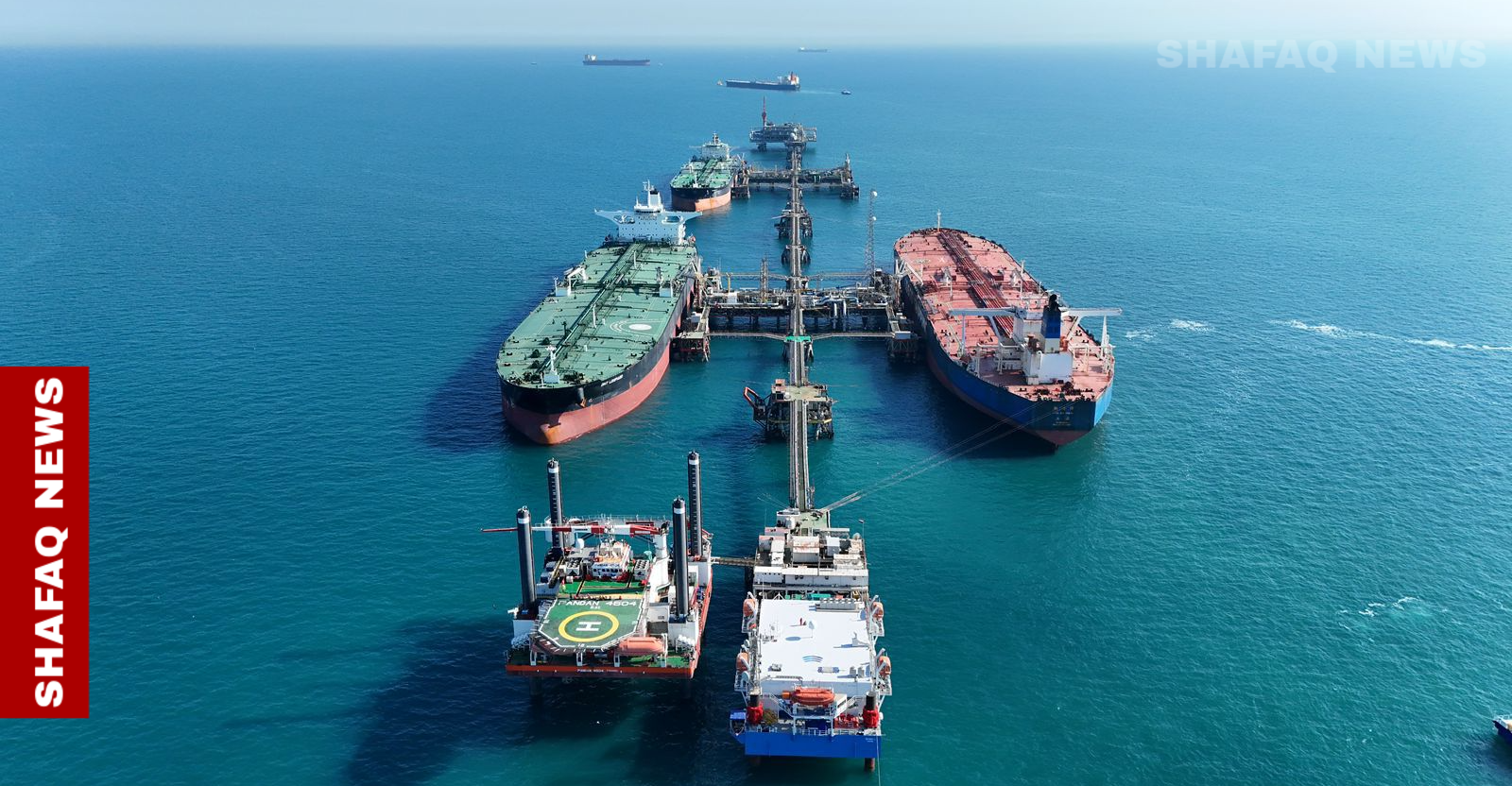 Shafaq News/ Iraq ranked second among the largest Arab countries exporting oil by sea in May 2025, according to data from the Energy Research Unit (based in Washington).
Data showed that the top five Arab countries exporting seaborne crude oil during the month saw increases in three countries on a monthly basis, while Iraq and Libya recorded declines.
Saudi Arabia topped the list of the five largest Arab countries exporting seaborne crude oil in May, with export volumes increasing by approximately 266,000 barrels per day on a monthly basis.
Iraq came in second place, with seaborne crude oil exports in May at approximately 3.27 million barrels per day, down 32,000 barrels per day compared to April, which recorded approximately 3.3 million barrels per day.
Reports citing government sources indicated that the country was targeting exports of less than 3.2 million barrels per day during May and June 2025, in an attempt to comply with its production quota under the OPEC+ agreements.
On an annual basis, Iraqi oil exports declined by 294,000 barrels per day, compared to the same month last year’s average of 3.56 million barrels per day.
The UAE ranked third among the top five Arab crude oil exporters, with exports rising to 3.02 million barrels per day. Kuwait followed with exports of 1.37 million barrels per day during the month, followed by Libya, whose exports declined to 1.19 million barrels per day last month.
Meanwhile, economic expert Nabil Al-Marsoumi warned of the potential closure of maritime trade routes in the event of a regional conflict between the US and Iran, which would negatively impact oil supplies. He urged the urgent resumption of exports via the pipeline from the Kurdistan Region to the Turkish port of Ceyhan.
Al-Marsoumi said in a post on social media, “They (the US and Iran) will negotiate in military uniform. If they agree, the world will live in peace. If they disagree, the gates of hell will open.”
He explained that in the event of a disagreement, “marine trade routes will be closed, oil export platforms will be destroyed, transportation and insurance costs will rise, oil supplies will be negatively impacted, and oil prices will soar.”
Al-Marsoumi added, “However, the oil-exporting Gulf countries will be greatly affected, as their oil export outlets will be restricted or closed,” noting that “the greatest damage will be suffered by countries that have no other outlets.”
The Iraqi economic expert believes that “reviving the Ceyhan pipeline may be more necessary now than ever.”
shafaq.com
