Iraq is paying the price for the Iranian blockade: US sanctions are putting pressure on trade, the dollar, and energy.
Iraq is paying the price for the Iranian blockade: US sanctions are putting pressure on trade, the dollar, and energy.
2026-09-19
 Shafaq News – Baghdad/Tehran
US sanctions are tightening the noose on the Iranian economy, while their repercussions extend to Iraq through trade, energy, and financial channels, at a time when dealings between the two countries are becoming increasingly sensitive.
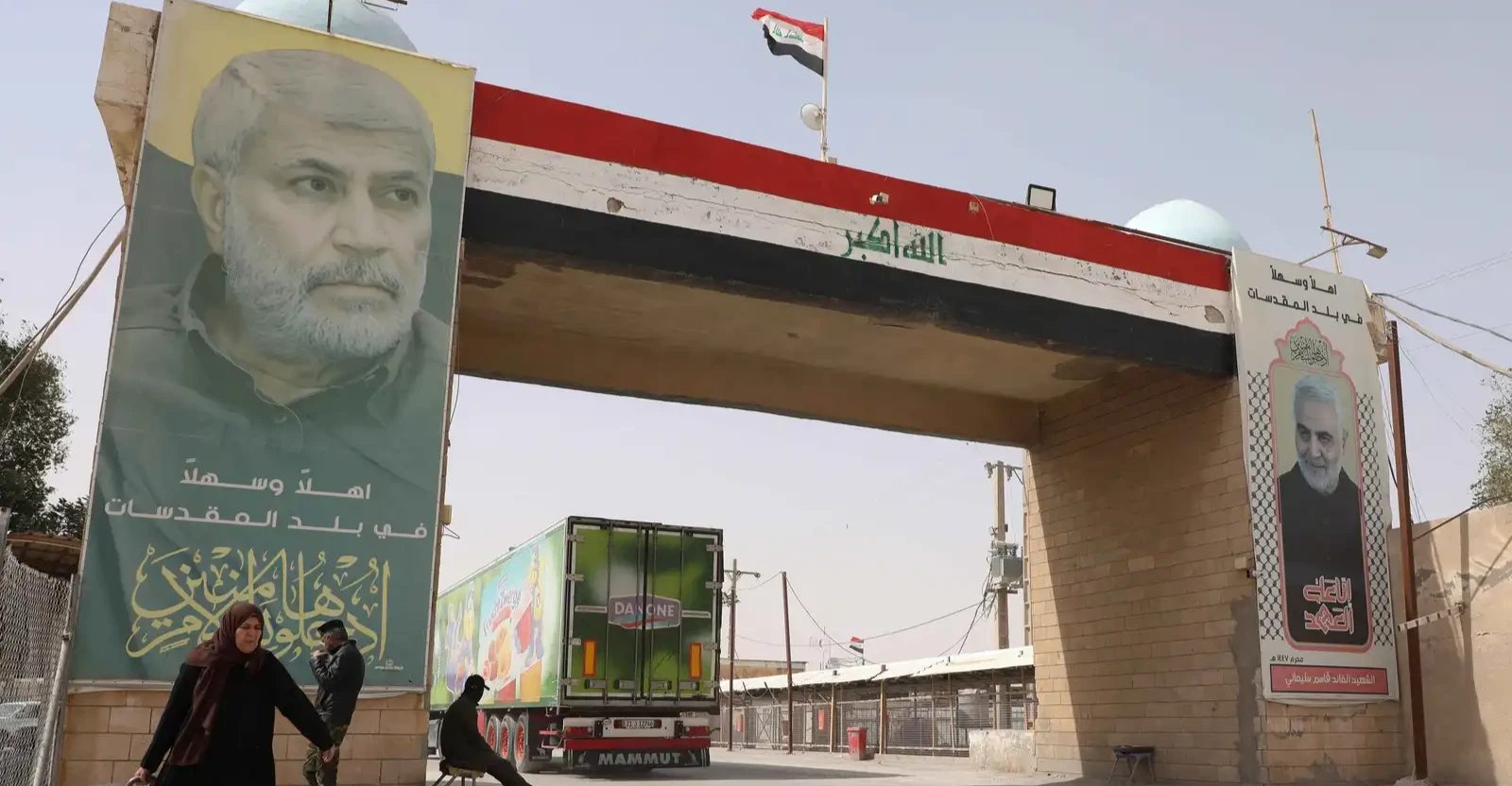
With Iranian exports declining and restrictions on the financial system escalating, the Iraqi border is becoming an important trade artery for Tehran, and conversely, an area where the needs of the Iraqi market intersect with the risks of US sanctions.
This comes at a time when Tehran is facing escalating economic pressure as part of the “economic pariah” campaign launched by the US Treasury Department last August, coinciding with the continuation of the war, which has entered its seventh month, amid Iraqi calls to formulate financial and trade mechanisms that ensure the continued flow of Iranian goods and energy without exposing the Iraqi banking system to US sanctions.
Adapt to the sanctions
Regarding the economic situation in Iran, Mohammad Yasser Ershadmanesh, a professor of international relations at Tehran University and an Iranian writer, believes that the sanctions are putting pressure on the Iranian economy, but they “have not yet been able to pull the country out of the path of economic activity.”
Ershadmanesh told Shafaq News that Iran is facing sanctions with a combination of domestic production and a “resistance economy,” explaining that continued resilience requires internal reforms, especially in the areas of inflation, fiscal discipline, the business environment, and energy.
He pointed out that nearly five decades of sanctions have pushed Iranian sectors to develop their ability to secure part of the needs of the local market, while trade has been able to find alternative routes, explaining that land and rail borders, energy networks and trade relations with neighboring countries give Iran outlets that financial sanctions cannot cancel.
Ershadmanesh continued, saying that Tehran could also use national currencies, bilateral contracts, swaps, and digital tools to reduce its dependence on the dollar, although these mechanisms raise the cost of trade and slow it down.
But this ability to adapt, according to Ershadmanesh, does not negate the need for economic reforms, as “resilience without reform is nothing but patience,” while, in his view, resilience coupled with reform can become a means of reducing the long-term impact of sanctions.
Iraq and the risks of sanctions
On the Iraqi side, financial and economic expert Safwan Qusay puts the issue in a different light, saying that the new sanctions do not target Iran alone, but may also put pressure on companies, banks and countries that deal with it.
Qusay, speaking to Shafaq News Agency, considered that Washington’s shift from directly targeting the Iranian financial system to punishing entities that deal with it financially and economically, requires Baghdad to search for a mechanism that prevents the Iraqi economy from being subjected to secondary sanctions.
According to his assessment, Iran is still able to finance part of its needs by relying on domestic production, but the sanctions are narrowing its access to foreign currencies, particularly the dollar, and making it more difficult to finance trade and imports.
He added that the option for Iraq is not necessarily to cut off trade with Iran, but rather to regulate it within clear financial arrangements that comply with the rules that protect the Iraqi banking system, suggesting negotiating with Washington on a mechanism that would allow the continued flow of Iranian goods needed by Iraqis, in exchange for settling dues through specific financial channels.
bilateral trade decline
This issue is of greater importance given the extent of interdependence between the two countries. Ershadmanesh said that Iraq secures about 30% of the fuel needed to produce electricity from Iranian gas, while the volume of bilateral trade is estimated at about $12 billion, with Iranian exports to Iraq declining by about 18% during the first five months of the year 1404 in the Iranian calendar, according to the figures he cites, which is equivalent to the period from March 21, 2025 to August 22, 2025 in the Gregorian calendar.
However, Iranian customs data published on July 23, 2026, shows a sharper decline in the first quarter of the year. Iran’s exports to Iraq amounted to $2.3 billion, compared to $5.1 billion in the first quarter of 2025, while the fourth quarter of 2025 recorded about $2.4 billion. This means an annual decrease of nearly 55%, compared to a limited quarterly decrease of about 4%.
Gas and gaseous hydrocarbons topped the list of exports during that period with a value of $351 million, followed by iron and steel bars and wires at $159 million, apples, pears and quince at $78 million, ceramics at $77 million, plastic household goods at $60 million, and ethylene polymers at $59 million.
Mehran and Zurbatiya
In an effort to expand trade channels with Iraq, Tehran is seeking to develop the Mehran Free Zone and link it to a corresponding joint trade zone in Zurbatiyah, Iraq.
Last Monday, September 14, the Iranian news agency IRNA announced that negotiations between the two sides had accelerated to establish a joint free zone between Mehran and Zarbatia. It quoted the CEO of the Mehran Free Zone, Mehdi Rayati, as saying that the Iraqi side welcomed the proposal, and that the talks aimed to establish an economic center on both sides of the border.
The Mehran Free Zone received approval in 2021, before officially commencing operations in February 2026, according to IRNA. The joint zone with Zarbatiya still needs legal, political and security frameworks.
According to a report by the Iranian newspaper “Financial Tribune,” about 470 production and service companies are being registered in the Mehran region, and customs operations have begun, with plans to open a factory that will provide about 300 direct jobs, in addition to commercial and administrative projects.
Ershadmanesh believes that the Iraqi border remains of strategic importance to Iran, because geography gives both countries a common interest in continuing trade even under sanctions.
He estimated that Iranian-Iraqi trade cooperation, in a scenario of continued pressure, could move within the range of $9 billion to $12 billion, while it could rise in the medium term to about $20 billion if the railway projects are completed and the banking problems are resolved.
But Safwan Qusay saw that the main problem was not the ability to transport goods across borders, but rather how to pay for them.
He concluded by saying that the use of local currencies, swaps and bilateral contracts can allow trade to continue, but it raises costs and risks, while access to the dollar and the correspondent banking network represents the main bottleneck.
Escalating economic pressures
In this regard, Professor of International Relations, Mohammad Hossein Hashemi, speaking from Tehran, explained that the current pressures are not new to Iran, noting that US sanctions have escalated over nearly four decades, reaching more severe levels recently.
In an interview with Shafaq News Agency, Hashemi confirmed that sanctions, embargoes, and restrictions on companies dealing with Iran are indeed putting pressure on prices, inflation, and economic capacity, but he ruled out that they alone would lead to the political outcome that Washington seeks.
He cites the military exercise that took place in Iran on Friday as an indication of continued internal mobilization, but at the same time he acknowledges that the economic impact of the sanctions is real, particularly in rising prices and the cost of living.
Iranian media reported on Friday that 33 million Iranians had registered for the “Feda’iyan Iran” campaign, while authorities announced that the number of participants in Tehran had reached 313,000.
Hashemi concluded by saying that trade cooperation with Iraq will continue, citing the historical economic and border relations between the two countries, and what he considers a shared ability to keep trade going even under embargo conditions.
shafaq.com
