From Washington: Iraqi-Syrian plan to pump one million barrels per day via the Kirkuk-Banias pipeline
From Washington: Iraqi-Syrian plan to pump one million barrels per day via the Kirkuk-Banias pipeline
2026-06-11
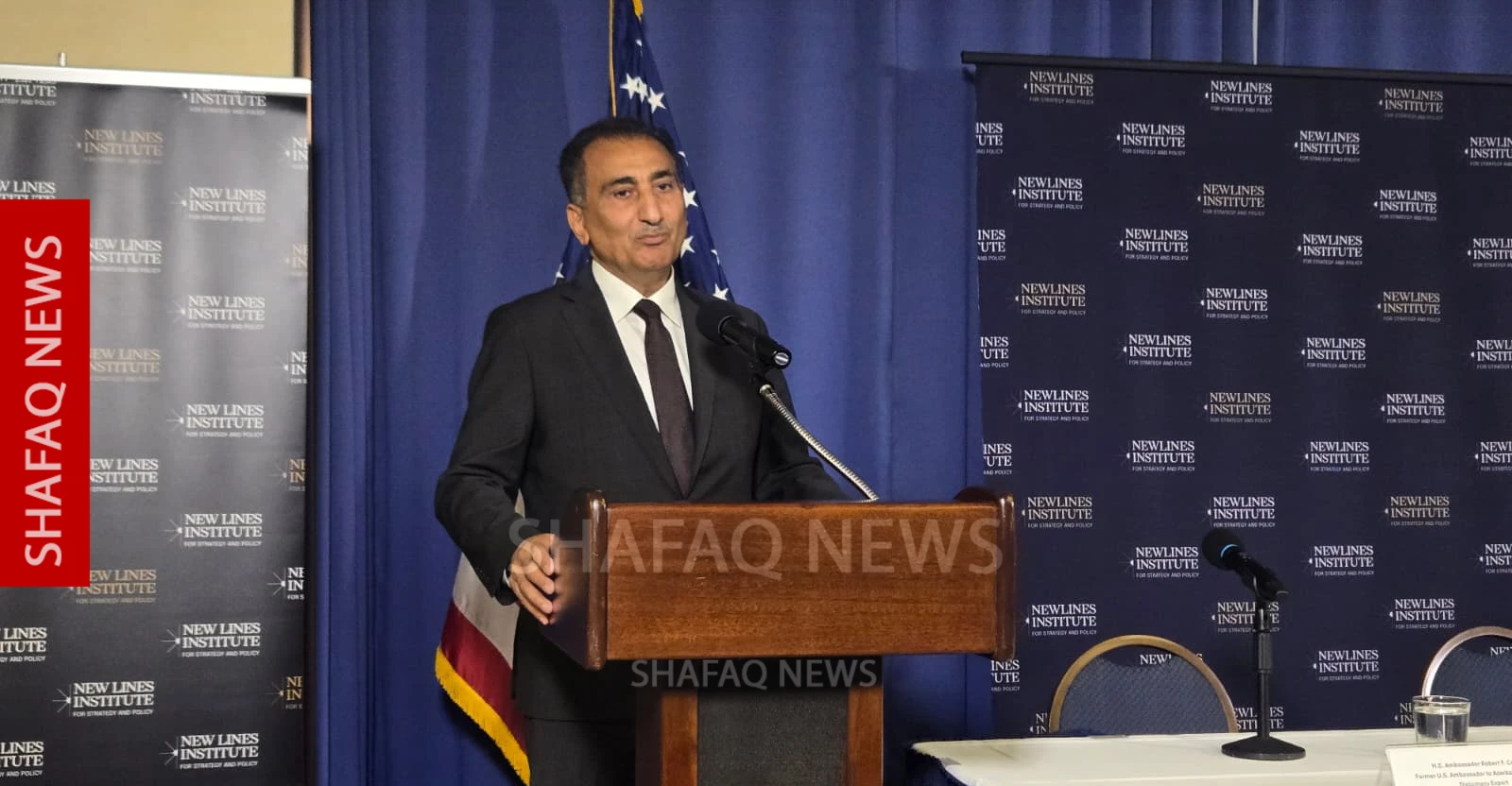 Shafaq News – Washington
The Iraqi ambassador to Washington, Nizar al-Khairallah, and the Syrian chargé d’affaires, Muhammad Qantari, confirmed on Thursday that the revival of the Kirkuk-Banias pipeline has entered the strategic planning stage to pump one million barrels per day, in an effort to achieve anticipated regional energy integration.
This came during a special dialogue session on the sidelines of the launch of the “Four Seas Initiative” at the National Press Club in Washington, D.C., organized by the “New Lines” Institute.
Shafaq News Agency’s correspondent in Washington said that the opening session witnessed very important official statements from both officials, focusing on the executive steps to revive the strategic partnership in the field of energy, and to move towards a new era of bilateral and regional relations between Baghdad and Damascus.
One million barrels per day of Iraqi oil exports
In his speech during the session, Iraqi Ambassador Nizar Al-Khairallah said that the development of the Kirkuk-Banias pipeline could be expanded to reach an export capacity of one million barrels per day, stressing the intention to expand the partnership to include gas and electricity.
Al-Khairallah considered the initiative to be a real opportunity born out of the current maritime crises that threaten ships in the Strait of Hormuz and Bab al-Mandab, noting that practical steps have already been taken to revive and develop the historic oil pipeline between Kirkuk and Banias, which extends over 800 kilometers and was established in 1952 and was previously damaged by factors of instability.
A message from Baghdad to Washington
The ambassador revealed that just two days earlier, the head of the Iraqi television delegation had conveyed a special message from Iraqi Prime Minister Ali al-Zaidi to the US administration, confirming the commitment to supporting economic stability in Syria through energy projects.
High-level delegation to upgrade the line
Al-Khairallah explained that a high-level Iraqi delegation of specialists visited Damascus last year to discuss the technical and financial details of restarting the pipeline, noting that the estimated cost of repairing and rehabilitating the pipeline has reached about $8 billion so far.
The Iraqi ambassador also noted that the current discussions have gone beyond the old traditional capacity of the pipeline (300,000 barrels per day), with plans to raise the capacity and export to one million barrels per day to ensure economic viability and profitability.
Connecting southern Iraq to the line
The ambassador revealed that the shared vision that was formulated last year includes the possibility of linking the oil fields in southern Iraq to the pipeline heading to Syria, and not limiting it to the Kirkuk fields only, thus creating a new and flexible export dynamic.
A legal framework and partnership that goes beyond oil
Al-Khairallah revealed that the two countries are moving towards drafting a new legal agreement that will define the terms and profits after the end of the previous historic agreement that lasted for 70 years, adding: “For the first time, in our current negotiations with Syria, we are looking to go beyond exporting crude oil only, to move towards petrochemical projects, natural gas, and electrical interconnection.”
Unique strategic partnership
The ambassador concluded his remarks by noting that Iraq had signed a new strategic partnership agreement with Syria, the first of its kind for Iraq with any country in the region, stressing that the stability of Syria is an integral part of Iraqi national security due to the historical and tribal ties that extend between the two peoples.
For his part, the Syrian Chargé d’Affaires, Muhammad Qantari, announced the start of a new phase with Iraq, and full readiness to pump oil and gas towards the Mediterranean Sea.
Launching a new era with Baghdad
Qantari said: “We are living through the beginning of a completely new historical era in strategic relations with Iraq, which is a source of great optimism for the future of both countries,” stressing that the vital facilities and installations in Syria are ready to receive and connect the lines capable of starting the pumping of oil and gas coming from Iraq through Syria to Turkey and the Mediterranean Sea.
Land-based regional energy integration
Qantari stressed that Damascus believes in the importance of regional cooperation, indicating that this trend is developing day by day; as Syria has already begun regional energy cooperation with Jordan to obtain gas, and there are active and continuous electrical interconnection lines with Turkey to import electrical energy, in addition to ongoing negotiations with Lebanon to supply them with gas and electricity.
shafaq.com
