Following calls to close the US embassy, a legal expert explains the procedures.
Following calls to close the US embassy, a legal expert explains the procedures.
2025-06-16 08:04
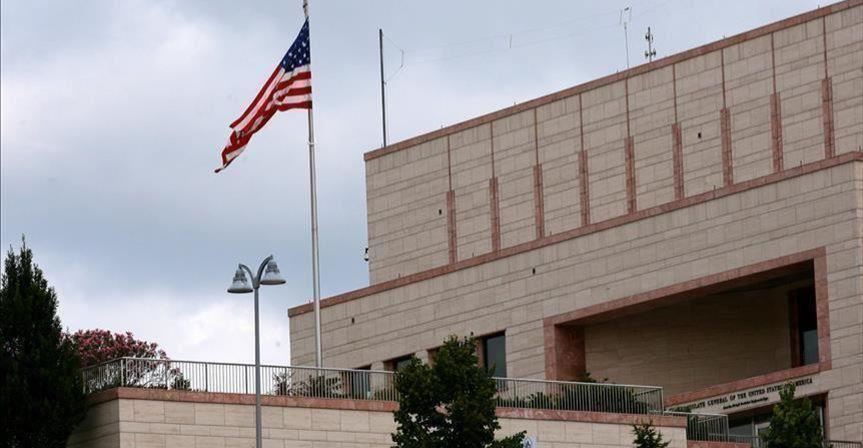 Shafaq News/ Legal expert Ali Al-Tamimi explained on Monday the legal procedures for closing embassies in accordance with international treaties, following the escalation of demands to close the US embassy in Baghdad.
Al-Tamimi told Shafaq News Agency, “The host country of the embassy can declare a diplomat, whether an ambassador or a diplomatic employee, persona non grata according to Article 9 of the Vienna Convention on Diplomatic Relations of 1961. This waives his immunity and protection in the host country, and the latter can submit a memorandum to the embassy explaining the reasons, or it may refrain from explaining them.”
He added that “after informing the diplomat of the decision and that he is persona non grata, he must leave the embassy and the host country as well, as Article 25 of the Convention on the Protection of the Embassy and its Property requires even with the expulsion of the ambassador,” indicating that “Article 29 of the Vienna Convention granted immunity to embassy staff, but this immunity is lifted when the diplomat declares himself persona non grata, meaning that the expulsion of the diplomat is an exception to the principle of immunity detailed in Articles 31, 32 and 39 of the Convention.”
Al-Tamimi pointed out that “Paragraphs 41 and 42 of the agreement place great emphasis on the embassy’s obligation to respect the laws, regulations, and customs of the country in which it resides, particularly security and sovereignty. This could be grounds for expelling the ambassador and closing the embassy if violations occur.”
He continued, “As for closing the embassy, Article 45 of the Vienna Convention addresses this matter. It occurs after the expulsion of the ambassador and the severance of diplomatic relations between the two countries.” He added, “Even with the closure of the embassy and the expulsion of the diplomatic mission, the host country must protect the members of the mission and the property there, because the embassy remains part of the territory of the country to which it belongs and must be protected.”
He stressed that “closing an embassy requires the host country to notify the embassy’s host country of the decision, which is usually followed by arrangements including the appointment of a third country to protect the interests of the country hosting the embassy.” He explained that “countries must also take their time and not rush into these measures outlined in the above agreement, given the shared economic, political, and security interests between the two parties.”
Over the past two days, the rhetoric of armed factions has escalated, with Kata’ib Hezbollah threatening to target US interests in Baghdad. All factions have also called for the expulsion of US forces, with some even calling for the closure of the US embassy in Baghdad.
During its meeting last night, the Coordination Framework called for demonstrations condemning Israel’s bombing and supporting Iran, after reiterating its “categorical rejection of the violation of Iraqi airspace and its use to attack neighboring countries.”
The US Embassy in Baghdad issued a security alert yesterday warning American citizens of the increased potential for violence or attacks against its interests in Iraq. It also urged all US citizens in Iraq to avoid areas frequented by foreigners, as well as large gatherings and crowds.
shafaq.com
