Federal security forces are putting Al-Zaydi under pressure… Will he succeed where his predecessors failed?
Federal security forces are putting Al-Zaydi under pressure… Will he succeed where his predecessors failed?
2026-06-04
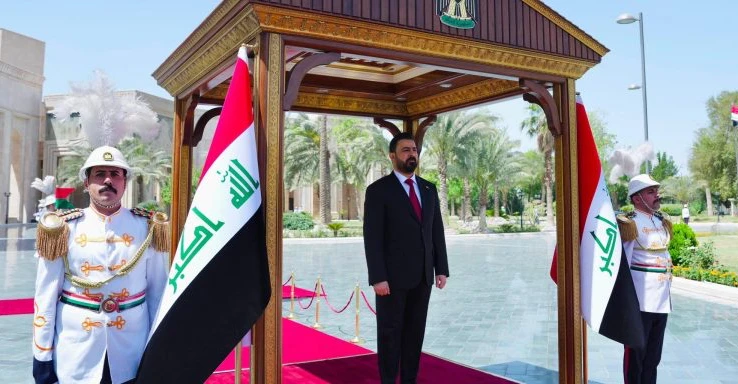 Shafaq News – Special Translation
Iraqi Prime Minister Ali al-Zaidi faces the same pressures that thwarted his predecessors’ efforts to establish Iraq as a prosperous and moderate actor reintegrated into the region, including the fierce competition between Iran and the United States for influence, according to the Soufan Institute , which believes that al-Zaidi, despite American pressure, will proceed cautiously in disarming the militias for fear of provoking civil unrest.
The American Institute explained, in a report translated by Shafaq News Agency, that the pressures that Iraq is subjected to due to the competition between Iran and the United States are amplified by the war between them, as oil exports, the main source of revenues in Iraq, have declined by 70%.
regional conflict
The report noted that Iraq was no exception to Iran’s obstruction of oil exports through the Strait of Hormuz, as its closure halted most of the oil production in Basra province, which represents approximately 3.3 million barrels of oil per day, or about two-thirds of Iraqi exports, while a third of Iraqi oil is produced in the Kurdistan Region and some of it reaches global markets via a pipeline from Kirkuk to the Turkish port of Ceyhan.
However, the report stated that the volume of oil exports through this pipeline is insufficient to cover the region’s expenses. It noted that during April, Iraqi oil revenues barely exceeded $1 billion, a significant drop from the pre-war total of approximately $7 billion per month, posing a threat to Iraq’s financial stability and imposing severe hardship on the population.
The report continued that Washington, despite praising al-Zaidi, also showed its willingness to use its financial and political influence over Iraq to form the new government in Washington’s favor and at Tehran’s expense, recalling that US President Donald Trump’s threat earlier this year to suspend security cooperation with Baghdad forced the Coordination Framework to abandon the nomination of Nouri al-Maliki to return to this position, and that al-Zaidi received warnings from US officials against nominating ministers linked to militias allied with Iran.
According to the report, only one of the new cabinet members has a limited connection to the Kataib Hezbollah militia, namely Mustafa Sand, who took over the Ministry of Communications.
In addition, the American report noted that al-Zaidi retained Fuad Hussein as foreign minister, who comes from the Kurdistan Democratic Party led by Masoud Barzani, adding that keeping Fuad Hussein reflects al-Zaidi’s recognition of the deterioration of Iraq’s relations with its neighbors, as regional officials hope that the foreign minister, who has proven to be a reliable partner among his regional counterparts, will be able to repair relations.
Nevertheless, the report suggested that al-Zaidi’s alignment with Trump’s team would complicate his tenure as prime minister, noting that more than 80 members of the 329-seat House of Representatives represent parties directly linked to armed factions allied with Iran, and insist on a share of power commensurate with their social bases.
While the report noted that armed factions launched drones toward Saudi Arabia and the UAE three days after al-Zaidi took office, it said that these militia attacks put al-Zaidi’s relations with Iraq’s Gulf neighbors at a turbulent start.
Weapons confiscation
However, the report noted that Washington and the Gulf states were encouraged last week after it appeared that al-Zaidi was fulfilling his promise to give the state a monopoly on weapons and the security scene, with al-Sadr announcing the start of integrating the “Peace Brigades” into the Iraqi national leadership structure.
Although al-Sadr broke with Iran more than a decade ago, which distinguishes his nationalist movement from other Iran-aligned militias, the report said that al-Sadr is so deeply entrenched in Iraq’s armed Shiite political establishment that his decision put immediate pressure on other militia leaders.
He went on to say that although the Sadrists did not compete in elections in previous election cycles, Sadr still commands the loyalty of a large part of the Shiite community, many of whose members routinely respond to Sadr’s calls to take to the streets in protest or to incite political action.
The report stated that al-Zaidi’s efforts to strengthen his government’s authority enjoy general support from other Iraqi political leaders, noting that some elected members of parliament support a proposal to place all Popular Mobilization Forces factions under the control of a new federal security ministry that manages all Iraqi armed forces. They believe that such a ministry would enable Baghdad to more effectively supervise the factions allied with Iran, including preventing them from attacking Gulf states and other regional actors.
However, according to the report, experts believed that implementing such a proposal, if adopted, would enable the factions allied with Iran to assert themselves more strongly within the already fragmented governance and security structures, rather than being under stricter control.
shafaq.com
