Billions abroad… How can Iraq recover funds lost to cross-border corruption?
Billions abroad… How can Iraq recover funds lost to cross-border corruption?
2026-07-11
 Shafaq News – Baghdad
With the expansion of anti-corruption campaigns in Iraq, the confrontation is no longer limited to pursuing the accused within the country, but has moved to a more difficult challenge, which is recovering public funds that were smuggled abroad, at a time when the government confirms that recovering these funds represents a priority parallel to holding those involved accountable.
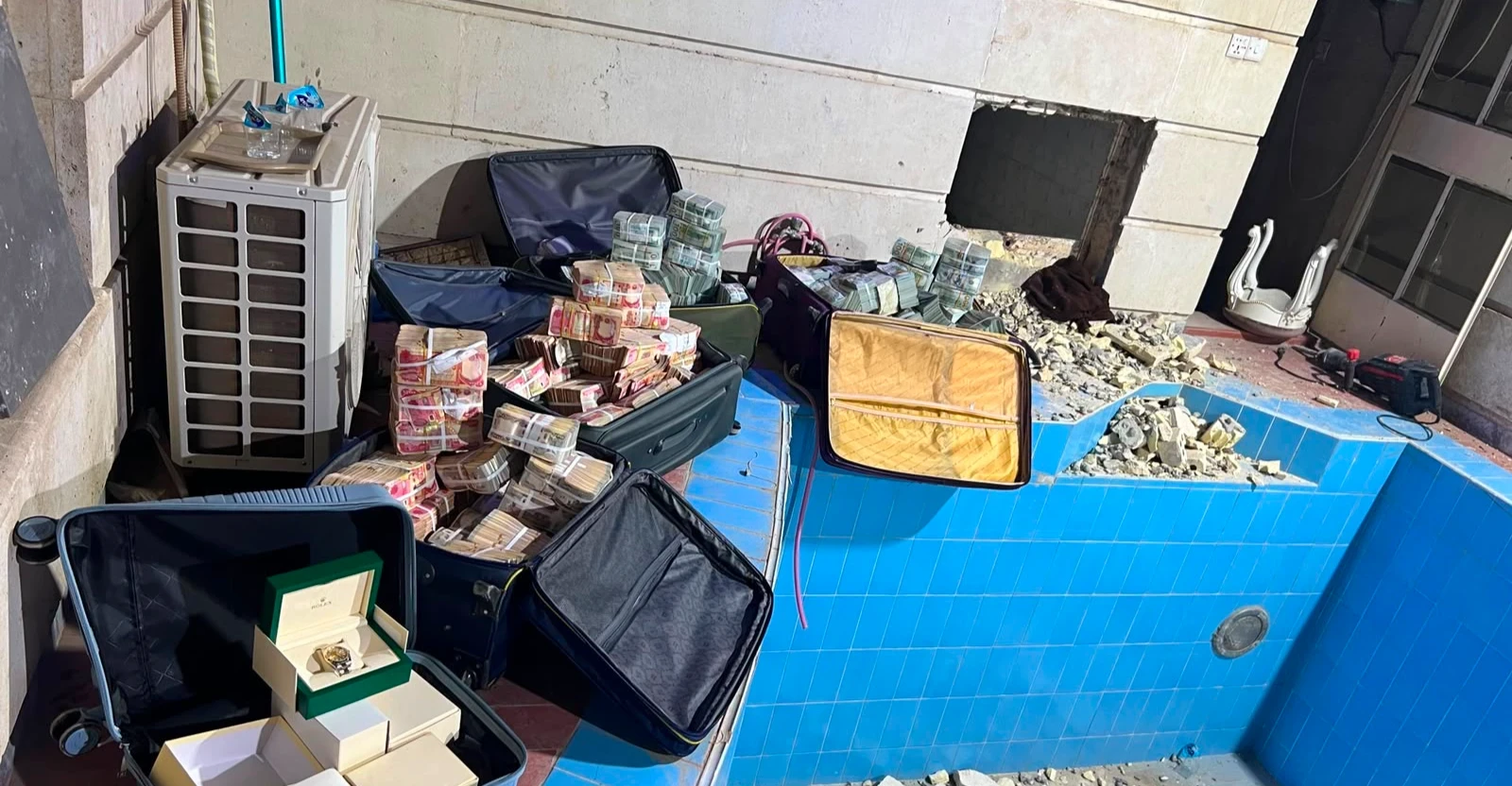
The Supreme Judicial Council recently announced the continuation of investigations into a number of major corruption cases, coinciding with the seizure of huge sums of cash in the case of the former Undersecretary of the Ministry of Oil for Liquidation Affairs, Adnan al-Jumaili.
The judiciary also revealed on Friday a legal mechanism aimed at combining the accountability of the accused with the recovery of public funds, by allowing – within the limits of what the law permits – the easing of some procedures or penalties against those who return the funds voluntarily.
Money back
These developments coincide with the Ministry of Justice’s announcement last Saturday that it had recovered more than $25 million of Iraqi funds over the past two years, while continuing to pursue funds, real estate and bank accounts abroad in coordination with the Integrity Commission and relevant international bodies.
Given that some of the corruption funds have spread to other countries, a question arises regarding the legal and diplomatic mechanisms that the government of Iraqi Prime Minister Ali al-Zaidi can adopt to recover those funds, especially with the presence of wanted individuals residing outside Iraq and investments suspected of belonging to those accused in corruption cases.
Experts propose the establishment of a joint high committee comprising the Integrity Commission, the Supreme Judicial Council, and the Ministry of Foreign Affairs, which would be responsible for preparing the judicial files related to the accused and the smuggled funds, before addressing the concerned countries through diplomatic channels, based on applicable international agreements and provisions for judicial cooperation.
National priority
In this context, Sakr Al-Muhammadawi, a member of the Parliamentary Security and Defense Committee, says that “the file of recovering looted funds represents a national priority because of its direct impact on protecting public funds and enhancing citizens’ confidence in state institutions.”
Al-Muhammadi adds, to Shafaq News Agency, that government agencies are required to “intensify their legal and diplomatic efforts, in cooperation with countries and international organizations, to track down and recover smuggled funds in accordance with applicable legal frameworks.”
He stressed the need to “enhance transparency in following up on this file and informing the public about the measures taken and the results achieved, while holding all those accused of corruption accountable without exception, in a way that strengthens the rule of law and preserves the rights of the Iraqi people.”
Al-Muhammadi points out that the Security and Defense Committee is following up on the ongoing investigations related to corruption cases, stressing that “recovering the looted funds is not just a financial demand, but a national entitlement that enhances development, supports the economy and contributes to providing basic services to citizens.”
Legal options
For his part, political and legal researcher Amir Al-Daami believes that Iraq possesses international legal tools that can be used to recover funds and assets located outside the country.
Al-Daami told Shafaq News Agency that “the international agreements signed between Iraq and the countries of the world allow for the recovery of funds, especially after the signing of a cooperation agreement between the Iraqi judiciary and the European organization (Eurojust) to exchange information, wanted persons and funds.”
He adds that these mechanisms “enable Iraq to track and recover funds, and the international community, especially the United States, supports the anti-corruption campaign, which may be reflected in the level of cooperation with Iraq in recovering funds and those wanted by the judiciary.”
International Cooperation
For his part, legal advisor Dr. Saad Al-Bakhati confirms that recovering smuggled funds is not achieved by judicial rulings alone, but rather requires an integrated system of judicial and diplomatic cooperation.
Al-Bakhati explains to Shafaq News Agency that the 2003 United Nations Convention against Corruption, which Iraq joined, is the most important international legal framework for asset recovery, as it obliges member states to provide mutual legal assistance, freeze bank accounts, and seize, confiscate and return funds and assets when it is proven that they were obtained from corruption crimes.
It shows that the recovery process begins with conducting financial investigations within Iraq to identify the funds involved in the crime, followed by issuing judicial orders for seizure or confiscation, followed by submitting official requests to the countries where those funds are located, supported by evidence and judicial decisions, in accordance with bilateral or multilateral agreements or the principle of reciprocity.
Al-Bakhati continues his statement by saying that the government is also required to activate cooperation with the International Criminal Police Organization (Interpol), and to benefit from the United Nations and World Bank’s initiative to recover stolen assets, in addition to forming specialized national teams that include judges, public prosecutors, financial experts and money laundering investigators, to track the movement of funds across borders and uncover shell companies and accounts used to hide them.
He believes that the government’s success in this matter “is not measured by the number of judicial rulings issued, but rather by its ability to build an integrated system that combines the strength of legislation, the independence of the judiciary, the efficiency of oversight bodies, and effective international cooperation.”
Al-Bakhati concludes his statement by saying that “combating corruption is not complete except by recovering public money for the state treasury, because true justice is achieved by holding the corrupt accountable and restoring rights to their owners.”
shafaq.com
