Between public anxiety and the experience of 2021… Why do economists rule out a comprehensive wave of inflation after the exchange rate adjustment?
Between public anxiety and the experience of 2021… Why do economists rule out a comprehensive wave of inflation after the exchange rate adjustment?
2026-10-10
 Shafaq News – Baghdad
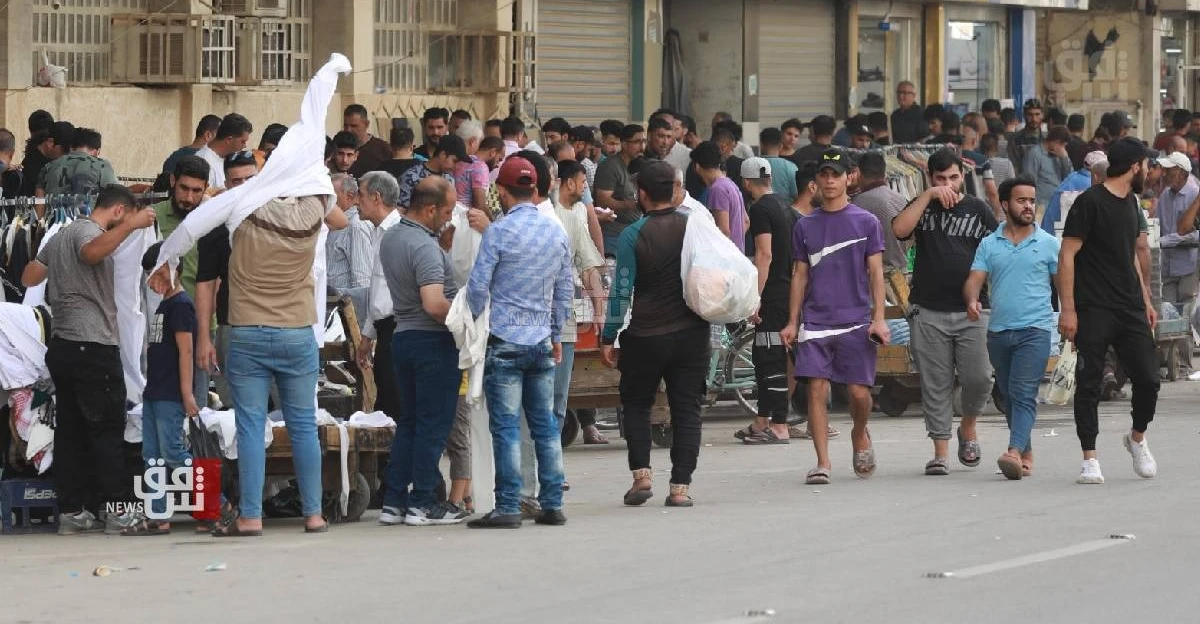
Economic experts ruled out on Saturday that all imported and locally produced goods would be affected by the new exchange rate decision for the dollar against the Iraqi dinar, stressing the importance of monitoring prices in the market and following up on inflation data for the coming months to assess purchasing power and hold the concerned parties accountable in the event of negative repercussions.
In this regard, the head of the “Iraq Future” Foundation for Economic Consultations and Studies, expert Manar Al-Obaidi, said that evaluating the decision to change the exchange rate requires clarity in objectives and accuracy in reading the results, explaining that “presenting the price of the most expensive item of a food commodity and ignoring the rest of its items does not provide a true picture of price movements. Measuring inflation requires monitoring a basket that represents what the citizen consumes, and tracking the change in prices of goods with the same specifications over time, and according to their weight in family spending.”
Previous experiences
The economist considered the experience of 2021 worth recalling. After the official dollar exchange rate rose at the end of 2020 from 1190 to 1460 dinars, an increase of about 22.7%, food prices rose during 2021 by about 5%, according to the World Bank, although some goods recorded higher increases. He stressed that this experience shows that the percentage change in the exchange rate does not necessarily mean that the prices of all goods will rise by the same percentage.
Attacking the government decision
Al-Ubaidi continued, saying, “As for the intensity of the attack on the decision, I believe that one of its main reasons is the lack of a clear link between changing the exchange rate and specific and declared economic goals, so that the citizen knows what is supposed to be achieved and when,” noting that “the decision came after a series of expectations and speculations that made society eager for any change, so anxiety accumulated before the results became clear.”
The difficult economic situation in Iraq
The economist stressed that “what is required is to monitor prices during the coming days and weeks, and to follow up on inflation data as it is released during the coming months, before issuing final judgments based on momentary readings that are dominated by fear and anxiety,” explaining that “with this monitoring, the impact of the decision on the purchasing power and life of the Iraqi citizen can be assessed, and the decision-maker can be held accountable for clear and measurable results.”
Expectations of a decline in commodities
For his part, economist Nabil Al-Marsoumi predicted a decrease in goods prices in the local market if the dollar stabilizes. He said that the dollar’s value dropping to 1630 dinars today is very important in positively impacting commodity prices. He added, “If the dollar stabilizes between 1600 and 1630 dinars per dollar, we may witness a decline in commodity prices because traders were already pricing their goods before the change at a rate of 1600 dinars per dollar.”
These speculations come in conjunction with the Iraqi Cabinet’s decision to amend the dollar exchange rate based on an emergency recommendation submitted by the Minister of Finance and the Governor of the Central Bank, so that the purchase price from the Ministry of Finance becomes (1500) dinars, the selling price to banks becomes (1510) dinars, and the selling price to the end beneficiary becomes (1520) dinars per dollar.
Under the new amendment, the Central Bank raised the exchange rate for the public by 20,000 dinars per 100 dollars, compared to the previous rate of 1,320 dinars per dollar (132,000 dinars per 100 dollars), at a time when the parallel market witnessed jumps prior to the decision to reach about 165,000 dinars per 100 dollars, influenced by leaks and expectations.
Thursday, the Iraqi Parliament hosted Prime Minister Ali al-Zubaidi regarding the decision to amend the exchange rate. He explained that “the government had three options: the first was to resort to mandatory savings and leave the employee to live on promises, the second was to distribute salaries every 45 days, and the third was to resort to borrowing and drown the country in debt, which it is already burdened with.”
He added that he took over the “mission while our economy was besieged due to the interruption of oil exports and the closure of the Strait of Hormuz. The size of the public debt was more than 208 trillion dinars, and the government was required to provide 10 trillion dinars monthly. Despite the crisis, we provided the salaries,” indicating that “the difference in the dollar exchange rate previously was taken over by speculators.”
For his part, Speaker of Parliament Hebat al-Halbousi affirmed that “the decision to change the exchange rate is irreversible, and the heads of the political blocs support the decision,” amid popular anger and protest from Iraqis against the decision.
shafaq.com
