Baghdad wakes up to closed markets as the strike begins
Baghdad wakes up to closed markets as the strike begins
2026-02-08
 Shafaq News – Baghdad
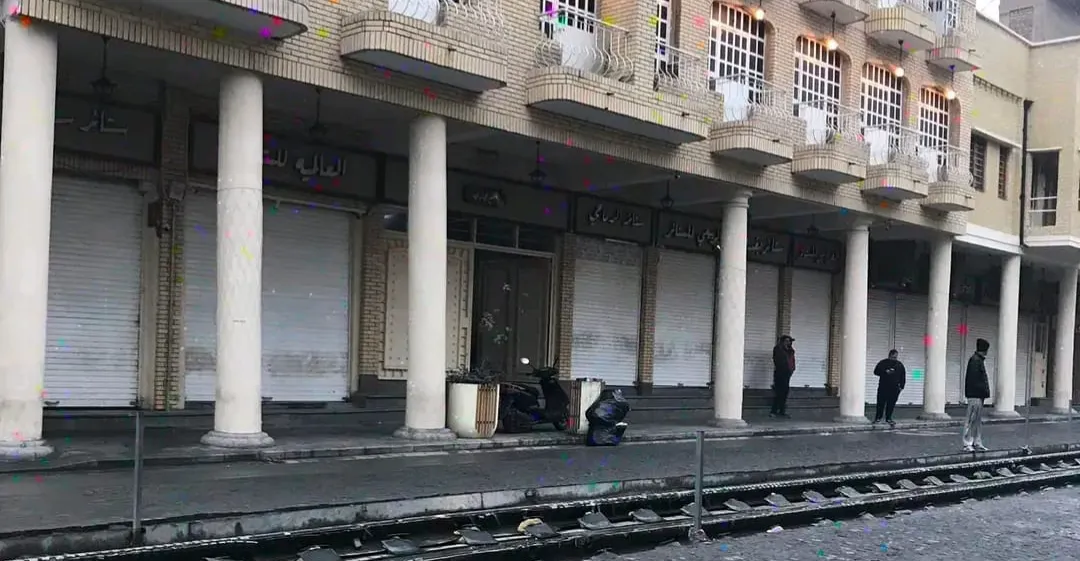
Iraqis woke up on Sunday to closed shops and shuttered markets, after traders announced the start of a general strike in protest against the decision to raise customs tariffs.
A Shafaq News correspondent reported that major commercial areas in Baghdad witnessed shop closures, including the Shorja, Rashid Street, Rabeei, and Industrial areas, as well as Karrada and Victory Square, in addition to other areas considered major shopping centers in the city. Meanwhile, a number of shop owners organized a protest in the Shorja area.
Traders and shop owners had begun a general strike on Saturday evening, which included closing a number of markets in various parts of Baghdad, in protest against the decision to raise customs tariffs, which they said had burdened them and negatively affected buying and selling.
Closing Al-Shourja and Zayouna for one day costs 30 billion dinars
Economic expert Mohammed Al-Hassani told Shafaq News Agency that “commercial estimates indicate that closing large markets such as Al-Shourja and Zayouna for one day could lead to daily losses of billions of dinars for merchants, as a result of the cessation of sales, the damage to some goods, and the continuation of operating costs, in addition to indirect losses affecting the state, including a decline in tax and customs revenues, disruption of transportation and unloading, and the work of laborers.”
He added that “the number of shops affected by the strike ranges between 30,000 and 40,000, with about 10,000 shops in Al-Shourja and its surroundings, and about 20,000 shops in Zayouna and other areas, while the total daily losses resulting from the closure are estimated at about 30 billion Iraqi dinars, without taking into account the indirect losses related to supply chains and price increases.”
A number of merchants told Shafaq News Agency that the new tariff caused a rise in the prices of goods and a decline in the purchasing power of citizens, which led to a recession in the markets and caused business owners to incur large losses. They stressed that the strike came to pressure the concerned authorities to reconsider the decision and put in place fair mechanisms that take into account the economic conditions, while they continue the strike until their demands are met and the door to dialogue is opened.
Yesterday, commercial markets in Baghdad witnessed a large turnout of citizens shopping in anticipation of rising food and consumer goods prices, after traders threatened to close the markets in protest against the decision to raise customs tariffs.
The decision is facing rejection from Iraqi traders, which has led to the accumulation of goods containers at the ports and the disruption of trade, which has negatively affected public revenues, which experts believe was one of the reasons for the delay in the salaries of state employees for the month of January.
In contrast, the General Tax Authority confirms that it achieved good financial revenues during the past month, while hundreds of merchants decided to close their shops starting from Sunday, with calls for a general closure of markets in all governorates until further notice, to pressure the government to postpone the decision or reduce the tax.
shafaq.com
