Baghdad and Erbil: Two decades of golden opportunities undermined by divisions and fragmentation
Baghdad and Erbil: Two decades of golden opportunities undermined by divisions and fragmentation
2025-07-27 02:09
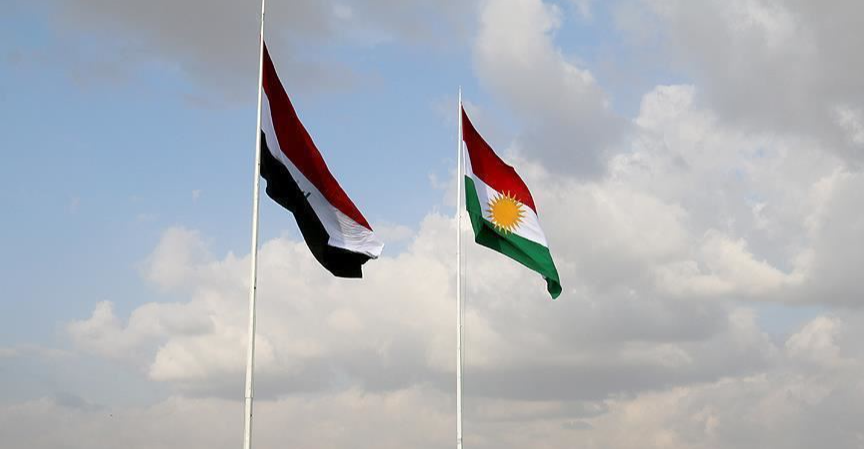 Shafaq News – Baghdad/Erbil
Over the past two decades, golden opportunities have been available for the federal government in Baghdad and the Kurdistan Regional Government in Erbil to enhance cooperation between the two parties, but they have been lost due to the lack of a unified vision and the accumulation of disagreements and crises.
The 2005 Federal Constitution provided a unique opportunity to begin building a multi-ethnic, democratic state by recognizing the Kurdistan Region as a federal entity. However, centralization in Baghdad and partisan tensions in Kurdistan have hindered the realization of this opportunity, according to observers.
Although the 2017 referendum on independence held by Kurdistan effectively exposed the limits of the country’s federal system, experience has shown the region that adhering to the constitution is the most effective way to preserve its gains, despite Baghdad’s failure to abide by those provisions.
An opportunity also emerged to build a model of civil coexistence after the victory over ISIS, but political and financial disputes have prevented the region from capitalizing on this achievement at the national and international levels.
In addition, the Kurdistan Region possessed advanced foreign relations and economic and tourism capabilities that could have made it a successful model within Iraq. However, the numerous problems with Baghdad and the fragmentation of prominent forces within the region hindered this development.
This has hampered the region’s oil exports and plunged Baghdad and Erbil into recurring economic and political crises, instead of investing in oil as a tool for shared development.
In addition to Kurdistan’s agricultural and economic potential, which could enable the region to become Iraq’s food basket, Baghdad’s policies have prevented the export of Kurdish agricultural products, dealing a blow to domestic production and leading to reliance on imports.
In this context, political analyst Khaled Walid explains that “the relationship between Baghdad and Erbil represents part of the political, economic, and social instability that Iraq has suffered from for more than two decades.”
Speaking to Shafaq News Agency, Walid pointed out that a number of problems are affecting this relationship, and unfortunately, some political forces are exploiting them to achieve narrow interests, causing significant harm to citizens.
Walid expects these problems and crises to continue unless permanent solutions and remedies are found based on legislation and laws that contribute to achieving stability.
He also stresses that political leaders must recognize that Iraqi citizens are becoming more aware and cognizant, and that the continuation of these tensions serves the interests of the quota-based leaders, who are beginning to face public discontent in both Baghdad and Erbil.
Walid asserts that real solutions can only be achieved through working for a national interest that benefits all segments of the population, based on a comprehensive Iraqi identity.
Article 140 of the Constitution was intended to serve as a basis for territorial unity and national unity rather than conflict over disputed areas, but it was neglected and unimplemented, exacerbating ethnic conflicts.
Arif al-Hamami, a member of the Iraqi Parliament’s Legal Committee, holds the Baghdad and Erbil governments responsible for the failure to implement the law, noting that Article 140 is not the only law that has not been implemented. Rather, many other laws pertaining to Baghdad and Erbil have also not been implemented.
Among these laws, Al-Hamami mentioned to Shafaq News Agency, are the budget law, the recent budget amendment law, the law on the transfer of non-oil revenues, and many other laws that have not been implemented with the region.
Al-Hamami, a member of the State of Law Coalition led by Nouri al-Maliki, believes that “the Kurdistan Region is the one maneuvering and negotiating but not implementing, so the regional government alone is responsible for not handing over oil revenues.”
He believes that “the regional government is the only obstructionist entity and has no real intention of delivering revenues, and all agreements are in fact political maneuvers to buy time.”
However, Kurdish political analyst Mohammed Zangana blames the federal government for “exploiting the time by creating new problems regarding the Kurdistan Region’s budget and funding the salaries of the region’s employees.”
Zenkana explained to Shafaq News Agency that Baghdad has delivered May salaries, but that June and July are awaiting decisions from the committee that was agreed to be formed to discuss pending issues, deductions, retiree rights, and the like.
Zenkana asserts that “the ball is now in the federal government’s court, as it is delaying the resolution of these problems. It is clear that it does not want to find solutions, despite the pressure and the Kurdistan Democratic Party’s threat to withdraw from the political process.”
Given the previous challenges, the need for Kurdish unity is more urgent than ever. Kurdish forces still have a real opportunity to reorganize their political, economic, and even military ranks within a federal framework that ensures a fair sharing of resources and powers with Baghdad.
shafaq.com
