Ahead of his visit to Washington, al-Zaydi’s “sieve” causes the biggest government shake-up since 2003.
Ahead of his visit to Washington, al-Zaydi’s “sieve” causes the biggest government shake-up since 2003.
2026-06-20
 Shafaq News – Baghdad
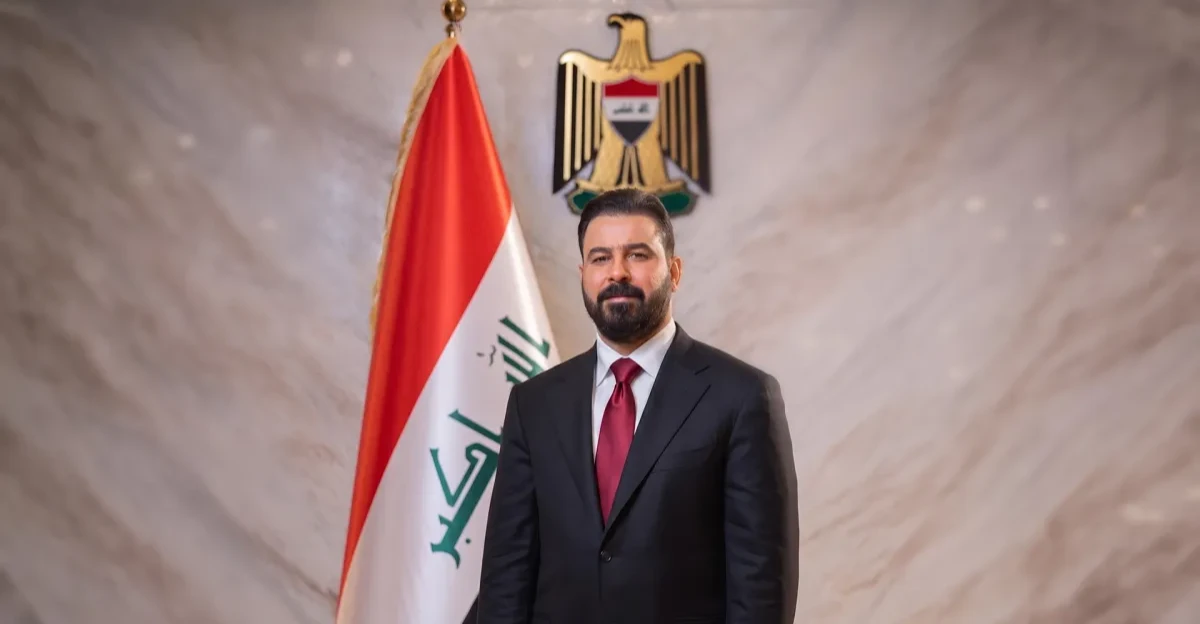
It wasn’t long after Ali Faleh al-Zaidi took over his duties that he began sending clear signals to his opponents and allies at the same time, under the title “The next stage will not be an extension of what came before it.”
While his government is still completing its ministerial formation, informed sources speak of a broad list of changes that may affect more than 100 officials at various administrative levels, starting with undersecretaries and not ending with directors-general, in a move that seems closer to redrawing the centers of influence within the Iraqi state than to mere routine administrative procedures.
According to information obtained by Shafaq News Agency, the team assigned by Al-Zaidi to review the performance of government institutions is continuing its work away from the spotlight, through a comprehensive evaluation of official institutions and bodies, in preparation for launching one of the broadest replacement operations that the country has witnessed since 2003.
The evaluation process is not limited to administrative performance only, but also includes the nature of the political and organizational affiliations of some officials, amid talk of a trend to remove figures who are accused of being close to armed factions or who have failed to manage the files entrusted to them during the past years.
In a country where successive governments have been accustomed to “waiting before approaching high positions for fear of clashing with influential parties,” al-Zaydi’s moves appear to be very different.
The current prime minister began his term with a series of decisions affecting sensitive security and economic positions, including the National Security Service and the Central Bank, which opened the door to questions about whether these steps represent the beginning of a project to restructure state institutions, or whether they come in response to the requirements of a “new political phase” in which internal calculations are intertwined with external pressures.
The timing of these measures is of exceptional importance as al-Zaidi’s anticipated visit to Washington and his expected meeting with US President Donald Trump approach, a visit that many observers view as a pivotal moment in shaping the relationship between the new government and the US administration.
According to political sources who spoke to Shafaq News Agency, US envoy Tom Barrack discussed with al-Zaidi during his recent visit to Baghdad issues that go beyond the formation of the government or the distribution of positions, reaching the form of the Iraqi state during the next stage, the mechanisms for managing sovereign institutions, and strengthening the independence of government decision-making from traditional centers of influence.
According to the sources, there are understandings that led to the abolition of the positions of deputy prime ministers, as well as the exclusion of the “Ministry of Federal Security” project, which was proposed to include various security formations, including the Popular Mobilization Forces and armed factions.
Meanwhile, negotiations regarding the allocation of security ministries and some contentious portfolios are still ongoing, amid assurances that al-Zaydi is seeking to select technocratic figures, even if they enjoy the support of certain political forces, sources say.
But the road ahead for the prime minister does not appear entirely paved, as any change in the highest state positions necessarily means disrupting political balances that have accumulated over more than two decades, which makes any broad replacement process a real test of al-Zaydi’s ability to impose his will within a system of governance based on consensus, power-sharing, and the division of influence.
With the postponement of the meetings of the Coordination Framework forces until after the tenth of Muharram, the political forces seem to be waiting for the picture of the final understandings regarding the government formation and the expected changes to become clear, before determining the form of their position on the Al-Zaydi project.
Until then, the list of 100 names does not appear to be a “media show,” but rather a title for a silent political battle taking place behind the scenes, which may redraw the centers of power within the Iraqi state, and reveal the extent to which al-Zaydi can turn promises of reform into reality, or remain within the limits of the balances that brought him to power.
shafaq.com
