The “balances” tax: Baghdad-Washington relations are on the verge of collapse
The “balances” tax: Baghdad-Washington relations are on the verge of collapse
2025-07-01 05:46
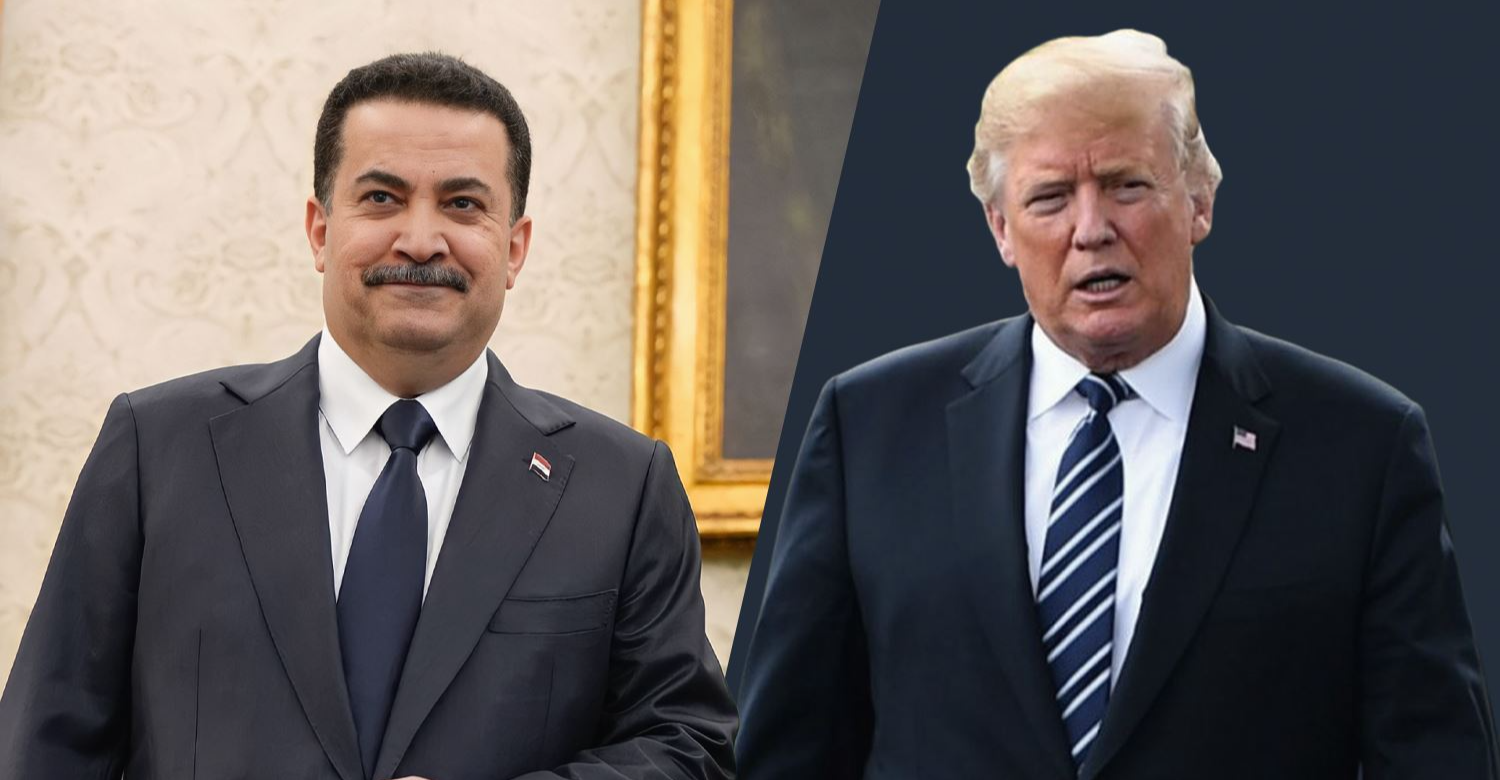 Shafaq News – Washington/ Special translation
It is difficult to imagine the course of relations between the United States and Iraq in the coming period, except for two options: either ending it or maintaining the status quo, which serves neither party’s interests.
According to a report issued by the Atlantic Council, translated by Shafaq News Agency, relations are under constant pressure from Tehran, with the aim of undermining them, especially after the outbreak of the “Israeli-Iranian” war and Washington’s involvement in it on Israel’s behalf.
Post-escalation Iraq
The report noted that “US-Iraqi relations were already strained even before the recent conflict between Israel and Iran erupted, and that popular opposition to the US military presence prompted Baghdad and Washington to agree to reduce the role of US forces in the fight against ISIS and move toward a new model of security cooperation.”
However, according to the report, Iranian-backed militias have repeatedly launched attacks on US forces in response to Washington’s support for Israeli military operations in Gaza, and have targeted US and US-linked companies, diminishing the already weak interest in expanding economic ties.
According to the American Institute’s report, in light of this reality, with security cooperation dwindling and opportunities for expansion into other areas absent, the options for the relationship are now limited to continuing the unproductive current situation or complete separation, which does not fully serve the interests of either party.
However, the report explained that “appearances can be deceiving, as significant progress has been made in the recent period on the security and economic fronts, particularly after Iraqi Prime Minister Mohammed Shia al-Sudani’s visit to Washington in April 2024, despite the escalation of the war in Gaza at the time.”
In light of this, the report noted that “relations between Washington and Baghdad are now at a crossroads,” indicating that “Baghdad may side with Tehran and demand the departure of the remaining American advisors, leading to a reduction or even termination of relations with the United States.”
conditional opportunity
According to the report, there is an opportunity that Washington can exploit to support Baghdad’s efforts to reduce its economic and energy dependence on Iran and build Iraq’s capacity to resist Tehran’s ongoing attempts to undermine its independence and sovereignty.
Both the United States and Iraq have always had to balance their relations with each other and with Iran, according to the same report. Washington has sought to build a stronger relationship with Baghdad while maintaining a policy of deterrence toward Tehran, while Iraq has had to reconcile its two conflicting partners in a way that allows it to deal with each side without exposing itself to pressure from the other.
The report noted that Iran not only played an indirect role, but also used its Iraqi proxies to pressure the Iraqi government and reduce cooperation with the United States in an attempt to expel American forces. This has hindered Iraq’s recovery and slowed political reconciliation and economic growth.
He added, “The trilemma of balancing between Washington, Baghdad, and Tehran has created chronic problems. Attacks on US forces present Washington with two costly choices: either respond, thereby fueling popular opposition, or not respond, which encourages further attacks. In both cases, the Iraqi government is forced to make difficult decisions between supporting Washington and appeasing its domestic allies.”
However, the report noted that “Iran today finds itself in a difficult position due to several factors: its inability to protect its airspace, losses among its military and scientific leadership, and mounting domestic public anger. This is driving it to increase pressure on Baghdad to end its cooperation with Washington.”
Sovereignty and interests
The report warned that continued Iranian pressure could push Iraq into a military response to Israeli violations of its airspace. Iran’s proxies could use this as a pretext to strike Israeli and American targets, this time under the banner of “defending Iraqi sovereignty,” a slogan that could garner greater political support than simply “defending Iran.”
However, such a scenario could push relations to the breaking point, leaving Washington with no choice but to suspend most security cooperation programs with Iraq, according to the report.
In contrast, the report believes that “Iraq is unlikely to choose to fully align with Iran, especially since the militias, despite their rhetoric, have a lot to lose if the conflict with Israel or the United States escalates. Their losses will not only be material and human, but will also extend to disrupting the oil smuggling network, which represents a major source of influence and funding. Some estimates indicate that Iran and its proxies generate more than a billion dollars annually from these operations.”
The report concluded that the best the United States can hope for is what Al-Sudani offered during his visit to Washington: a continued security relationship and expanded energy cooperation. The future of relations between Iraq and the United States, as the report sees it, is not as bleak as it appears, but it is also not as promising as hoped.
The report continued, saying: “Amid rapidly changing regional dynamics, the relationship remains fragile, uncertain, and highly sensitive to any development. However, while Baghdad rejects an overt alliance with Washington at the expense of Tehran, it simultaneously demonstrates a degree of restraint in the face of Iranian pressure and militia provocations, demonstrating its continued commitment to maintaining a relationship with Washington.”
The report concluded by stating that “US influence in Iraq will not depend in the future on hard power, but rather on Washington’s ability to support Iraq’s sovereignty and economic resilience. It calls for adopting an approach based on ‘constructive opportunism’, grounded in sufficient communication to enable the rapid and effective identification of opportunities and expansion of areas of cooperation.”
shafaq.com
