Oil: We will achieve self-sufficiency by the end of 2025… and a plan to increase production to 6 million barrels.
Oil: We will achieve self-sufficiency by the end of 2025… and a plan to increase production to 6 million barrels.
2025-05-17
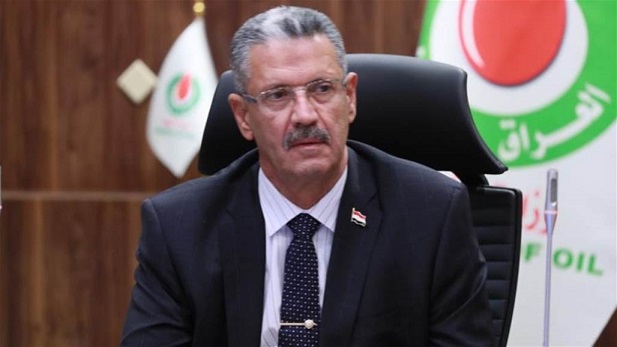 Deputy Prime Minister for Energy Affairs and Minister of Oil Hayan Abdul-Ghani confirmed on Friday (May 16, 2025) that Iraq will achieve self-sufficiency in imported petroleum products by the end of this year, while the Undersecretary of the Ministry revealed a plan to raise crude oil production capacity to 6 million barrels per day by 2030.
Abdul Ghani said in a press statement that “By the end of this year, Iraq will completely stop importing petroleum products, as a result of the expansion of local refining and refining projects,” adding that “the FCC (Fat Catalytic Cracking) unit project in the southern refineries has reached advanced stages and will contribute significantly to achieving this goal.”
In the same context, the Undersecretary of the Ministry of Oil for Extraction Affairs, Bassem Mohammed Khudair, explained in an interview with Baghdad Today that “the ministry is working according to a strategic plan to increase crude oil production capacity to approximately 6 million barrels per day by 2030,” noting that “the plan relies on developing existing fields and investing in undeveloped fields, in addition to strengthening partnerships with international companies.”
He added, “This goal is realistic and achievable within the specified timeframe, especially given the availability of the necessary technical, technological, and human resources.”
Iraq’s current oil production rate is approximately 4.2 to 4.5 million barrels per day, with an export capacity of approximately 3.4 million barrels per day, according to data from the Ministry of Oil. Iraq is seeking to gradually increase these figures by expanding production from the southern fields, most notably Majnoon, West Qurna, and Rumaila.
On the refining front, Iraq still relies on imports for a significant portion of its petroleum derivatives, particularly gasoline and kerosene, due to limited refining capacity. The FCC unit project at the South Refinery (Basra) is one of the most important projects aimed at converting heavy derivatives into higher-value, lighter derivatives, such as high-octane gasoline.
The Ministry of Oil expects this project, along with the development projects for the Karbala and Nasiriyah refineries, to contribute to bridging the gap between domestic production and consumption and achieving full self-sufficiency in derivatives before the end of 2025.
burathanews.com
