Cooperation instead of deterrence: An American website suggests including Iraq and Iran in the “Mecca Alliance”
Cooperation instead of deterrence: An American website suggests including Iraq and Iran in the “Mecca Alliance”
2026-10-23
 Shafaq News – Special Translation
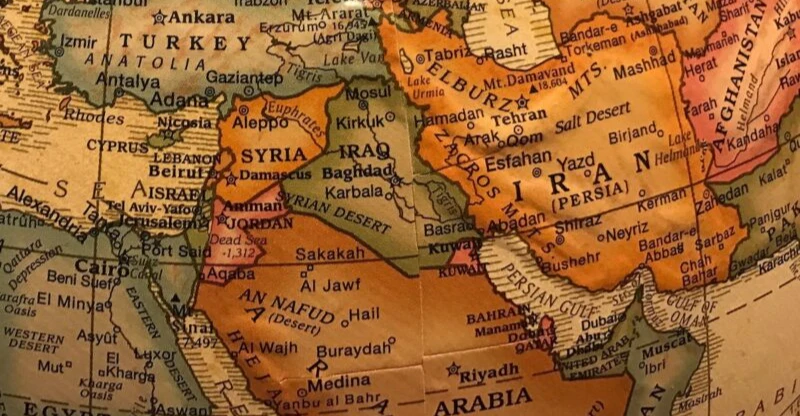
The inclusion of Iraq, Iran, and Kuwait in the recently announced “Mecca Alliance” between Saudi Arabia, Turkey, and Pakistan provides a means to avoid pushing regional states into mutual retaliation for attacks from abroad. This arrangement would better protect approximately 55% of the world’s oil reserves and infrastructure in the region than the idea of military deterrence alone, according to the American website “ Eurasia Review ”.
The American website stated in a report translated by Shafaq News Agency that the Gulf cannot achieve lasting stability through military deterrence alone, explaining that a broader framework of mutual non-aggression and mutual reconstruction, such as the “Mecca Alliance,” would prevent regional states from being drawn into a destructive war fueled by military interventions, regional ambitions, and strategic interests coming from outside the Gulf.
According to the report, the Gulf has reached a critical turning point after the continuation of the military confrontation became a threat of turning into a wider regional war, as the danger is no longer limited to attacks coming from outside the region, because these attacks could cause retaliatory operations between neighboring countries, exposing their oil facilities, ports and other basic infrastructure to mutual destruction.
The report added that the immediate challenge is no longer about strengthening the defense capabilities of these countries, but rather “preventing external confrontations from turning into conflicts between the Gulf states themselves.”
Therefore, the report considered the Makkah Joint Defense Agreement, signed by Saudi Arabia, Turkey and Pakistan in August 2026, to be an important commitment to collective security, noting that the effectiveness of this agreement could be enhanced by expanding the scope of regional security consultations to include Iraq, Iran and Kuwait, with a focus on preventing confrontation rather than responding to it after hostilities have broken out.
The report highlighted the importance of expanding cooperation with Iran, Iraq and Kuwait through maritime security, early warning mechanisms and protection of energy infrastructure.
He went on to say that if Iran were attacked by Israel or the United States, this should not automatically make Saudi Arabia, Kuwait, Iraq, or other Gulf states targets for Iranian retaliation. At the same time, he added that attacks against an Arab Gulf state should not be used as justification for indiscriminate retaliation against Iran.
The report recalled Israeli Prime Minister Benjamin Netanyahu’s statements about changing the Middle East, which, according to the report, raise serious questions about the consequences of these ambitions on the sovereignty and security of neighboring countries. It added that the Gulf states must be wary of allowing foreign military objectives to drag them into confrontations with each other, especially when their lands and basic infrastructure bear the brunt of it.
At the same time, the report argued that the United States must also address the economic repercussions of oil supply disruptions and rising fuel prices, noting that prolonged instability in the Gulf will affect not only oil-exporting countries, but also American consumers, industries, and international trade.
The report argued that whatever differences may exist among the leaders of the Gulf states, they share the responsibility of preventing external military confrontations from turning into conflicts between their countries.
The report suggested that the proposed framework should include a publicly declared commitment by participating states to refrain from attacking each other’s basic civilian and economic infrastructure, and to prevent their territories from being used for unlawful attacks against fellow participants in this cooperative framework, which could deter external powers from anticipating an attack on one Gulf state to provoke retaliation from its neighbors.
He went on to say that these understandings should include a proposal for mutual restraint and the establishment of mutual commitments to protect and restore essential infrastructure damaged during military confrontations. He added that if Iranian oil facilities, electricity grids, or other vital installations are attacked by Israel or the United States, the neighboring Gulf states must be prepared to provide technical assistance, specialized equipment, and emergency repair capabilities rather than engaging in retaliatory destruction. Iran will also have parallel obligations towards Saudi Arabia, Iraq, Kuwait, and other participating countries, regardless of the identity of the attacking power.
According to the report, such cooperation does not mean accepting the original attack, nor does it require any participating country to abandon its current defense arrangements or its legal right to self-defense. However, it will strengthen the principle of regional solidarity so that damage to a country’s basic infrastructure will lead to assistance from its neighbors, rather than further destruction among them.
The report considered that economic motives reinforce this vision, recalling a recent position of the “OPEC” organization on the need to protect sea routes and warning of the long-term repercussions of attacks on energy infrastructure, adding that oil security cannot be achieved through production capacity alone, but also depends on safe navigation, infrastructure protection and cooperation between neighboring countries.
Therefore, the report says that “Iran, Iraq, Kuwait and Saudi Arabia, which have worked together as founding members of OPEC since 1960, have significant common interests in maintaining these conditions, despite their political differences.”
The report noted that the Gulf Cooperation Council countries, along with Iran and Iraq, represent about 55% of the world’s proven oil reserves, while this region has exceptional religious and cultural importance, including Mecca and Medina, in addition to other important centers of Islamic history and learning.
He added that a Reuters report concluded that the Iranian war showed that the conflict may have strengthened Netanyahu’s political position while exposing the Gulf states to significant economic and security costs, and therefore the countries of the region have compelling reasons to prevent external confrontations from turning into destructive conflicts among themselves.
The report concluded that the proposal to include Iran, Iraq and Kuwait in the Mecca Agreement is not limited to their geographical proximity or their joint exposure to regional conflict, noting that these three countries, along with Saudi Arabia and Venezuela, were the founding members of OPEC at the Baghdad Conference in September 1960, and that despite their different national circumstances, they recognized the need to cooperate in protecting their oil resources and economic interests. It added that after more than 6 decades, this historical experience provides a precedent for expanding their cooperation beyond oil policy to include protecting their territories, basic infrastructure and regional security.
The report concluded by saying that the current members of the Makkah Charter could extend an invitation to Iran, Iraq, and Kuwait to form an integrated framework for regional consultation and infrastructure protection without expanding the scope of the Charter’s military commitments to include them. It added that this mechanism could begin with non-aggression commitments, emergency communication channels, independent incident investigations, and coordinated infrastructure repair capabilities among them.
He added that “by drawing on the shared OPEC heritage of Saudi Arabia, Iran, Iraq and Kuwait, the Makkah Charter can expand regional cooperation into a broader framework of mutual non-aggression and mutual reconstruction, contributing not only to collective defense but also to preventing a wider war and promoting lasting peace in the region.”
He continued, saying that “the future of the Gulf must be determined by the common interests of its countries and peoples, and not by confrontations coming from outside its shores.”
shafaq.com
