Stagnation and protests… The US dollar paralyzes Baghdad markets
Stagnation and protests… The US dollar paralyzes Baghdad markets
2026-10-15
 Shafaq News – Baghdad
The main markets in the capital, Baghdad, are still experiencing an almost complete standstill in buying and selling activity, since the Iraqi government announced last Wednesday (October 7) a change in the exchange rate of the US dollar against the local currency.
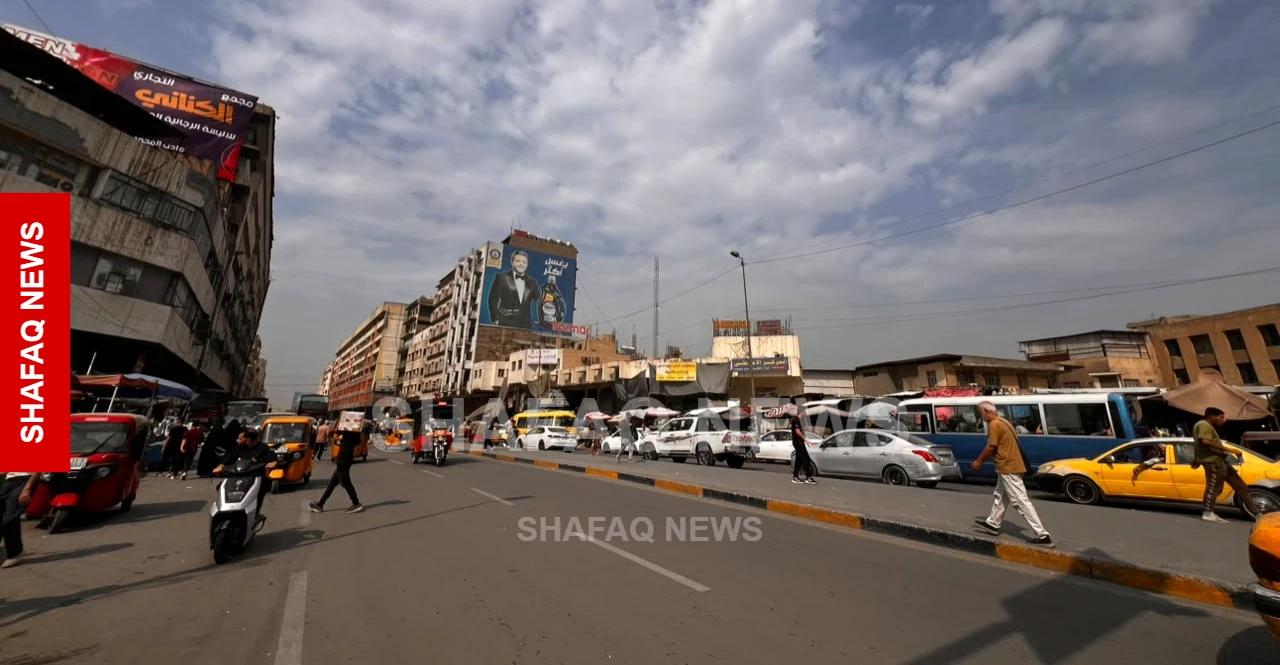
A correspondent for Shafaq News Agency said that the Al-Shourja area and Al-Rashid Street appeared almost empty of shoppers, coinciding with a protest organized by a number of citizens rejecting the decision to change the dollar exchange rate.
Images taken by Shafaq News Agency in the aforementioned markets showed closed shops and almost empty corridors, while protesters raised banners demanding the reversal of the decision and rejecting the adoption of the new price.
The Cabinet had decided, in its session held on Tuesday, October 6, to adopt new exchange rates, according to which the purchase price of the dollar from the Ministry of Finance was set at 1,500 dinars, and its sale to banks at 1,510 dinars, and to the end beneficiary at 1,520 dinars, compared to 1,320 dinars previously, i.e. an increase of 20,000 dinars per 100 dollars.
The Central Bank of Iraq announced the adoption of the new prices, to be effective from October 7, 2026.
Following the Central Bank’s announcement, traders in the Al-Shourja market and “Alwa Jamila” closed their warehouses and shops, along with a number of money exchange and transfer companies, in protest against raising the official exchange rate.
The sudden rise in the exchange rate led to confusion in the markets, with difficulty in determining buying and selling prices and repricing goods.
For his part, Prime Minister Ali Faleh al-Zaidi explained to the House of Representatives, during his attendance at a meeting with the Presidency Board, the motives and necessities of the decision.
Al-Zaydi said that the government had three options: “The first was to resort to mandatory savings, the second was to distribute salaries every 45 days, and the third was to borrow and plunge the country into debt, which it is already burdened with.”
He added that he took over the task and the economy was “besieged due to the interruption of oil exports and the closure of the Strait of Hormuz,” noting that the public debt exceeded 208 trillion dinars, and that the government was required to provide 10 trillion dinars monthly, stressing that the government had provided salaries despite the crisis.
He added that the difference in the exchange rate previously “was taken over by speculators.”
For his part, Speaker of Parliament Hebat al-Halbousi confirmed that the decision to change the exchange rate is “irreversible” and that the heads of the political blocs support it.
shafaq.com
