Prior to his visit, Al-Zaidi dispatched the oil minister to Saudi Arabia to “prepare the huge file”.
Prior to his visit, Al-Zaidi dispatched the oil minister to Saudi Arabia to “prepare the huge file”.
2026-10-11
 Shafaq News – Baghdad
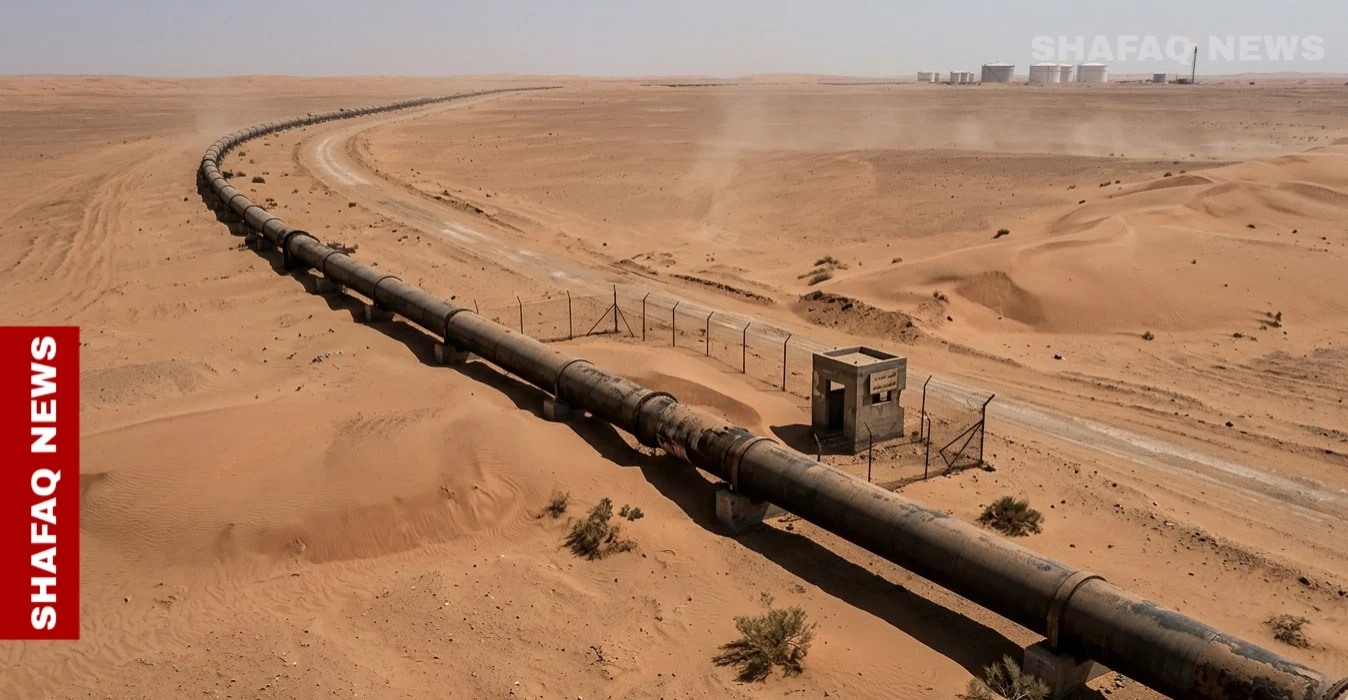
A government source revealed on Monday that Oil Minister Bassem Mohammed Khudair is heading to Saudi Arabia to prepare files in anticipation of Prime Minister Ali al-Zidi’s visit, most notably the activation of the joint oil pipeline.
The source told Shafaq News Agency that “one of the most important topics to be discussed with Saudi officials is the reactivation of the joint oil pipeline to transport Iraqi oil towards the Saudi port of Yanbu and on to the global oil markets.”
He added that “among the other issues that the Prime Minister will discuss in Saudi Arabia is the mechanism for de-escalation with Yemen, in addition to stating Iraq’s position on what is happening in the region, and the need to stop the Arab-Arab conflict and focus on de-escalation.”
He noted that “Al-Zaidi’s visit to Kuwait will include discussions on the maritime border demarcation file, the Khor Abdullah file and Iraq’s water rights, in addition to other issues of interest to both countries.”
Iraqi Prime Minister Ali al-Zaidi is expected to conduct a Gulf tour next Wednesday, which will include Saudi Arabia, after which he will head to Kuwait.
This anticipated tour comes after the cancellation of a visit that Al-Zaidi was scheduled to make to Riyadh last July, against the backdrop of rapidly evolving security developments in the region .
Iraqi-Gulf relations have been marked by anticipation and caution since the launch of regional military operations in February 2016, amid repeated accusations from countries in the region that armed factions are exploiting Iraqi territory to launch drone attacks targeting regional economic interests.
The joint oil pipeline is one of the most prominent projects between Iraq and Saudi Arabia. It extends for about 1,568 kilometers, starting from the Zubair field in Basra and reaching Yanbu in Saudi Arabia.
Work on it began in the 1980s, but work stopped in 1990, during the invasion of Kuwait by the former regime in Iraq. In 2001, Saudi Arabia used some parts of the pipeline on its territory to connect the East-West pipeline, which is now a strategic alternative to the Strait of Hormuz for oil transport.
shafaq.com
